
The Science of Scaling
Each week, host Mark Roberge (Sr. Lecturer at Harvard Business School, Co-Founder at Stage 2 Capital, Founding CRO at HubSpot) talks with the most successful sales leaders in tech to find out the science behind scaling a company’s revenue and sales.



Latest episodes

Back in 2013 Christopher O'Donnell and I were told to bring HubSpot CRM to market. Now we’re reuniting to discuss the future of sales and what jobs will survive the AI era. Think your team's ready to ditch the SDR/AE/CSM split? Get our free guide to the full-cycle seller model: 🔗 https://clickhubsp...
Back in 2013 Christopher O'Donnell and I were told to bring HubSpot CRM to market. Now we’re reuniting to discuss the future of sales and what jobs will survive the AI era. Think your team's ready to ditch the SDR/AE/CSM split? Get our free guide to the full-cycle seller model: 🔗 https://clickhubspot.com/n59s Christopher is now the founder of Day AI, and he's spent years thinking about the same questions I have: what actually happens to sales roles, CRM, and go-to-market design once AI in sales can do 2-10x the work of a human. In this conversation, we get into why the SDR/AE/CSM specialization era is ending and the "full-cycle athlete" seller is coming back, and what jobs survive an AI-native world. -Mark
00:00/00:00
what is the future of sales in the post ai era that's a key question on so many people's mind have i got a do for you i'm bringing and my buddy christopher o'donnell in two thousand thirteen brian our match the two c cofounder of hubspot sat he and i down and said you guys are gonna bring the hubspot crm to the market so for years we po authenticated around how sales should work today crispr has founded day ai a stage two capital portfolio company and he's been thinking about this all day for years in so i today we sit down for the first time and exchange notes on the future of crm the future of sales and the future of go to market system design i'll mark bears and this is the science of scaling alright so chris i'm so excited a life moment here to gone through the battle we went together in the last generation of sales tech mart tech go to market strategy here we are again your new company day ai you've been thinking about this for years again in a new era so let's let's pull that out of your brain and let's start with like the roles the talents the jobs like there's all this pressure about i'll last you and then the beginners like yes yours going away blah so like where are you at now and all the thinking and research and you know customers discover you've been doing on what these roles look like yeah every day there's a new news article saying nobody's gonna work five years from now or nothing's gonna change everybody's gonna have the same jobs and just be fifteen percent more productive and then oh the research shows they're actually fifteen percent less productive with the ai and it's kinda all over the place you know look i i think some of this is settled in my mind in clear now that people will work work we're just all screwed right and the ai will take over the world and you know there's nothing that we can do about that anybody who is still working three years a year five years from now i think it's safe to say that they will be producing two to five to ten x as much work product and that will have impacts on sales that will have obviously impact on engineering where we've seen the most of this progress i think so far it will have impact in wonderful areas like pharmaceuticals you know we may actually cure cancer okay fine but i drive into work and i check email and i have meetings like what's gonna happen to me that's the lens that i would use is how can you produce more work product as people do produce more work product using ai using agents those roles will start to blend together i think in really beautiful ways that are great for customers that make work a lot more fun everybody's talking about taste right now which i find delightful it's super important we are going to be taste makers in this new world and be able to spend more of our time on the details the why and on things like design things like copy and getting the fine details just right because the kind of grunt work of whatever it is updating a crm or writing code that stuff kind of blends away you still have to have a strategy you still have to understand what matters but you can actually get to a hundred percent you can actually get your product to be perfectly consistent the customer memory across all of your reps and anybody who's ever talked to anybody you can hold on to that right and grab it instantly yeah i've been thinking a lot about this what are the future jobs for humans in a very mature ai world and christopher ideas are giving me a lot of conviction on some of my hypotheses i've always said since the beginning politicians and we do want humans out there that we're voting on that are making decisions on how we run as a society number two i agree with him he says taste i say creative i just think you put ed sheeran and taylor swift in room against ai ai even ten years from now and they'll still create quite a few festival selling in hits and the same applies to movies to books are certainly to sports etcetera and then this one's a little trickier and i've developed the conviction more recently in christopher saying in a similar way and i would say human in the loop i think technology technology's has been able to fly planes for quite some time but we still have pilots there just in case i know when ai is able to form if i'm having brain surgery i'm okay with an ai neurologist but i would like a human neurologist in the room just in case and if i buy a million dollars of software from someone i'd like to shake a human head to make sure that they have blessed my needs and the fact that they will actually deliver so i agree there's some ideas on the future human work it opposed the irs so that's kinda where i see it going is everybody needs to start thinking about if they could hire a virtual worker of some kind or even if they could hire somebody and they walk through the door right now what would that job description be that they gave that person and to really start investing in those artifacts even if you don't have head count actually especially if you don't have head count and especially if you've never written a job description in your life you should still take your current role and cut it up into one three five job descriptions of work that you don't wanna be doing and focus on your new job description which is work you do wanna be doing for sellers that means being on you know camera or in person with a prospect or with a customer and listening it's a great thing about these meeting note takers is instantly we can pay attention in the meeting we can build rapport we can talk about pate maternity leave maternity leave oh how are your kids doing you know what sports seems whatever we can get very deep into discovery because we know that if we miss something in discovery it's gonna pop up and remind us or if a question has already been answered in discovery through some other channel or some other clue from somewhere we know we don't have to ask that we can focus on the rest of what's missing about how this prospect could succeed so just taking those things and starting to cut them up into this new agent kind of workflow because we all do get these virtual workers we all get them today right there's no worker who can't have some ai companion now helping them with their job literally okay so i love that i think that's very accessible right now is like everything besides seller talking to buyer let's make that you know let's ai that do you see it going beyond that do you think that we'll have agent sellers do you think we'll have agent buyers i don't know if you've gone down that thought exercise yeah and you know there are folks doing really cool things like a customer onboarding for a saas app there are things you can get out there that are like being on the phone with an implementation person who coaches you through how to use the product i think that stuff is is great for people i think it doesn't eliminate the need to have somebody who owns that customer relationship but maybe it does blend sales into account management maybe that's the right way to do this you know i think ultimately all of this allows you to solve for what the customer actually wants mh why do you have six touch points with a given vendor it's not because the customer wants it the business model requires it because these are specializations working renewal is different from training a customer is different from selling a customer doing discovery qualification right these are different skill sets but maybe some of these we can hand off to the ai and the role of that seller becomes something really new and exciting one thing we talk about is we wonder if sellers will become masters of their own domain reverend in the early days we had sellers who would focus on there's one i'm thinking of in particular who just sold sign shops right yeah exactly i think she's still there right right been there like better part of twenty years and found this thread okay there is like my uncle in law vin has a one of these sign shops in buffalo new york tony and she just knew exactly how to help this person get leads yeah and so has sold like every sign shop in america we think that that's the kind of thing that'll happen where somebody with a broader more general role okay maybe they're not a marketer but as part of being a seller they know everything about this persona and can get all the help they need to do battle cards white papers customer testimonials marketing site content you know solutions page or whatever for that particular slice that they sell yeah that's interesting twenty twenty five was definitely a year of ai in product and engineering and christopher talking through how there been so much specialization from just engineers to product managers front end engineers back and engineers designers data analyst data scientists etcetera and he sees it going back to a single role and i think we see the same things in twenty twenty six and go to market in nineteen ninety five we had one role salesperson they did it all and the last twenty years we went to sdr str r a a am cs customer support rev ops etcetera and ai will probably get us to go back to the app fleet specialization is great it allows you to align the talent with a role and use the hardest to find skills in that most important part of the funnel but it comes with a cost a cost of local maximum optimization and a post ai world the full cycle salesperson will be the optimal design so that type of expertise becomes more valuable because it's easier to leverage in different ways where it used to be very siloed you know the seller isn't gonna walk over to customer marketing and share all this stuff necessarily so it kinda goes into a black hole alright i'm i'm curious if we've landed on the the end architecture if i could draw parallel to the dot com era i think in the beginning of the internet everyone thought like the internet was a brochure online sure and then suddenly it was like oh my gosh this is like share an economy this is like you generate content there's so much cool stuff like that turned out to be one point o that all got disrupted i think we've tasted that with like the initial c copilot era which ended up being these these wrappers which are super light and all those kinda like went away now in this agent era have we landed in the longer term architecture is that what this is gonna be or is there not another one talk talk us through this agents yeah red point has a great piece recently where they talk about these phases and i think they have those phases pretty much right and you start with this c copilot era and you end up with this very ambitious sort of strategic agent era where entire parts of your business are being reconsider and rep plan dynamically and we're kind of in the second or third chapter of this i think some of it is still very undecided and some of it is pretty decided even the language that we use around this stuff you know jerry tan has this g stack claude code rig that went viral and has hundreds of thousands of github stars and nobody even knows what that thing is called like is that a skill pack is that a harness is that a is that a workflow config so some parts of it are evolving really quickly i think there are a couple parts of it that are really decided and that is the idea of an agent and the idea of skills any ai product you go to has skills you know whether it's the dia browser or per complexity claude cursor quad code whatever day ai it's a slash command you know it's a a set of instructions about how to do a particular thing mh whether it's your browser you know nba score checker or it's a github pull request review do whatever it is it's just a little training manual mh that can get pulled up in the right moment so the ai can do something perfectly every time that is settled like that's definitely not going anywhere the idea of an agent is probably also not going anywhere the idea that an agent has a job description that idea that i'm gonna be responsible for three times the work product well who's gonna do this work product agents okay so what is an agent you need more than one they have a job description we give them a view of the world a set of opinions of what's important and where to look to get your bearings in the case of open claw which is always a fun one to talk about don't use it at work but mh boy is it powerful it has that same architecture as well and it goes so far as to have a sole document that's one of the things that you set up when you do open claw and get that running is you actually give it a soul like a name a whole identity of purpose for living a backstory you know whatever that i think is actually settled and is correct mh and so you know there are a couple of layers that are still being decided one is the automation layer even way back in the day if you talk to i which i'm sure you did long time salesforce reps mh the ones we talked to said look at the end of the day i feed my family selling automation that's really what it is it's salesforce automation s is really what people think of as crm how do you automate these skills we don't know we don't know yet you know cloud code has a loop command now cloud desktop and web have this idea of an agent platform that can run asynchronously day ai lets you take a skill and say do this every four hours or do it when there's a new opportunity added or whatever right that i think will firm up to some degree but peep there will be a lot of vendors in a lot of different ways of doing it agents also there will be a lot of vendors in a lot of ways of doing it but will coalesce on this idea of a job description mh and using skills and then there's the fourth component of it which i think we're really entering into the era where people really need this and see the need for it which is what's your data source so these agents are are wildly intelligent you can have as many of them as you want they have job descriptions they're ready and willing to do work products and what are they working off of our take is that they should be working off of the actual customer truth mh down to the word that was said the minute it was said who said it why it all matters and to keep all of that wired up to be instantly accessible regardless of what happens in these other layers i wanna ask this question because i think everybody's out there and you go talk to a founder you go talk to you know a ceo and they're always like we are so ai native as a company we're so ai native and what i've been pushing the ecosystem and is like how do you know and how do you measure that in r and d i mean in engineering stripe had a great post about this recently if you look up stripe minions they talk about the productivity that they're getting now from agents running in the background some of this automatic orchestration that i'm talking about i mean the industry average for an engineer pull request per week you know what it is no oh god so now you're says says i have no idea i've never studied request is like a unit of work showing somebody that turns into a deploy five i don't know i'm probably way off two and a half okay two and a half not as i could've said fifty and had some thoughts that that would be the case okay two and a half cool polka glass and and it really could be anything because you could have a culture where they're smaller or culture where they're larger where but two and a half pull requests a week for a good solid engineer and this was true at hubspot this was true at stripe and that talked about this and i think that you are seeing eighty percent of these engineers still at two and a half it's a problem that's a problem and they're all bragging about oh man we're using cursor and cloud and all this stuff and they're still to enough yeah and you see these articles in the news about oh the ai is supposed to be making everybody fifteen percent more productive and actually we think it's fifteen percent less productive my take on all that noise is it's gonna be pretty bi already it's pretty bi where you have people who are no one is fifteen percent more productive right like that would be people using auto complete or something but still coding manually that's not what anybody's is really doing yeah that's happening all the time right now you're in the boardroom and they're like our sales team is so ai native our engineering team is so ai native how do you know what are you basing that on because you're using open to write emails that's the key we have to get to now is quantify it how will you know in twenty twenty six whether you're truly an ai native sales team i'll throw authorize it some metrics number one selling time goes from twenty five percent to seventy five percent selling time is the percentage of week that a salesperson is in front of a buyer or a customer it goes to seventy five percent get rid of all the admin work the crm prep a lot of the meetings with pipeline reviews with your manager etcetera number two the rep to manager ratio doubles it goes from say seven to one to fourteen to one why because one of the most time consuming aspects is coaching but today's ai is a better coach than humans they can look across seventy calls not just two and they can look across number of coaching calls to know the type of coaching that the human is most receptive to and ultimately you double productivity per rep so bob and susan who for years and years and years have averaged two hundred fifty k a quarter will start averaging five hundred k a quarter that's how i know if you're an ai enabled sales team in twenty twenty six i think you have people who are two to five in some cases more than that productive and you have a lot of people who were still at the baseline so that's what i would say at the board meeting is like okay fine you're you're bragging about how how like ai native you are what was your power request per week in the last quarter and i'm looking for five which would be a two x up to twenty which should be like you know a nine or something like that yeah exactly and hasn't it changed i mean whatever whatever that particular company baseline is you know it's just work product can be cheated like can you be like oh yeah we're we've crush poll request but it's not actually driving so and so productivity on that oh sure sure sure but it's pretty obvious i mean if if you start working in this new agent kind of way yep you're not gonna have to really cheat anything and it's a kind of an enormous amount of work to try to show that you're using the ai it's it's a lot more work than actually using it so it's dramatic in the amount that's kind of the lens for all of this sales engineering anything is how much work product are you you know the colleague sitting next to me in charge of and getting credit for yeah versus the baseline of twenty twenty three or before that and i think across all these departments it really is you know radically more work products it's crazy that like we under appreciate both of the on prem and the cloud era there was a decision around a database structure sure tables rose columns that the entire industry had to conform to and that's essentially what you're saying is we don't have to have that that you know obstruction there it's it's not that you know you couldn't build something like pal sure using oracle mh relational database exactly there are things you can't build on top of even salesforce right salesforce you know ultimately is extremely good at the things that it does hubspot is extremely good at the things that it does and now people are turning not necessarily away from crm they're saying yeah yeah crm fine like it has my opportunities and people get paid because they keep it up to date and there's some value in all of this but okay if i'm gonna run agents i need all the gong data yeah i need all the slack data right i need all the email data and then you start to get into this world where it's like okay we're gonna ask the ceo to share their email inbox we're gonna ask the head of product and this support rep and everybody at the company to just pull their data together and you realize pretty quickly okay well we're gonna need to give people some controls you know so that they understand what is being shared what is visible to everybody else at the company in some cases if you have a customer facing agent boy you better make sure that they can't you know delete all the meetings from mark's calendar just by asking it too so that's gonna be a really interesting story to watch on hold that is such a challenging thought exercise it's how the level of abstraction changes with time you know we could think about like something very minor abstract from today's point of work like right this email and that's where we are today will we ever get to a point where we just say build a billion to company and it just builds a bill our company who knows how far abstract we will get and on which time frame but i will say this those level of abstraction will likely define the phases of evolution of our opposed ai world for example in sales we already talked about how the first phase may just increase selling time but the actual process is humans selling to human buyers and perhaps the next level obstruction will be the functional boundaries that we know today start to blur in a way we have finance sales marketing engineering product because of limitations of humans there are very few people who study finance and write code and vice versa and yet those functional divides create sub optimal inefficiencies within organization we would benefit from finance being closer to sales product being closer to support hr being closer to product perhaps over time those functions will blur in the optimal organizational design this is the new thing that people are trying to roll their own you know there was a brief period of people talking about vibe coding a crm yeah and look you can vibe go to crm single player sure you know people are like could you really do that in a weekend it's like if if you're just trying to build yourself a crm you don't need a weekend mh you need forty five minutes mh the minute you go multiplayer and now you can see your leads i can see my leads but i can't see your leads then you go i think maybe i'm gonna go to a vendor i think i'm gonna go by house hubspot i'm gonna go by salesforce yes now in this customer memory which is sort of a a super set of what crm tries to solve it gets really intense really quickly you need to be able to populate that customer memory almost instantly to get going and you need it to be built originally for the ai mh we no longer judge whether the interface or the feature set or whatever is to our liking because we are working with the ai the ai is working with those tools see what i'm saying totally and the ai will tell you what it can and can't do based on those tools you can connect a bunch of different tools to something like claude and say what do you think of all of these like what could i use these mc servers for try some of it tell me how well it goes and it will give you lots of ideas and some of those products are incredible products and they won't really give claude what quad really wants so yeah i mean the there's absolutely room for a new data structure when people are building these customer memory layers themselves they are not using relational databases it's not their first instinct they go to vector databases they try property graphs they try all of these different interesting things i do think ultimately they'll realize that this is the kind of thing they should use a vendor for and that's where we can let me ask a this is a cool call i apologize but more like where the level of abstraction ends and this is something i'm just struggling with i want your take on i'll i'll make a simple analogy on like a a toy manufacturer like so like there's all these people assembling toys they come up with the ideas etcetera and the first level ai just like automate the assembly part blah blah and then the next level of ai might be like you know creating an idea for a toy in the in the pro so we're obstructed it even further and then you go to first principle what does the toy do a toy creates entertainment for children so like let's just abstract like yeah what's the best way to create entertainer for children and then you make a billion dollar company so like you apply that to sales and it's like okay we already see the first level abstraction and we talked about selling time right so it's like okay we're getting rid of all the admin stuff and then like how far does this get distracted to like okay closing customers okay inventing product okay creating billion dollar company i'm struggling without leg level of strategies is that where we get to or where does it end i don't know where it ends i started making agents and i made a user researcher agent and a data analyst agent and a marketing copywriter agent and then i made an agent to manage them right and i was really blown away by that vp who immediately started asking for all of the things the real vp would crazy like hey wait a second i need more i need more data i need more of this like you gotta give me this and i'm like this really is like humans and then i realized okay this is awkward i could make a ceo agent right and and i did you know there are still decisions that need to be made that have human consequences you know we have investors i can't just give away the strategy of the company we have employees i can't count on the ai to inspire the employees and to answer their questions and to meet them in their train of thought and and try to explain how we see the world as a company so that they have the piece of the puzzle they need to continue now as far as sellers go i think it's a good example i think we sort of agree maybe that we want a seller to be making the human connection mh providing that trust in that credibility building rapport being the face that is answering these questions mh it's hard for us to develop trust with the agents and we can talk about that particularly with somebody else's agent but with sellers there are some pretty obvious opportunities if you imagined you had infinite time to review your deals and to look at the internet and to just imagine all the possibilities into pattern match well the ai should be able to say you seem to like generating pipeline why don't we go develop a plan to generate more pipeline starting with here are the customers that close the fastest here are the patterns in the similarities between them here is what they said in their own words they came to you looking for and here is the moment where your solution made sense to them though here were the words that were used by the seller here was how the prospect reacted to that in their own words okay so imagine taking the entire history of everything and just extracting from that history just those bits yeah who are these people what are the patterns and then being able to say get me a hundred more of these then imagine that when you reach out to them you are using all of that customer success in all of the previous prospects previous customers actual words mh they're actual feelings not a bunch of us sitting in a room coming up with marketing slogan but actually the source the record of the reality of what happened that turns into your outreach to these people i get these cold emails from ai sdr apps all day every day and none of them are any good i mean they seem to kinda pull my linkedin and that's pretty much it in your role at day ai and found it's like the same my favorite one though my favorite one was somebody talking about the cathedral because i live in winchester mass okay no and it's like talk about contact you're talking about like westminster germany and think that's definitely a different country right we have a very modest like an church in downtown yeah so that's where i think this kinda goes is hyper accelerating the part of our job that we really like in that case being on the phone with somebody who really needs the thing you have i mean it's a great feeling right when you just have those like blue bird just oh my god they're gonna love this thing and you go home to your family and you're like i crushed it today that's what we wanna really speed up the future of sales isn't approaching it's here yet many teams are still running a tired playbook this guide breaks down the full cycle seller model where ai fits into modern workflows and how to give sellers more end to end ownership without stretching them thin you'll get a hiring profile you can use immediately a framework for measuring whether your team has truly restructured around ai and a transition plan for making the shift grab your free copy of the full cycle seller model at the link in the description alright let's get back to christopher is that i think in the last year we've kinda of reg we've gone back to the human like i think like it in a lot of situations like the last year it's like oh yeah like human sdr str are still outperforming in the ai sdr you know like if you the human that writes this no or like the human demo etcetera is that just because of limitations is the ai tech today that goes away or is that instructive to the future of humans existence in like their role in this new architecture i got a call last night from somebody using one of these sdr str systems mh and so is this chris i'm calling from such and such real well known company you would not and i said are you using this app and he's like how did you know that you i'm like good you have so much to work with like we have shared investors i have done demos of your products we decided to use this service provider instead of your app and it didn't go well right it's like you have all of this history and so humans and ai are trying to do this thing in this case to establish an initial connection from cold from zero the ai is there the humans are there all of the technology is there and yet this outreach is just really kind of va what's missing is some instant access into every data point in every clue so that these hyper intelligent ai models can come up with something to say if you give them the right starting information they will come up with something to say and very good at writing very good at helping people communicate with each other this is one of the biggest things people use chat for mh is like marriages and dating and their personal relationships these models are very good at personal relationships they don't have the starting material they don't have how do we think about this person we're writing to in the context of everything we've ever said to anybody there's no ability to find patterns and start from those patterns when you decide to reach out to people so in many ways i think it's a problem that should be solved by now but these these emails are terrible these emails these calls are terrible but i can give you i can give you an ai bd that is not terrible mh may give you anything i love that a lot of the vendors that i have and i love them dearly i love them i don't mind buying things i like buying things it's super fun but these folks as it goes from the bd to the ae to all the way through the renewal manager and everything they have it's like the goldfish with the five second memory they just have absolutely no idea who the hell i am that is in excuse at this point everybody should know every detail that matters k so like before we get off it picture three twenty two year old mit and cal tech engineers building something right now you walk and you know there's gonna be massive holes and so like they're just like probably building too much in a vacuum you need to convince them with a very tactical tip on like how do you stay closer to the customer what's that one thing you tell them to do i don't wanna be too self promotional i do it you can yeah no i mean if you just set up ai record your meetings connected to slack whatever everything comes into what we call the customer memory layer nice and then from there it's pick your poison and if you're more comfortable with a web app environment and seeing tickets fine if you wanna automate the whole thing so that it just flows through the github if in the personas that you're talking about you could just wired it up all all automatically or you could do something in the middle with cloud code you know whatever that's but whatever you do you know you could connect gong or you could connect fathom you could roll your own slack thing email gets a little bit tricky but yeah i think we're definitely past the kind of ticket concept you know level and you should be able to have some sort of automated action off of that and then start to roll that up into higher level more sort of synthetic strategic insights and be able to ask questions about you know who would this impact if we did this feature you know what are the biggest gaps for this new persona that we're going after i think that's the expectation regardless of what you use i think that's the expectation that people should have is that a lot of that prep work is done for you and the raw material is there for you so like all that said let's talk about the future crm for a minute and what i've what i've extracted from your conversation so far is like obviously relational database goes away we're talking about this unstructured data that's really close to the frontline personal of the customer we're talking about removing a lot of like the tasks that are you know you don't wanna be spending human intellect on it can be done by the ai can you just am i right directional and like can you solidify that like what is the future of the tech stack that supports all this there needs to be some sort of instant memory layer for whatever it is that you're doing you know if you are doing legal work mh you need to be able to grab all of the relevant case law instantly if you are working in medicine you know or pharmaceuticals biotech you need to be able to grab all of the most relevant data points to the thing you're trying to do apps like open evidence unbelievable product people love this thing helps doctors and researchers because it just instantly grabs all of the exact pieces from canon whether that's you know this insurance company's policy about such and such or whether it's the best treatment or diagnostic method for this other set of clues and it's instant and it's boom it's right there mh you know this is information that exists somewhere maybe and can be assembled and recalled perfectly in time for a person to get the answer that they need mh so the memory layer no matter what you're doing becomes the single most important thing you can get agents you can get skills you can get eventually automation from any vendor you can get it from claude or chat you know you can get it from cursor you can get it from per complexity the part that people will need to get right that is extremely hard is this memory this access layer crm i think could play a role in that mh but if you look at jack do piece on the world model of a business it's only one of the inputs does it help does it hurt i think it depends on how clean your crm data is how diligent you are if you have a team that has kept everything up to date and your pipeline is in perfect order that's really valuable information for the ll but it's not enough this super set of information of every fact ever being able to ask a question and have all of the most valuable pieces of data presented to the ai when it tries to answer your question when it tries to draft an email or give you a way to read an x ray or whatever it is that retrieval is really the big layer that's gonna matter in the future rem zoom out it's like the local maximum issue mh pretty so i wanna i do wanna zoom out and before we get back to the hubspot archives yep one more point on this team design and where i'm gonna zoom out to here for our product founders is you gotta be very attentive to innovators dilemma that you can exploit right now that is so key hundred percent and if you don't know what i'm talking about as a product founder go do a quick reading on innovators dilemma essentially what this is as you know clay christian sends the late clay work when we have these massive technology shifts the it it gives a huge advantage the startup up relative to the incumbent the startup usually wins it's very different for the incumbent to defend themselves mh as a founder i have to be aware of what those opportunities are and exploit them not enough founders are aware of this stuff and that's the big question these days is like we know looking back on cloud what they were what are they gonna be in ai and i have a hypothesis that one of the strongest ones is not necessarily how you ai your product but how you ai your your team and organization k and like we're talking about this like potential move from massive specialization in r and d and gt to a single person that does everything sure and what i wanna like that's a massive opportunity for us to exploit i wanna hear what it is on the r and d side but i think on the sales side if i'm hiring someone directly into this like ai enabled team my hiring spec is so different than what it used to be is like hiring an aa and sdr and cs that's a massive opportunity because you're you're if you're a huge incumbent with a thousand people on your go to market team and suddenly the right answer is like oh this is how it works now you don't have many people that fit that spec so you ever have to retrain people or get rid of people or replace people as a startup i can hire into that profile right from the get go that is a massive innovator dilemma that product founders can exploit and i will tell you i wanna hear what your spec is on the r and d side i will say on the go to market side if i had to promote like an sdr r and a or or ec cs or whatever it's probably an ae that's the best but it's like you're very tech enabled as well i could see myself promote sdr i mean that's something i gotta do some work on is like what is the optimal go to market higher in this ai enabled world i think it largely goes out of ae christians says the startup founders have it kinda easy the challenge is the startup founders are going to innovate but don't have distribution and the incumbents need to innovate faster then the startups can get distribution and it's kind of a fair fight mh right it's a game we can get out on the field i have tons of friends at incumbents you know and we can all go out and have a lovely dinner and you know everything else like nba players who hug after a game because they were college roommates it's like it's all good so that's the fair fight and if you wanna make it a little less fair i think the org design of a brand new company is is the most obvious place to do this why not have people in whatever department able to write code mh you know well we're nervous about you're nervous about what deal with your nervous put the right process in place have clogged triple check this and put it in front of a human have a new engineering role that is in charge of you know release engineering for ideas that come from other departments like experiment try stuff but that's principally i think the innovators dilemma you know evolution in advantage that we have today can i wish christians and could see amazing i'll go to one more thread here yeah that i was actually inspired by watching some of the changes r and d is the concept of specialization and role and let's look at that and i'd like to hear yours your take on r d and i'll tell you what i'm seeing on go to market yeah as you are very well aware because we lived through it in the eighties in sales there was one role it was a salesperson and they set the meeting they worked the customer they renewed the customer they ups sold the customer and probably triggered by the work of aaron ross some predictable revenue coming out of salesforce yeah that went to like a highly specialized environment we should have an sdr cold calls and sets the meeting an account executive that sells the meeting a cs that onboard the customer in am that renew and expands and there's always like we we got into too much specialization last decade like there were a lot of contacts where people did it just because it was in v but it wasn't optimal for their context i predict we're going back because like there's always a trade off like yes with specialization you can hire the perfect person but now you have these handoff offs that are very inefficient for the customer in the organization right with ai ai can empower a single individual to handle all those roles so i've been talking and inspiring a lot of companies to get rid of the concept of an sdr and am and a cs it doesn't mean you're to getting rid of those people it just means we're going to a single role and i was kind inspired from some of the i've been doing an r and d where i'm i'm i'm hearing that they're having pms do more of the stuff that engineers used to do can you speak to whether you think that's gonna happen on the r and d side too yeah the same kind of diamond shape thing were in the back half of that diamond i think already you know when i was working with you back in the day and let's say twenty eleven twenty twelve i was the product manager the support expert the user researcher the you know cs liaison i was the go to market lead on those products i was the front end developer on those products i was the designer on those products and all of those by even by jeez twenty sixteen were individual departments yes exactly and then those things started splitting further and you had ux copy you know content writers you know and it and it got kind of probably obviously past the point of reason ability and these small autonomous teams that we wanted to have all of a sudden were seven eight nine people and this happened to everybody and it turned into i heard it describe once as like a quaker meeting you know for what it's supposed to be three people planning you know what they're gonna do and and moves are gonna make on this part of the product again very customer driven now all of a sudden you have this huge conference room full of people and you lose that effectiveness now going back to generalist you absolutely have pms not just coding but doing some pretty sophisticated stuff mh in their coding and that i think the last six months i think six months ago we started to realize okay especially early stage but even later on the pms are going to need to have much more detail upfront which is interesting i didn't kind of see this coming we were always a little bit kinda run and gone be very customer driven make a decision it's small you get it out you get it live you get feedback your ab b testing you're gating you're kinda working that way and now there's really a reward for having all of the details of a particular product change that you wanna do every error case like all of the polish around this if it occurs to you and you can even say it out loud that can be in a spec and the cost of writing the code from the right spec is as approaching zero like it you know the right spec for a thing you wanna do with the planning phase and the research phase and you know everything that we're doing in agent coding that spec becomes almost like an iron on d cal sure that you just iron on to the code base do you know what i mean all of the details are there i think you know everybody's awareness of design and taste and design is kind of an interesting topic because everything sort of converging back to a set of clean based defaults mh which is interesting it's not about doing something new it's about doing the thing that people really expect the most and across all of that you basically have just product generalist in a lot of cases who can do a lot of coding a lot of design really can get involved in go to market yep right and so that kind of interaction is much more tightly bound and much more organic and much more detailed and ambitious in what it can do again because you can both look at the problem you're trying to solve in the customer base you don't need an analyst to quantify it you don't need a designer to mock up a bunch of options you don't need any of that you need somebody on the phone and somebody in product to sit together over a coffee and get a lead on something you could do verify that it's gonna have this impact and ship it forty five minutes later so the way of working is really changing in our office we mostly sit around a set of couches looking at the results of the data and looking at the customer feedback in discussing high level what our options are down to the very specific details of how we wanna do something and we may talk four or five of us for three hours and at that point the software is written dude but what's your answer on the r and d side what's you know you get what i'm saying r and d is not that complicated i think because you have people who are very curious mh and people who are not okay i interestingly i mean this is magic wand level stuff yeah and not everybody cares there are a lot of skeptics and you got you have to find the people who are authentically really really curious about this and across the whole company i mean there's nobody at our company that is not using quad code to do most of what they're doing yep we had a had a marketing join recently and the first day he's there at the office monday morning and i have him install c which is like a total claude code sick way of using mac terminal right this is like even engineers are like that's that's a little much yeah and i'm like first thing go to c dot dev okay second thing quad code you know off boom boom boom third thing do you understand agents and skills and mc and you know all this kind of stuff and we just start building this rig you know by thursday afternoon he was deploying to production crazy meaning on our commercial web app he was deploying a production had never written a line of code before had never opened a code editor actually still hasn't opened a code editor so that you know on the sales side we were having this conversation literally on the way over here mh because we are really interested in the people who think the ai stuff is incredibly cool like that that's the number one thing i mean yeah we sell an ai product but also just operating i mean it doesn't really matter what your business is the people that you wanna hire is a startup are the people who just think all of this quad code you know whatever else they you know agent harness the people who think that stuff is unbelievably cool and are already playing with it nights and weekends and then figured it out from there we created a new role that is asian engineer and it's kind of a post sales cs sales engineering i don't even know what you would call it and as these folks come in they have a quad code rig where they can do extremely deep analysis using using our product as the customer memory layer of the entire install base mh we're at about five hundred customers right now and what one of the really interesting things here is that the go to market roles in the r and d roles are starting to kinda merge exactly and so we have this agent engineer role yes that is coming from a sales background yes super comfortable being on the phone super personable polished business acumen you know quota etcetera but eighty percent of their time is in quad code or in day ai whatever and using that customer memory to basically find insights find pockets find you know oh the we could get the marketing departments into our product how would i go about that let's create a new notification that they can get you know wild stuff and they're able to pursue this stuff autonomously and they're coming back in slack with results of ab tests and it's just like this wild hybrid but the number one thing for us is just do you think this is cool do you want to be using ai at work and becoming more creative mh are you willing to spend more of your time directly with customers with your friends at work having extremely detailed debates that cause the room to sort of stop and stare at the wall for five minutes because you have reached that area of the very hard problems you break through that then you ship the code you improve this for customers like you're unblock that all that's left is taste details thinking the problem all the way through being extremely honest about impact and data you know understanding your customer base incredibly well and that the sort of trade craft of putting it live into the world every day gets closer to great well man what a blast so it's so good to see you i think when people think about like i grew up with my siblings i went to college with my college buddies i like what we went through together is just stories and memories i will bring to my grave so i'm i'm blessed to have had that opportunity and to have this moment to kinda you know remember those times together and think about the future as well it was a lot to go through and i'm really glad i went through it with you alright bud mark on running what is in this coffee look this coffee is disgusting i love you i love you matthew but coffee yeah what kind from from when needs coffee i just made it like i'm and i i go into seven eleven and drink coffee and i have no problem yeah yeah we're like talk
55
Minutes listen
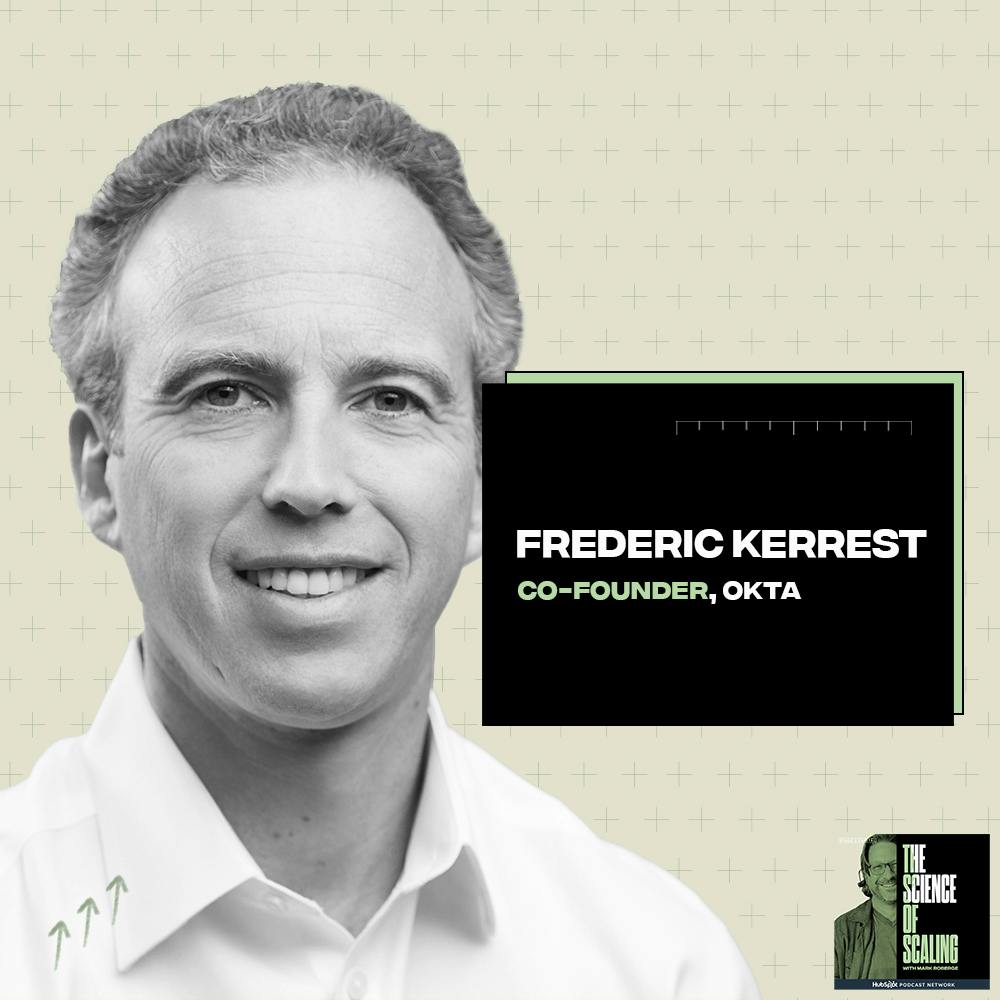
Get the Science of Scaling Database! Real Playbooks from Billion-Dollar Companies: https://clickhubspot.com/scienceofscaling Every founder needs to sell. If you're not comfortable selling, then get comfortable. I see too many founders think that once they've secured the first revenue & gotten ...
Get the Science of Scaling Database! Real Playbooks from Billion-Dollar Companies: https://clickhubspot.com/scienceofscaling Every founder needs to sell. If you're not comfortable selling, then get comfortable. I see too many founders think that once they've secured the first revenue & gotten Series A they can hire a professional sales team. Wrong. Today's guest Frederic Kerrest (Co-Founder, Okta) tells us why it's so important for founders to be salespeople, and the when & how to start building your team. Use referral code: SOS to request your spot at this year's HubSpot AiSummit 2025 in San Francisco on June 11. The Science of Scaling is a HubSpot Media podcast in partnership with Hubspot for Startups// Learn more about HubSpot for Startups // Produced by Matthew Brown
00:00/00:00
your number one job is an entrepreneur for any ways to sell if you are not comfortable selling you need to get comfortable selling founder selling it's a phrase that's gotten more popular in the last decade more and more product founders technical founders bee l that's their job in the early days the first dozen customers the first few dozen conversations stay close to the market get the beta get the design partners get the first revenue but i think the mistake is they think it's over once that's done once they get the a once they hire the professional team no the founder still has a role not just with the customers the investors and selling them in the buying the vision but still in the funnel hit the revenue with the reps probably one of the best in the businesses freddie ke the founder of o today in our last episode of the season we're gonna unpack how he magically navigated those waters and bra o to a successful ipo i'm mark be and this is a science of skill so hey freddie welcome to the show thanks mark thanks for having me it's thrilled to be here long time or first time caller well thanks man you've been so supportive of everything and it's awesome to see all the great success let's unpack it like talk to us how was it was the first aviation during the classroom my cofounder todd mc mckinnon was the head of engineering and product at salesforce while i was there he started o three so the year after me and he was there until o nine when we started we started o second year second semester at mit we started working on it together kinda dating in that spring spring semester right before i graduated and we said hey you know what we're not exactly sure what this integration is gonna be in fact at first it was an identity where we ended up it was system management it was something else but we said hey we think there's something here and let's go try and figure out together and and that was the the founding of vodka well you capitalized at that time are you guys doing nights and weekends ramen noodle bootstrapping or did g get check a lab yeah no seat checks so we were the seat checks we both no checks into the company and then we raised a friends and family seed round when we raised seed round of a million bucks in the summer of o nine and and that guy was going when did you decide you wanted to start like trying to charge for the thing yeah the first years was definitely hard i mean first of all the macro was hard right this is the great recession or whatever so people are not buying software people are not investing you know it was although it turns out in hindsight obviously we're were geniuses because you should always start these kind companies during downturn heck but it took us like two and a half years to get a product that was really out there that could work that could work at scale with hundreds or thousands of users it is very common that these more like it ops devops like more middle layer take longer to get to something that can be sold because there's such a high bar for security you talked about the million dollar angel check i'm assuming that wasn't enough to get to you know this product being ready these two year journey can you talk about how that unfolded for sure we raised a series a so we raised a million dollars of convertible debt in a in a you know safe in the summer of o nine and i'd spent a little bit of time in venture capital why was it mit working at hu win lab venture partners now known as aspen adventures working for mark g who's actually the chair of the mit corporation now everyone said well don't go back to business go for your second year just stay in venture capital and i said well that's interesting so i use the opportunity to go out and meet actually twenty different venture capital and they said well do you wanna get a job and i said no i'm going back to my mit and then i'm gonna build the company but it was great because then i'd met them so at least we have like a way to you know to get to know them but one thing in particular that's stuck with me and my time of bench capital was entrepreneurs did a poor job of under promising and over delivering they'd come in with these giant plans and say i'm gonna crush this i'm gonna crush that and then they'd show back up six or twelve or twenty four months later and they'd missed their massive plan and they'd still done well but it had missed the the promises they'd made to the investors and the investor was like well whereas if the dynamics had been shifted and they'd set a lower bar and come in and beat that bar would have been up into the right hey folks just mark here yeah this is what i really see amongst serial entrepreneurs and even like vps of sales and cro like the lesser experienced folks are just overly optimistic like promise in the sun and i fell into this trap myself but like once you get experience and you seen this a lot in like really good like football coaches for example and that's what i did like we had one up here new and then bill ba check right like who was famous for this where it's like when i showed up to the board and gave the update you couldn't tell if i missed by twenty percent or hit beat by two hundred percent it was just the same thing i like hey this is what we did well this is what's off this is what i'm worried about and this is our plan that's what they wanna hear they they they know that not every business crush every quarter and our business business gonna hit their every single plan but they just wanna make sure that you're on top of it you're diagnosing it well you're being realistic about the expectation and freddie is crushing this out of the gate he's managing a seed funded of business as if it's public let's get back to him but instead you should probably set some metrics that you can beat and raise just think about being a public company when you're a seed funded company basically i'm like okay i'm gonna beat and raise every quarter every six months i'm gonna beat and raise the number just like you do when when you have earnings you know you always have a chance to reset also right after a financing so you can have this whole plan and then right after the financing you know this is a little dirty secret that our venture friends is not gonna like but the reality of it is that first board meeting after the financing has closed you can come in and say you know what we really grab the plan and i think this is where it's gonna come in and i know it's twenty percent lower than what you have in the in the data room that you did the diligence on but i think this is a good plan and kinda reset from there love it love it alright so let's get to some of like the go to market stuff great so like talk to us how okay fine andrew ci h like give this gives the check you're building the todd's building the product you're yeah like what how is that how is the go to market developing in parallel in these early early days you know just living and learning and talking to people i think one of the big big mistakes that entrepreneurs make especially you know very smart entrepreneurs will sit there and there ivory tower and build something and say you know it's kinda like the kevin costa movie if i build it they will come for dreams it's actually that's not how works yeah how it works in particular in enterprise software raise you have to go out and you have to talk to these folks there's a couple good books that i recommend people look at zero to one is a good one peter t the four steps of the epiphany steve blank kind of an older one from here but it basically just says hey go out and talk to people and understand and and show them show them drawings show them pictures show them documents show them the product we did that so starting in i think august of of o nine for four months i had a monthly plan where i had to go talk to eighteen net new it professionals and just talk to and say hey what kind of problems do you do you have this problem mh would you use this would you buy this you know how would you think about this some months i missed my number i had them all c color coded i still saw i i pulled this out like six months you i was looking at it it's like green yellow red for each of the names and what date i talked to them this is just like classic you know pursuit of product market fit in the signs of scaling framework is like yeah go in front get you know eighteen calls a month and yeah they're gonna gravitate small that's fine as long as they're in tam that's who we get in front of he's not going and pitching this is my product you know what do you think he's he's talking about problems in fact he's leading in with like i've been studying this particular space i'd love to share my findings perfectly aligned with the awareness stage and gets them talking about the problems you can understand if you're even folks on the right problem in reading the market wide before you actually present the product and then finally like he's getting the meetings through the network we need a hundred meetings that means we need to reach out to three hundred people and of those hundred meetings we're gonna get twenty customers so he's comb the alumni network his password network his vcs network we're that's how we get to those first means we don't need to stand up this like very sophisticated outbound cold calling or inbound marketing program at this point we need to achieve product market fit and get those early beta customers this is the science of scaling pursuit a product market fit down to the tee let's get back to freddie it was super valuable and it was just it was like you know no one's gonna talk to you two guys in a trick duck in a garage so it was using the networks it was banging the phones it was like yeah that's why what they wanted to unpack because a lot of the founders they're just sitting here being like how the heck did you get in front of these people yep help them help them get that together you are an sdr r you are a sales development rep i mean your number one job is an not for ways to sell if you are not comfortable selling you need to get comfortable selling mh now i'm not saying you need to become a seven figure ac sales rep right but you need to be comfortable convincing people and talking to people and you need to get out from behind email well they didn't get back to me well what do you mean well i send him an email i mean how many personal emails you get every day mark personal emails hundreds emails what other people want you to do it's not what you should be doing you need to be able able to become a communicator on the value of what you're trying to build it's true for hiring it's true for raising money right mh you gotta convince investors of what you're gonna do it's true for everything all the time you know is a practice of going through my linkedin network think about what jobs you had what those alumni networks are and i was just inside the university databases i was inside linkedin all day long cold calling people figuring out what email tag worked right highlighting what i known in the past and then the last big thing i would say is in these kinds of things people are willing to help you but point out to them what you can bring to them to make sure it's like a two way thing so when i call you i hey mark i have this new product i'd love to show it to you you're like okay great yeah maybe i'll do it i mean i know frederick if someone asked me is a favor if i say hey mark i'd love to update you on the latest of what's going on in ai and cyber cybersecurity and so valley by the way i have a product that i think is addressing some of these issues and concerns and i and i'd love to bring it up to you is it okay if we schedule twenty minutes i'm happy to start with the ai cyber piece and answer any questions you have turns out then if you're willing to do something back the other way of making a two way street you'll get a lot more and better response one of the really good things i like about steve blanks approach is the hardest thing in business is separating someone from their wallet that's the final decision point do they write the check do they cut the budget and that's what i like to do like even before i have the product right we've talked about in this past but it's just like okay steve thank you so much for el elaborate on the issues it's actually interesting that you know what you talked about is just like the seventy three other people we spoke to and we're gonna launch that product in two months and it's gonna be like fifty thousand dollars a year but we're just looking for five design partners to sign a letter of intent to be our first five design partners in exchange we're gonna give you a ninety percent discount at five thousand dollars would you sign that right now no i won't now the real stuff happens or yes i will i'm dead serious this is really good stuff but by pushing them to separating them from their wallet gives us the real feedback it's a differentiation between a false positive and a true positive let's get back to freddie you're like oh would you use this product oh yeah of course okay would you use products i charge you a hundred thousand dollars like whoa whoa whoa whoa wait what and so figuring out what what is really the problem what people are really willing pay for which usually is pretty simple right in enterprise software you're usually increasing revenue you're decreasing costs you're enhancing security like it's not too hard to figure out the roi return on investment the tc total cost of ownership buckets of what it could possibly be but really identifying that and then helping them stick a number on it this is why i'm gonna buy your thing that's gonna help me build more and grow more and sell more because i'm gonna save a bunch of money where i'm not gonna get hacked or whatever it is just figuring out what that is those are the key key parts of early sales hi i'm francis fry and i'm anne morris and we are the host of a new ted podcast called fixable we've helped leaders at some of the world's most competitive companies solve all kinds of problems on our show we'll pull back the curtain and give you the type of honest unfiltered advice we use usually reserved for top executives maybe you have a coworker with boundary issues or you wanna know how to inspire and motivate your team no problem is too big or too small give us a call and we'll help you solve the problems you're stuck on find fixable wherever you listen to podcast i imagine some of those early conversations with the it director you didn't have anything to sell them yet no was there ways to push them toward like okay now let's let's see if this is really a a false positive or true positive first of all talk let's talk a little bit about enterprise sales enterprise sales is not transactional you know buying a pencil transactional you go to a store you wanna buy a pencil you don't wanna buy a pencil it's three dollars it's very simple so you buy it or don't buy head enterprise software is not that way you're not gonna walk in oh you wanna buy my cyber cybersecurity software for fifty thousand dollars you don't wanna buy no it's a process and so a lot of times enterprise sales is relationship sales especially in those early days and so it's like who's the person and what do they care about and what are their goals and what are they trying to get done inside a company and you gotta remember in enterprise sales a lot of times the goal of the meeting is to have another meeting mh so i think that you know when you're pushing someone towards it to use your terminology what you're really doing especially early when you don't have product is you're just trying to see if there is a potential demand for what you're trying to do back in the day it took a lot longer to build product today you can build products a lot faster and you can build a much more inexpensive so i would actually argue that like the lessons that we learned there should actually be modified for today's world so today it's like you should have it up and running you should be able to spin the core of it up at least so that people can have an idea of what you're trying to do and how it could be valuable to them from the get go right and so you you can do that much more quickly much more something effectively today so but yeah you're trying to get them to say okay is this valuable to you okay what are the top three problems you have is this one of the top three problems you have and then understand i mean you know we should probably talk at a very high level about sales methodologies i mean just understanding basic sales methodologies in a lot of times today i can think of multiple times this week already when i've talked to technical founders who are ceos and i've said hey well what's going on with your sales process and they're like you know talk out what what what does that mean sales process i have a deck that explains what my product does that's what my sales process exactly totally oh and at the end there's an ask i think that there has been a great refinement of sales methodologies and sales processes in last twenty years too that have that are very advantageous to today's technical founders i advocate something pretty simple like medic which you can look up right which this approach yep it's perfect we actually made a little more complicated we use med pick so you can start add in different pieces but something very simple who's buying why are they buying what's their process are you replacing something or increasing revenue or are you creating new you know new category is it a greenfield opportunity are you gonna be more evangelical or is it gonna be very this is a better mouse top than what you had before and it's ten x better who's who's gonna be your coach right who's gonna be your champion what's the difference to your coach in a champion and by the way who's trying to like jam you and you're not there you're get guaranteed whatever super innovative product you're bringing to market is gonna upset someone's apple cart yeah the sales playbook is not a presentation about your product about the features and benefits it's how you navigate this conversation it's how you qualify how you discover it's how you uncover pains it's how you understand if this is a champion or a coach and yet med is perfect for them right metrics economic buyer decision maker decision process identify pain competition great for complex enterprise sales and he customized it to med pick which is a popular customization so point number one you need that point number two you start with the vanilla one and you can customize it to your business you add one more point you take away one right other popular ones ban budget authority need timing super simple i like to have most people start there especially if you're not doing enterprise sales you can try from winning by design you could do spice situation pain impact critical event and then a decision right and then or gp that's where we used a hubspot goal plan challenge timeline really great for discovery but bottom line is hoping you're getting a better picture of like the sales playbook is not the deck it's more complicated than that it's really about understanding the buyer their qualification they're pain their ability to make a decision just get back to freddie and just like understanding those little dynamics inside companies is very very valuable on it it's and it's not rocket science but it's tract problem you have but you just have to know what to do and when we were talking you've told me a few times about the tulsa oklahoma oklahoma yeah and i think that's a great representative example of that to like when was that and what why don't you tell the audience how that unfolded february and march twenty eleven i know what month it is because the whole thing started because i got the month wrong so i we had this opportunity in this company oil pipeline servicing company and they were looking for a new identity management solution this is twenty eleven they bought salesforce they bought workday their big thing was workday but and workday day is a master was brand new functionality for us so we're just trying to get it to work and i remember they said okay well there's two finalist and they said hey come visit us in oklahoma i said great i'd love you so i go to the airport s and they said well this is a great ticket but this is the wrong month and i said what do you mean it's the right day of the week sunday and it's the right day of the month but it's the wrong month because february has twenty eight days they're like well this is great take but this ticket actually for the month of march and they're like this this the flight that you want the direct to tulsa from s o on sunday afternoon is full so i call the guy i call our the director of it who had set up the meeting with the cio and i said hey jeremiah i mean i remember his name i said jeremiah how's it going so frederick i said roy started to to bother you on a sunday but here's kind of my situation i'm at the airport and and they don't have a flight for you today and i was wondering is it okay if i if i just you know fly tomorrow night and and he's like well i understand you're predicament but that's not possible i said what do you mean he said well there's too finalist you're going tomorrow the other guy going tuesday we're making a decision so you gotta be here tomorrow morning i wish you the best luck and i'm like alright so i go back to the terminal anyway long story short i ended up having to get a red eye through chicago which as you know it's not really red eye have then transferring at like six am to a flight to tulsa in tulsa like eight am and it's a blizzard oh okay get to my hotel i go to the front desk i'm like okay i'm gonna i need a cabin like an hour or two to get to this and the lady laughs and i said i'm just asking for cap said do you see what's going on outside i'm like yeah it's blizzard she's like there's no calves coming i was like why i need to get like two miles down the road and she's like well i understand that and i'm sympathetic your plate but you know that's not gonna happen so i'm like okay i've got a suit and tie on i'm like hi so i put on my jacket and i walked down a regional highway and i get to the office i get to the place like twenty minutes ahead of time and i'm dripping wet and i walk in the door and you know the person at the front desk is like are you okay i was like yeah yeah i'm okay i'm here for a meeting with you know so and so and so and so and they're like are you but are you okay i was like yeah i'm great one and they're like you're totally dr so she was nice enough to go to their on site gym and got me a towel and i'm w out my suit pants and they're dirty and grimy me i mean i'm disgusting and i used towel to clean myself up as best as i can and i walk in and you know jeremiah the the the director it he's like well good to see him guy you can make it you know so it's so the cio walks in he's like what happened to you and i'm like you know it's it's a long story but the bottom line is i'm here we're very excited about this opportunity let me talk to you about it her blah blah blah two hour sales call you know went back to my hotel flew buffalo flew out the next morning and you know a month later we got the deal unbelievable man biggest question i get every day how do you build the next unicorn how do you build predictable scalable revenue growth luckily the folks at hubspot have put together are the science of scaling database real playbook from companies that have gotten to the scale of like forty billion in market cap the playbook cover key decisions like hiring compensation go to market strategy ic development even stuff on ai in sales all from the folks behind the fastest growing companies tech it's not fluffy it's super tactical you know my content you know my brand it's stuff that you're gonna pick up download and put to use within an hour so head to description click on the link and download your free copy to start scaling your business today talking about being a cofounder with a sales orientation and then build it and leading a team now you also hire our vp of sales yeah so can just talk about those dynamics as you hit that next stage of growth so first of all you always should be the salesperson as the ceo or the founder from day one i close the first twenty customers you need to not dis associate yourself with actually what's going on and you need to listen carefully you need to be the fe fox not the alligator right small mouth big ears not big mouth small ears and you need to you need to do a lot of active listening what is this person telling me what are these customers telling what's the trend that i'm seeing that they're actually talking to me about the challenge when you intermediate with a salesperson is salesperson trying to hit a number they're trying to hit a quota so they're gonna come to you and say we absolutely mark we absolutely need to build this feature yes you like do we need to yeah yeah if we build this feature we're gonna get this big customer and everyone else wants it turns out no one else wants it turns out that's the only customer that needs it and it's a really corner case and you're gonna use your precious resource of engineering and product to build this one thing that one person might want they might or might not even need it to do the deal if you're not talking to the customer you don't get all that you know beta on what's actually going on so that's the first thing second thing is you wanna build a lot through customer marketing customer success and to do that you have to build champions and you have to build relationships with these people who are gonna help you grow your company and if it's like upfront and early on they're buying into you they're buying you and your vision and your promise and your personality and your commitments i actually think i learned this one from salesforce i bet that's where freddie picked it up too i'm gonna even expand it beyond just general references and selling against the competition i invested time just like freddie did it's like okay i invested my time on the folks that switched from our competition right whatever we're closing whatever five hundred customers a month or five hundred customers a quarter but like here's two customers that switch from our competition i call them up thank you so much for the business very excited why did you decide to switch by the way here's my cell phone call me directly as cro anytime you need anything and by the way you're in chicago bill next time i'm there i'll i'll take you to steak dinner how's does that sound oh you're in seattle mary next time i'm there you know why don't we grab a coffee together why are they getting that tension the only i just wanna hear feedback i wanna stay close to customers i'd like to stay close with you and the only favor of return is maybe once a month if we have a customer that's considering competitor a and us i want my salespeople to be trained to say hey would you like to talk to a customer that's used both and i'd like you you be okay to take that call this is like a beautiful approach to competitive selling to build up those references and to really creating a high scalable high impact opportunity as a c level executive let's get back to freddie you always need to start number one number two you should always hire three salespeople once you kinda have enough that someone can get going and replicate what you're doing always hire in threes hiring threes because they're competitive hiring m threes because it'll be great learning for you all salespeople people even if you give methodology they'll have their own way selling you'll see what works better or what doesn't work and then finally you know you can put a score board up and they're very competitive people and finally you don't know what the quotas are you're like oh quarter should be a million bucks we've got three and one does one point one one does three point six probably three million dollars so just so much more learning in that in my opinion it's like after that if your roy sa traction success it probably makes sense to hire your first sales manager we could talk about the criteria the qualifications who you're actually looking for who you're not looking for if you wanna hire a player coach who carries a bag but also manages the first three that's okay to if it's super technical you might have to have a sales engineer to and then you slowly build a machine yeah i love the i wanna add one more thing on salespeople which i think is is misunderstood people say well do i have enough pipeline to hire salespeople and what you'd be surprised about is that salespeople create pipeline in particular in enterprise and in particular in the field so a lot of times i'll see people are saying yep my enterprise sales motion is working and i'm selling into upper mid market lower true enterprise i'm thinking of hiring a first few salespeople people who i don't know if i should hire one in dallas in chicago just yet because fill the blank and the answer is maybe but maybe not and you gotta realize that when you're hiring a salesperson in dallas if you're hiring the right person they probably been their twenty years they probably have a bunch of connections they probably know a lot of people they probably built a lot of really successful relationships so actually hiring that person of course you need some pipeline you need some marketing coverage you need some event coverage you need some inbound lead flow you need some partner network to generate some opportunities for them but you be shocked that that person's also gonna create their own pipeline because they're gonna call the last ten buyers who are now good friends of theirs who they bring to sporting events who they go to cook off with and they're gonna say hey actually i've got a new opportunity for you mister missus customer who i've worked with for ten years who trust me let me come and show you what i'm up to now don't say yourself oh man i can only hire sales reps once i have pipeline coverage and if you wait for that you're probably too late that's a great point especially at this day with like the age of p at m q and right so much more dominance and heavy handed role by marketing it's not always that dependency interrupt and by the way the agents are not gonna be buying seven figure deals from the agents anytime soon so enterprise software where you're trying to do six figure seven figure eight figure arr deals will for now and for the rest of my lifetime be done between people it's not companies buying software from companies at that size it's people buying software from people and that's why it's so important is the founder to understand that to identify associate with that but also to realize that like you're gonna be creating these i still have amazing relations with customers this sir as customers fifteen years ago where now we go we go skiing together or we'll share book recommendations or or whatever else it is and so you know these are just people they're trying to solve a problem and hopefully you have them for them but also you can build a great relationship the ai is common and what we'll talk a little bit about that but enterprise sales as a practice as a profession and as an expertise is not going anywhere alright now let's talk a little bit we got like five minutes or so ai like what are the well you can go in any direction whether it's like challenges to the go to market playbook you know future and cybersecurity also like you and i live through the on prem to cloud transition which you can draw some historical analog to try to po on what's gonna happen in the you know cloud to ai so you whatever you're excited about i think that there's a lot of tools and techniques that processes and systems that salespeople people frankly can use to make themselves more efficient and effective to increase you know their value to companies but without worrying that the ai is gonna replace you so certainly you know let's talk about some specific things i think it'll certainly help sales people in my opinion in ways like focusing qualifying leads faster making sure that they're focusing on what the opportunities might be that they can't see it's not obvious but maybe there's a company in there in the lead set that should pop for whatever reason i don't think it's gonna change look large deals are still gonna be face to face meetings and so people should realize that but i think there's a lot of ways to enhance all of the work i mean how much work did we used to do is sales professionals just prepping things and writing our meeting notes and filling out the templates and making sure that we communicated up and down our internal organization and a lot of that can be automated and that's great that's busy work you clearly had an amazing vision as you saw on prem switch to cloud yeah that led to the birth of auction now granted it it pivoted a little bit but do you see i don't know how to ask this like if you were to restart like that solve that problem in the ai world does it change and do you see a similar vision there in enterprise infrastructure and cyber cybersecurity i definitely see new opportunities that are rising all the time i mean i'm gonna i'm gonna i'm gonna keep out the ai native new innovation around l at those kinds of things because that's just you know foundational models and unfortunately all that value is gonna accrue to the hyper scaler anyway just because they have all the capital they have all the resource they have all the compute and they have all the data so i think that's it it's unfortunate but i think it's gonna be like the larger gonna get larger but when it comes to enterprise infrastructure and cybersecurity i think absolutely first of all the way to process i mean there's so much signal in today's world on who mark is where mark's authentic from how he's getting into services what services he's getting into oh mark's actually using ai which ai platform is he using who does he actually have the right to use that date in the ai oh when mark's logged into an ai interface and he's trying to do something what data is he actually authorized to go in access and how fine grain is that access so complexity it's almost like the matrix just went up at dimension on on addressing cybersecurity and a lot of the infrastructure opportunities it's just shocking to see like privacy privacy is kinda like you know fast follower in ai and i don't i don't know that that's necessarily ideal that could be dangerous that could be great dangerous so yeah i think there's a ton of opportunity yeah the other thing is you also see these cyber security and infrastructure software companies growing so much faster than we did you can see them going yeah i mean the the acceleration because of that opportunity is is is really amazing a big part of your motivation with these new ventures is your and philanthropic side you wanna talk for a second about any organizations that you're excited about that you're supporting we start octave for good when we were very very young as a company fact some of our investors thought that we should focus more on building the business in those early days and octave for good but all worked out okay this same is true yeah in in my personal life the books a great example you should all buy a copy the books your at ipo all the profits go to two amazing nonprofit that help black and underrepresented kids stay school using entrepreneurship and leadership there some amazing organizations build dot org is one of them guys too love it love it start in boston and then it it came out throughout north america the hidden genius project is an amazing group that actually started to hear my back yard in oakland and that has now gone out tipping point organization which helps poverty and homelessness throughout the bay area the green light fund which was started by john simon actually out of boston founder a general catalyst does an amazing job and then i mean there's there's so many others but i think it's really important especially in this day and age when some of the federal and local funding might be on hold for a little while that those of us who can support these organizations continue to do so so i appreciate you bringing it i think it's way important thank you for being supportive of so many of my ventures including you know coming on in the show and this has been such an important gem for the ecosystem in enterprise sales in general go to market and how to build a unicorn so thanks for being here freddie thanks all for amy mark i really enjoyed it and appreciate the opportunity alright that does it for today folks our episode was written and produced by my favorite producer matthew brown editing comes from patrick edwards the science scaling is a proud part of hubspot media and if you like what you heard today make sure you follow or subscribe to us wherever you're a fan of the show and if you're a founder ready to scale check out my bc firm stage two capital we are backed by over eight hundred cro cmos cc from the best companies in tech and we're ready to help with your scaling journey okay see you on the next episode today's episode is brought to you by hubspot for startups right now with hubspot for startups eligible startups can save thirty to seventy five percent on the ai powered and connected crm that two hundred forty eight thousand plus customers including some of the fastest growing startups trust to increase leads accelerate sales and streamline customer service grow better and scale smarter visit hubspot dot com slash hubspot for startups or click the link in the episode description
38
Minutes listen

Get the Science of Scaling Database! Real Playbooks from Billion-Dollar Companies: https://clickhubspot.com/scienceofscaling When budgets are tight and every rep needs to perform, you need force multipliers, not more headcount. Sometimes you need Rule of 40 -- a private equity orientation t...
Get the Science of Scaling Database! Real Playbooks from Billion-Dollar Companies: https://clickhubspot.com/scienceofscaling When budgets are tight and every rep needs to perform, you need force multipliers, not more headcount. Sometimes you need Rule of 40 -- a private equity orientation that can still lead to great success for the founders, the executives, and the investors. Mark Wayland (CRO, Box) talk about how only a few months into his grow at all costs company he found himself with an activist investor and a pivot to Rule of 40. The Science of Scaling is a HubSpot Original Podcast // Brought to you by HubSpot Media in collaboration with HubSpot For Startups // Produced by Matthew Brown.
00:00/00:00
hey folks quick plug before we get into today's episode i'll be at the hubspot ai summit twenty twenty five in san francisco on june eleventh this is an invite only event that's bringing together some of the top founders enterprise leaders and investors in the ai ecosystem i'm joining some colleagues from rep lit and live x ai for a session on how autonomous agents are starting to disrupt the saas ecosystem and what it means for go to market product strategy and how we build software in the next decade i've got ten invites to share with listeners of the science of scaling if you're building in this space or investing in early stage ai and think you should be in the room request a spot with the link i'll put in the description and make sure to put science of scaling in the referred by field i'll review and handpicked pick the ten folks who will get approved hope i see you there that's the challenge rule of for you it's very constrain you have like half a point to move on one side or the other you don't have ten points to throw around like maybe had in the old days we strive for the unicorn the triple triple double double the venture capital outcome but it doesn't always happen that way in fact it rarely happens that way we need to pivot we need to pivot the business model and we can pivot to a rule of forty a private equity orientation that can still lead to great success for the founders the executives and the investors we're gonna unpack that today with mark whale the sierra of box and stage two capital lp as he pivoted he thought he was gonna hyper scale but then the macro economy fell apart and they needed to pivot to a different style i'm mark and this is a science to scale alright so mark hey good to see you welcome to the show great seeing you thanks for having me you've had a a number of amazing runs at some of the best tech companies out there more recently boxed maybe we just start at the beginning you know paint the scene on like how box came up with you how y'all got introduced and what made you jump in it was right about six years ago this month that a recruiter reached out to me and i was at a stage of my career where i had decided that culture was i think the most important thing to me in my next role and after talking to steph who hired me who was the coo for kind of my first five plus years here i just thought you know these are people i can work with and that ended up being you know arguably the best career decision i've made in the last thirty two years is that sort of authentic to you and your preferences or is that is there sort of like a a stereotype you're looking for i suppose in order for me to be my best i have to work with people that are passionate and committed and aren't coast or vest in peace or all these things that we talk about that you see in some companies i wanna work with people that are smart and hardworking working and passionate about what we're doing and when you have people that are in that mindset you can do amazing things love it so a little bit of like what you see is greatness but also what's right for you yeah alright let's move over to some of the execution side obviously for you to make a bet like this you must have been quite optimistic sick about the role and the potential perhaps even some of the impact you could make we made a run at this market at salesforce when i started there in the o seven zero eight period and we kinda made a run it with a product called salesforce content that we later abandoned in favor of some brilliant moves in service cloud and marketing cloud and everything else so i was familiar with the market so i i arrived in two thousand nineteen with you know grand plans to accelerate growth and then three months after i arrived we got an activist investor and i think it is applicable to start because our experience in working with the activists were a great lesson for the rule of forty world that came upon in the whole market a couple of years later generally when an activist shows up they have a working thesis which is this is a company that's probably not growing as fast as we think it should be and they're spending too much money to put it really simply and so you know they come in and through moves that i wasn't directly involved with they basically say you know you you need to grow faster and you need to cut cost and if and if you don't you you're not gonna like the way it goes the as i think the simple version of it so we were you know not grown as fast as we should have at that time and we felt that way as well and we were definitely spending too much money and the music stopped on that for us and then it did for the whole market ru over forty but for us the music stopped a couple of years before it did for the rest of the world hey folks just mark here this sounds like a big company thing activist investors switched to rule of forty but there's so much important learning in here for the startup up ecosystem okay so first off let me just like have some deeper definitions here rule of forty so rule of forty means you add your growth rate plus your profit margin and it's forty or above your good and if less you're suboptimal optimal highly used in the private equity world and in some cases they even apply if you're negative margin right so you could be growing sixty percent but have a negative twenty percent margin and still be rule forty some depending on who you're dealing with as an investor come we also have this activist investor coming in who's forcing a contextual change on box and mark from g all cost to operating within a rule of forty mentality the startup ecosystem we do a startup up we raise venture capital and if you raise venture capital you better have a blitz scale plan you better have a grow at all cost plan that's the expectation however two three four years in ten percent of the time it works out ninety percent of the time it doesn't the problem is we don't change the playbook we don't change the system even though it's very clear that we're not a blitz scale that we're not a grow all cost that we're not gonna be a ten billion dollar company we still apply the same go to market system design and approach wrong we got a shift we gotta a shift just like what's happening here to mark with the activist investor we have to shift to a rule of forty we have to change our go to market system to salvage this business to be default alive and it gives us a shot a real shot i'm talking like more than fifty percent of the time to return hundreds of millions of dollars to the founders the employees and the investors or get it back on the unicorn approach that's happened we've had other folks like henry at zoom info where that has occurred but we're default alive we have to contextual shift so that's where we're gonna unpack with mark on what are the details on making that happen let's get back to him we had to take a lot of cost out of the business and we did so fairly quickly and with less pain than any of us expected because we did have a little too much fat in the business and in a pre rule of forty world you know companies like ours if you saw an opportunity whether with a product or with a market or an initiative you could just throw five or ten people at it and give it a go and see if it worked or not and a lot of them would work and a lot of them wouldn't and it was sort of okay but what happens when you have to focus on profitable growth like driving growth while making money which is what we all have to do now is you just have to be much more measured in the decisions you make you can't just you know throw stuff at the wall and what we found i think was the big lesson is actually you know being profitable making money is a good thing but the real waste when when you are doing all these experiments is that every one of those experiments every one of those initiatives requires all sorts of inter lock meetings with your executive teams and so when you're an executive in a company you spend a lot of your time going from meaning to meeting to meeting getting updates on all these projects and many of them are going to work so not only do you get the savings but you actually free up so much of time of the time of your executive team to focus on the core business which is what is really gonna drive growth for the company biggest question i get every day how do you build the next unicorn how do you build predictable scalable revenue growth luckily the folks at hubspot have put together the science of scaling database real playbook from companies that have gotten to the scale of like forty billion in market cap the playbook cover key decisions like hiring compensation go to market strategy ic development even stuff on ai in sales all from the folks behind the fastest growing companies in tech it's not fluffy it's super tactical you know my content you know my brand it's stuff that you're gonna pick up download and put to use within an hour so head to description click on the link and download your free copy to start scaling your business today coming out of what you know maybe we call it a blitz scaling mentality or grow at all cost mentality and you're you know now you've completely shifted and you're reflecting on some of like the advantages of the shift the silver lining come the shift some point we we might swing back to a all cost and in fact some of that's happening in a lot of that's happening in ai right now and if you went and join one of these ai companies can you justify that i think this is a healthier way to run a business you know when when cost doesn't matter then your teams roll up to you lots of growth initiatives and you can green light all of them or eight out of ten of them and they don't get the level of scrutiny that they should but when you have cost constraints then a lot of really great ideas come up and the hard part about the job is which things you can afford to say no to not what can i say yes to you know we also have to just depreciate why the blitz scale and the growing a cost exists and why it is advantageous if the context is sued for it i've never really like i gotta more deeply frame this and like get this into the book but like let's just kinda r within the context that mark is giving us so the typical counter to the rule of forty is you gotta get out there first you gotta be the first one to raise all the money and the first one to have the tech crunch in the wall street journal article and that's gonna allow you to get all the best engineers and to attract the best salespeople and to have customers re recognize you as the category leader there's huge value to that if you can go and oftentimes that works out it creates big big big businesses but the counter of that is sometimes we go too far right like i think we'd all agree if you you know raise a seed round of capital and you're at a million in revenue burning a billion dollars in the next year is too much we'd also agree that burning a hundred dollars is too little but where are we in between and i just think that we take on too much for what our business is telling us in terms of our capability and you know let's say we get pulled off that track and we continue to burn and that flywheel shuts down and we never grow into that valuation then we're gonna regret it unfortunately mark is here catching that sooner with the activist investor and recognizing that is a different way but i just wanna make sure that we understand both sides shouldn't always do rule of forty should always do grow at all costs we should listen to the signals in the business and the market opportunity and do rut right for our context and opportunity alright let's get back tomorrow i know that we make data driven incision on everything literally everything that we do is a data driven decision how much is this going to cost and what's the return going to be on it and win and not these you know five year horizons like you you just have to be much more measured in where you invest your time where you invest your resources what did you have to change to adapt from this site grow at all costs through all forty at salesforce it was very much in those early days i don't know what it's like now we were we were big believers in distribution capacity like just like using simple math and you know the stuff so well like if each head is worth you know a million dollars a year just to make the math easy and you wanna get to a hundred million dollars and you need hundred heads you know it's just like right and you kinda added the you sort of added them in q one as soon as possible yeah you hire as one hundred and then and then if things are going well you hire more and it's this linear thing in the go go years we pause hiring for a couple of quarters and then i think after the mortgage crisis we pause hiring for a little bit and then a few quarters later we didn't have enough capacity and we're like we're gonna never pause hiring again but like that's over because if you don't make the reps successful then then you're in trouble the world that that you and i were in when you were hub hubspot those early days that i was at salesforce when i started there people were buying their first at saas app or their fifth or their tenth or their fiftieth and now the oc reports says the average enterprise has a hundred eighty seven saas application so it's just that the buying motion is different and so this idea that you can just like never stop hiring you have to have really good onboarding programs really good sales enable capabilities you have to have robust lead gen capabilities like the whole go to market system that you referenced earlier i think needs to be built with much more scrutiny than before and then of course now we're in the age of ai you know a lot of my friends from salesforce are now qualified and you know there's all these companies that are doing ai that world's changed right i don't i don't have to have the same sdr str capacity that i did before because i can use ai tools and so then if i can have a different ratio between sdr str and aes do i take that as savings or do take that to fund other initiatives that maybe i couldn't forward before the grow at all cost it's like okay you said the easy numbers hundred mil we need a hundred res produce a million each let's get them as early as possible and we'll weed out the folks that don't ramp and then if it's going well we'll add them we'll add even more mh but in in in a rule of forty what it what what happens in the planning process that's different on the ae front that part of it has not changed a whole lot right you still do need distribution capacity the pacing of the hiring can change based on if we're running hot if we're running cold how the numbers are going it's not just a green light to hire or hire or higher like it's been in the past and then it's all of the supporting teams that are a little tougher these days when when budgets aren't wide open so whether it's s ratios you know we sell with partners as well so we have reseller we have is partners we have si partners you need people to manage those relationships those are not unlimited head count as not that they were unlimited before but it was more generous and you know basically when you go through annual planning you fund the aes and then and then all the other roles you you know i i i want ten i get seven and that you get that sort of a conversation across every one of the supporting roles that you need in order to make those ae successful and so it's just it's just constrained which i think is healthy to my earlier point that just means that mh everything has to have a business case everything has to have an roi if you hold on to this belief that we are in a challenging environment you know this quarter this fiscal year and it's going to be different next year you're gonna be sore disappointed yeah mark's story and box right here this whole like you rule of forty versus grow at all costs the pacing that's is really coming a life for us right out of the science of scan methodology in terms of like how fast can we scale i mean we've always kinda joke it like the typical answer is like we gotta a triple we need a hundred million our reps do a million each so we need a hundred reps let's hire them in the in the beginning of the year according to plan and just cross our fingers and see what happens and if it goes well we'll add more and if it doesn't we'll lay people off and miss our target like this just seems weird you know so what what mark's doing here is he's looking at this each quarter right and we and we have an opportunity here as i'm opposed to like sitting down and saying okay we're supposed to triple triple double double because that's what data b did in their fourth year so let's do the capacity math higher that many wraps up front and go now let's analyzing using our speed parameter a product market fit and go to market fit to figure out how fast we're able the scale and we'll tweet we'll get a little aggressive on the close rates get a little aggressive on the higher and pacing like ten or twenty percent aggressive and we'll get to that hundred and fifty percent target but more importantly is once we set the annual plan that's not it for the year that's just our best projection as we're sitting here in november of q four on what we can do and we're gonna reevaluate that in march or early april when the first quarter is over and we define what will we have seen after that quarter that would cause us to go faster what would we see that would cause us to go the same pace and what would i see that would cause us to go slower and we reevaluate that each quarter as opposed as hap hazard like living and dying by the knowledge we had in the business back in november even though now it's august and we know a lot more so just think about that annual planning and that phenomenon or more it's not like this constant t higher fifty reps this quarter higher no reps this quarter lay people up higher fifty reps again that just creates a lot of inefficiency in the business but instead we look at this as a red yellow green on a quarterly basis and throttle accordingly alright let's get back to mark you know we're not gonna go from twenty seven percent operating margin down to twenty two so we can put tens or twenty or fifty or a hundred million in go to market it's gonna be this measured growth and that's the challenge rule of for you that's very constrain like it's you you know you you you have like half a point to move on one side or the other you don't have ten points to throw around like maybe had in the old days hi i'm francis fry and i'm ann morris and we are the hosts of a new ted podcast called fixable we've helped leaders at some of the world's most competitive companies solve all kinds of problems on our show we'll pull back the curtain and give you the type of honest unfiltered advice we usually reserve for top executives maybe you have a coworker with boundary issues or you wanna know how to inspire and motivate your team no problem is too big or too small give us a call and will help you solve the problems you're stuck on find fixable wherever you listen to podcast i do believe that we blitz scale too much in the ecosystem i do believe that we grow at all cost too often and but at the same time i appreciate the why we do that but i'm i'm i'm kinda with you i think we need to retract to rule forty more often than we do but that said the arguments for the blitz scale the grow at all cost is you're going to attract the best people like you're going to like get the tech crunch article the wall street journal article you're gonna raise the big dollars you're gonna be known as the category creator yep how do you defend against that or compete with that thirty two years i've been in tech sales roles as as an ic and as a leader you you can have this sort of romanticized version of what your career can look like where maybe you get an early with a company that is white hot and you blitz scale it and you make generational wealth and your category creator and everything else it's just not the way my career played out who has done that i mean i literally like no no not no not i haven't in the sense that like while you go through yes on the surface yeah but as you're going through it yeah it feels like there's no pain no there's no great there's no there's no doubts exactly like there's i i've never met anyone where that was like a champagne party all the etcetera yeah no it's never easy and and so like i went to salesforce post ipo i went to box post ipo i've gone to companies in like this build and scale phase i never went through the like zero to a hundred phase i've been at like operational scale building repeatable motions you know i joined salesforce at four hundred million a i joined box at six hundred million so i've been at periods of scale and i never did that hyper growth you know one to twenty five twenty five to a hundred kind of a thing so i have an appreciation for it but i've worked in these kinds of environments so here's the reality is that most startups fail so i can't tell you how many hundreds and hundreds and hundreds of reps and managers i have hired that worked at big companies and then they went to three startups ups that wiped out and then they wanna come back to a company like ours and and i have found that working in a company like ours can build really really strong operational skills when you work in a company that's at scale that has financial constraints which all you know at scale software companies have now you build really really good skills and then if you're in a less constrained environment where you've got the market coming to you you because you have really good product market fit and you're a category creator and everything else i think the skills you build working in a company like ours or an not scale company will serve you very very well that's that's well said and now let's get it back to the go to market system design and explore whether changes occur at the tactical level as we make this shift so talk about the rep hiring profile yeah you know when you thought about like what you did at salesforce or what you were doing and right when you joined the company did it change at all when you had to take on this new operating mentality no my hiring profile is the same as the one that we kinda built when i was at salesforce we have this really fun opportunity to go work with sales leaders from around the world in all geographies in all segments and figure out like who are the top sellers and why are they successful and then figure out what the rubric is and we found out that the number one skill of successful salesforce sellers and this this must have been i don't know twenty ten twenty eleven twenty twelve across segments the very best sellers were really strong on business acumen and this should come as no surprise right because if you're selling business applications and it's a use case driven sale where you're selling to it and to lines of business you have to have high levels of business acumen you have to understand how to get to root cause of what the problem is customers are trying to solve it's not just a feature benefit sale and and the people that had had a high business acumen were very successful and that's the same year box and then the second thing and these are the most two important traits for me is grit the problem is you'd hire these people that looked right on paper and then they would fall apart when things got hard so around that period i really shifted my interviewing style to talk about losses like i wanna talk about the most pain and suffering you've had in your personal in your professional life and what did you do because when you come work for us it's gonna be hard there is a dramatic shift in the hiring profile for sellers in the grow at all cost versus the rule of forty and it's like it's it's trying to think how to explain this it's so subtle but essentially what it means is if you are successfully pulling off gold at all cost sometimes oftentimes it means that you are just crushing it on the product side on the marketing side on the demand side such that below average sellers are succeeding like what he's saying here with his study about the business acumen he's saying that they understood the business drivers the problems they weren't showing up and throwing up they weren't feature dumping this is the contrast between very good selling and below average selling very good selling being consultative when you analyze the first meeting between the seller and the buyer we've seen and endless statistical studies that the best sellers out there speak less than half the time they're asking questions they're probing for this pain understanding the business challenges and we've seen endless studies that show that below average sellers feature dump this is what we do this is how we do it either get on board or don't and that's fine when you're successfully blitz scaling and you've created this huge market demand but in almost all cases it comes to an end even he's even talking to here with salesforce where they're still doing great their brand is growing like crazy there's tons of marketing and happening but because they're growing so fast the territories have shrunk to like a hundred accounts in san francisco to two and guess what the show up and throw a person who can cherry pick and can get fifty leads in close four and make their quota no longer works at some point you have to pivot to a great seller to as mark says someone with great business acumen as he goes on to say someone can execute consultative selling as he discuss someone that can probe on pain and tailor the solution to that pain so that's gonna happen for sure when we shift the rule of forty is we're gonna have to up level our seller get rid of the folks that haven't learned the skill yet and bring in a world class team let's skip back to more and people that didn't have a lot of grit which she defines as the passion and perseverance for long term goals they would fall apart they would emotionally fold up their tent and they would do fifth through center of their number and then you would have to manage people out that looked right on paper i have found that an enterprise software if you find people that are high end business acumen and they are high on grit they will always be successful in any environment in any company in any economic condition i love that and i love i love the reflection back to the salesforce analysis and it's so applicable i think to this rule forty journey that you had to do let's also cover the demand gen side of the system mh so does that as you think about okay the systems you ran go at all cost how did demand gen work and then you had to shift to the rule forty did it change anything with demand gen strategy it did when you're doing your your planning for the next fiscal year there are some resources that generally don't get hit aes don't get hit and engineers don't get hit and everything else gets constrained and unfortunately marketing budgets get constrained way more than ae head count budgets do so that that is hard and i think it's really critical that the cro or your vp of sales and the cmo or your vp of marketing whether have the title or not but the functional heads of marketing and the functional heads of sales have to be very very aligned i love this i i love this like go to market system holistic sales plus marketing culture and it starts at the top the cmo and cro or the cmo and head of sales cannot be politically at odds with each other they need to be partners driving toward the same goal they need to sit in a room and agree how each of them is gonna measure their departments and there's no room for cheating there's no room for oh we missed because the leads suck marketing mess or marketing said oh we missed because the sales team sucks we feed them great leads and they don't close them now we have to like clearly define what is pipeline whether it's created from an sdr or created from an event or created from a content campaign and we have to agree what is a reasonable conversion from pipeline to customers to hit those arr target we're operating together and when things are breaking we're both taking ownership kudos to mark and their cmo on creating that culture that is clearly an important ingredient leading to boxes growth and success to skip back to him if you have people that you know say the leads are weak and if they don't use those words but if they have those thoughts you you have a problem or if you have marketers that are saying you know our salespeople can't sell value that you have to have a revenue team not a sales team and a marketing team but you have to have a revenue team and that's that's what i wanted you to like come at it from mark two is like not necessary closely associate the demand gen with marketing yeah but appreciating the demand gen can come from aes yeah it can come from sdr str that can roll up to sales yes so i'm kinda like as you it's look at that holistically how are they different it's really critical that we're all looking at the same numbers you know yeah and the the whole market has evolved around this like rc cmo attrition and i we are partners in in helping to drive the business as well as john is our chief customer officer and like the metrics that she runs her business on i know what they are and i agree with them and she knows what my metrics are and there's no we're there's no one that's using like funny math rather than taking the budget that you know you get the budget from the board goes to finance and you split it to go to market and then you split it to mark and you split it to sales we're having one integrated conversation about like here here's what the whole budget is for go to market and where and where should we place our bets and and you can't have any game plan on that it's gotta be one unified leadership team that's making those decisions on where the dollars go and you mentioned sort of like she knows how you're measured what you're responsible before you know what she's measured what you both agree to it can you elaborate on that we manage those numbers together but you know she knows that the pipeline needs to arr and i know that the arr needs the pipeline i think that's just having real clear alignment on what those metrics are in fact like right now i'm talking to you during a pipeline meaning that i'm gonna go to right the end of this meeting and and that's a call tell i apologize that's a call that she and i host together yeah and and and and we don't think of pipeline as being a marketing thing we think of pipeline as being a whole company thing you have to manage what the different sources are pipeline you wanna monitor those things but you can't overdo it there because then people start playing games and so i think that having alignment you know with the functional leadership on you know we have to go build x hundreds of millions of pipeline where do we go invest our dollar so we can deliver that result and then let's monitor it week by week you know throughout the year to see how we're doing do have to make some changes with people do we have to move some money around but making those decisions in an aligned fashion is i think the best practice what are these folks doing how are you what are you training them to do what do you hold them accountable to do did that change at all like as you thought about like what your vision for that was in twenty nineteen and then how it might have changed after the activist investor action did it change at all for us the really hard thing was we kinda got through the activist period really quickly and then ninth so they activist showed up three months after i got here we did all the cost cutting and then six months after that the pandemic hit but when the pandemic hit we all had massive cost savings right we all had no more t and e no more field marketing expenses and and that was huge huge savings and then it was just a hiring frenzy at that time lots of other companies were hiring our people like crazy and then magically or maybe not so magically during that period we saw a pretty meaningful growth acceleration which is pretty awesome like we were like crazy margin expansion relatively quickly while we accelerating revenue growth and then right when we were about to like step on the gas and refill the demand gen budgets what i i was an annual planning and i was like alright there's tens of millions come on our way we're we're gonna go then rule forty hit and so the challenge at that period when rule of forty hit and and at that moment and it was january of twenty two i think what it hit you know all the saas valuations got cut in half and ours kinda held because not because we were better than anyone but we had already done all the cost compensation work and we weren't over value ever so everyone else took a haircut that we didn't have to take if you have eighteen points of operating margin than they want nineteen the year and twenty the year after that that it doesn't go the other way you gotta you gotta get more and more margin as a public company and that's slowed down to the private markets so they staffed the chalk line on us of our operating margin when we were at our lean i mean very very lean then then we had to expand margin from that point so at a point where we had proven the growth thesis and it was time to invest we were constrained in our ability to do so so we had a couple of year period where marketing budgets demand gen budgets were almost flat as we are trying to drive growth and that was very very challenging the big change that we had to make is that every dollar that marketing creates cost money right because you have to spend money on seo on events and everything costs money but every dollar of pipeline that an ae creates in a sense is free because those heads are already built in your financial model so we really had to like pivot the the culture of the sales team to understand that you are demand creators you know your job is arr your job is to close deals and retain customers everything else but you have another part of your job and that's building pipeline because like think about it this way like in our company we have you know three hundred ish sellers we have like eighty cs they have to be pipeline generators as well and the marketing team is smaller than both of those teams so if we have a mindset that like marketing responsible for pipeline we're gonna be in real trouble one of the arguments i suppose that folks that wanna a blitz scale or grow at all cost is like you need a lot of this periphery experimentation to expand tam to explore with new products to explore with new demand ten channels when you started talking at the beginning the our discussion that was some of the stuff that got caught does it all get caught or are you just more disciplined around that experiment is that is it experimentation still needed can you can you talk through the how that flowed through the real forty culture yeah i mean to be clear it doesn't all get cut and in in years that i've been here we've grown from you know six hundred billion to one point one billion and we've introduced a ton of new products to the market and you know we've expanded from you know collaboration into electronic signatures and workflow and now the ai boom is is the most exciting growth period that we've been in and all those things require money you gotta hire the engineers to do it the product managers to do it you have to have pm you have to do messaging unit and positioning you have to enable the sales team and we fund all those initiatives we just fund them in a very measured way mh you're stepping into the investments as you show results rather than writing in an open check and you know check it in later i just wanna thank you for dropping that knowledge and helping us compare and contrast it in a very real and successful practical example and i i think i need to get you back to a pipeline review as well i i gotta go talk about pipeline right now thanks for happening me and yeah growth is a good thing thanks so much mark alright that does it for today folks our episode was written and produced by my favorite producer matthew brown editing it comes from patrick edwards the scientist scaling is a proud part of hubspot media and if you like what you heard today make sure you follow or subscribe to us wherever you're a fan of the chef and if you're a founder ready to scale check out my bc firm stage two capital we are backed by over eight hundred cro cmo cc from the best companies in tech and we're ready to help with your scaling journey okay see you on the next episode today's episode is brought to you by hubspot for startups right now with hubspot for startups eligible startups can save thirty to seventy five percent on the ai powered and connected crm that two hundred forty eight thousand plus customers including some of the fastest growing startups trust to increase leads accelerate sales and streamline customer service grow better and scale smarter visit hubspot dot com slash hubspot for startups or click the link in the episode description
40
Minutes listen

Get the Science of Scaling Database! Real Playbooks from Billion-Dollar Companies: https://clickhubspot.com/scienceofscaling You've navigated your company to unicorn status. Crack the champagne, ring the bell, and hang the banner. Only, months later the macro changes. Now, you need to pivot the mo...
Get the Science of Scaling Database! Real Playbooks from Billion-Dollar Companies: https://clickhubspot.com/scienceofscaling You've navigated your company to unicorn status. Crack the champagne, ring the bell, and hang the banner. Only, months later the macro changes. Now, you need to pivot the model, pivot the playbook, and pivot the team. Today I'm joined by Carina Brockl, (fmr. CRO, Aurora Solar) who faced these challenging shifts and tells us how she navigated them. The Science of Scaling is a HubSpot Original Podcast // Brought to you by HubSpot Media in collaboration with HubSpot For Startups // Produced by Matthew Brown.
00:00/00:00
hey folks quick plug before we get into today's episode i'll be at the hubspot ai summit twenty twenty five in san francisco on june eleventh this is an invite only event that's bringing together some of the top founders enterprise leaders and investors in the ai ecosystem i'm joining some colleagues from rep lit and live x ai for a session on how autonomous agents are starting to disrupt the saas ecosystem and what it means for go to market product strategy and how we build software in the next decade i've got ten invites to share with listeners of the science of scaling if you're building in this space or investing in early stage ai and think you should be in the room request a spot with the link i'll put in the description and make sure to put science of scaling in the referred by field i'll review and hand pick the ten folks who will get approved hope i see you there when the company is still small you wanna make sure that every single employee is motivated is in seat wants to achieve wants to get to where you are and i mean it every single one today i'm joined by k bro former cro of aurora solar and stage two lp she joined aurora in the early part of this decade navigate them to unicorn status and then boom the macro changes they had to pivot the model they had to pivot the playbook she had to pivot the team and we're gonna unpack all the challenges as a leader as she managed that adversity through the transition i'm mark be and this is a scientist free welcome to the show yeah what a pleasure to be here thank you for having me oh thank you for making the time so aurora was quite the journey in you know a very interesting vertical can you maybe take us back to the beginning you know a lot of our listeners are you know early sales leaders who might be or even salespeople who might be picking their first sales leadership job at a company and i think like i'm always curious speaking to someone like yourself on how they should diligence that opportunity there is the standard set of data points you can gather so i think the first one where i typically start is what is your arr what's your annual revenue it depends of course what business there is i would caveat a bit now ai companies the numbers are very different now so i would say the benchmarks that you used to look at in in this case it's a saas business towards what you're now comparing careful very different there's also very different expectations around it but the first set of data that i look at is how healthy is the business on anything attached to revenue especially as as a revenue leader stepping in and especially when you're looking through the sales of or a lens of sales what is retention looking like there is a set off kpis so that usually dive into here and then it's where do you want to grow into so what's the valuation right now of the company already what are already the expectations that have been set by the investors sort of vcs and then what i do you have to what are the expectations that it as a leader or a sales in your function that you're gonna step until and you have to grow into so i also of course ask for the growth numbers be careful again when you're starting from a very low base growth might look wonderful mh even even crazy numbers and growth but it gets harder hey folks just mark here pay attention to karina here she's showing quite a bit of maturity sophistication wisdom in selecting her next role you're know like that that diligence is so critical and and she's walking through some of the stuff that i think a lot of folks do well like okay where's the arr where's the growth where's the a dollar retention but that valuation thing is tricky even for founders there's this tendency to wanna just have the biggest valuation possible lower dilution i can start doing the math about how much my equity worth but it can get into trouble if the valuation multiples off you're joining a company twenty million high flyer ai company just raised it a billion dollar valuation it's happening okay that's a fifty x multiple on the the valuation to the arr i don't think there's any sector that doesn't return to earth at some point it's gonna happen so just imagine okay you're you're valued at a billion you're doing twenty and then you go have two phenomenal years okay like good years double twenty to forty forty to eighty you executed but guess what the sector corrected back to ten x now you just doubled twenty forty eighty and you're worth eight hundred underwater never mind all the obvious things about like equity options being off never mind the expectations and pressure you're gonna have to to grow faster than you're capable of so that's what korean is talking about here when she says doesn't make sense that valuation multiples is important it's not always about maximizing it it's about settling in into something healthy to set you up for success in that role let's get back to her you just need to be ready it gets every year you're doubling tripling quad i mean again different benchmarks now so that's what i usually spend as a first set that's where i spend quite a bit of time you know climate is it's it's good for the soul and that was a unique experience for you so talk to us about that when i joined aurora there was a mere three percent three percent of energy the us produced by solar and so so much opportunity is so much more space so much more to do here their technology is there the childhood had made huge jumps so the the price per kilowatt because of this because of the panel's getting so much better i'm not gonna get too technical but because of technology jumps and the hardware piece now the software i could get much much better too and these combinations just made that now all a sudden the cost of a kilowatt hour or kilo in solar reduced so much and that was so exciting for me so you had a really if tooth sides huge demand people more are conscious about climate but it be it's because it reduces the electricity build so that to me that's right and that's so absolutely and so i could get very very excited so huge room three percent i mean mh we can go grow so much more technology innovation make in solar or just the cost so much better and then real savings for consumers biggest question i get every day how do you build the next unicorn how do you build predictable scalable revenue growth luckily the folks at hubspot have put together the science of scaling database real playbook from companies that have gotten to the scale of like forty billion in market cap the playbook cover key decisions like hiring compensation go to market strategy ic development even stuff on ai in sales all from the folks behind the fastest growing companies in tech it's not fluffy it's super tactical you know my content you know my brand it's stuff that you're gonna pickup download and put to use within an hour so head to description click on the link and download your free copy to start scaling your business today yeah i wanna dive into one piece of that too that you said which i think is also seen almost all the time in a successful start up journey which is their their appetite to go upstream these startups ups come out and they they sell the small business is great great starting point and they their a rockets ship and at some point and this is the right call you know what our five ten fifteen twenty million of revenue when they they're higher when when you join it's like hey we should go upstream now what do you wanna look for to know that a company is ready to go upstream for you to come in and make that impact you have to dive into the product you have to understand is it ready for enterprise and now i wanna be a bit more precise enterprise and solar is companies they're not actually that big so solar installers typically there's a lot of small but then there is there's is a few in the medium but not that many and then there is there's there's a good cluster a very large ones so there's a nationwide installers who nationwide install solar panels the product needs to be ready to actually cater for more scale meaning that in the enterprise there is more requirements around security there's more requirements about does the product now not only within a small team but also all a sudden if you have five hundred people on the platform does it still work am i gonna pass these workflow and security requirements of the enterprise and it doesn't have to be perfect i wanna say that but the the company needs to be ready and you focus on the enterprise because the product will need work in there typically it will not be perfect and so you need to have that appetite to wanting to collect those things work with the product org to then take the product where it's right now to already sometimes it's already ready that's that's ideal situation and you just go out and then actually you know your market and you sell but most of the time you'll have to collect with the customers what's still needs to grow into that yeah this is assessment of going upstream and their readiness is important for many directions as the ceo founder board and karina joining and so you've seen a lot of these and the commonality you see amongst those that are successful hit many of these points number one they're what they call quote unquote pulled upstream meaning they weren't purposely going there yet but customers were showing up large customers like at the booth in the inbound just like we we love what you're doing we need to be more strategic and they're willing to be a design partner with you so oftentimes like if it's really ready you'll already see a couple logos there that are onboard maybe it's not a full rollout but that is a remarkable foundation by which to start the other thing is you don't want to commit to a revenue target right off the bat you have to repeat the product market and go to market fit journey as karina is saying here and that happens all the time as folks are over optimistic that the motion that they've built the go to market system they've built the way they generate demand the playbook the sales higher the comp plan the pricing model is only gonna need to be tweaked to go upstream to the enterprise that's usually very very wrong like we've got a reestablish product market fit and understand the gaps we have to reestablish go to market fit understand how our messaging how our sales hires how our comp plan how our territories need to change to align with this enterprise opportunity and the last thing we would be doing is walking into an annual planning process having not already reduced all that uncertainty and committing to a target like we're gonna do ten million next year in the enterprise even though we only have three beta customers so just have the right mindset around the path and journey and steps and the timeline it's gonna needed to be able to go upstream alright let's get back to k when i arrive on a job the first quarter what i do is just listen and i listen very carefully to what the organization is saying and then the second part is i listen very carefully to the customer but it's really just to listen where are the biggest topics and for for aurora it was actually really easy already so that the team was already ready they needed a bit more structure so there was the internal side where it was structuring more there were things like need territories what were they doing it they were they were around robin but they were too big at this point it just wasn't set up fairly it wasn't set up in a structural way it was hard for anybody anybody really didn't go to market to understand how did they get the set of accounts and so just just setting up a structure that is balanced fear is explained well that matches with the comp plan which just was a first they just see that clarity on that which takes a bit of time you know do you wanna make sure that your market you you not only do that in sales but marketing customer success is all brought along so that a go to market team can actually really operate on a joint territory philosophy really and and it doesn't have to be complicated can very it can be very simple can be very easy but just to have a structure and that the teams can can rally around and understand why do i have these five accounts and not the other five accounts for example for folks that are go through that because that's a pretty common i guess clean up or up leveling and professional that occurs and just to coach the folks that haven't gone through that transition mh i imagine there's a lot of like my territory socks this isn't fair the most important thing to me is transparency in this it can be geography it can be post you know so post codes it can be set size of the customer it doesn't have to be complicated it can be very easy but really transparent and communicating those are the one two three variables how we carve and how we how we how we select or how accounts get selected or territories get selected and then communicating that very transparent and that usually ninety five percent of the complaints go away by that and writing it down so that everybody can look it up having a good again nothing complicated but having a few policies just around hey if we have a dispute where do we go what do we do and then consistency consistency consistency i cannot say word out of word everybody just will settle into that if it's if it's set and it's consistent then people know what to expect and then that that already sets it up by the way no territory will ever be a hundred percent balanced i also set that expectation straight up it's just not possible you will also you know we call it a blue bird sometimes you know and a deal will will fall and nobody even thought about you can't plan with that and also being very transparent about that we'll do our best it will never be perfect but we have a set of rules we have a set of variables and so people can plan with it hi i'm francis fran and i'm ann morris and we are the hosts of a new ted podcast called fixable we've helped leaders at some of the world's most competitive companies solve all kinds of problems on our show we'll pull back the curtain and give you the type of honest unfiltered advice we usually reserve for top executives maybe you have a coworker with boundary issues or you wanna know how to inspire and motivate your team no problem is too big or too small give us a call and help you solve the problems you're stuck on find fixable wherever you listen to podcast what were some of the other execution items in the first two quarters i just also look at org structure you know we just looked at you know what are the roles we have you know you sometimes have a manager that actually has let's say they have a team off sdr str are outbound but then they at the same time they also manage the lead flow and they manage a system behind and they manage they manage events and what you wanna do is just make sure that people are you know that the workloads are makes sense that they're right that they actually match the job descriptions and so there is a bit of just assessing your talent making sure your talent is in the right spot because that sets your people up for for success they know what your job is they know how they're getting paid they know their territory so there is just some baseline things that you wanna be thoughtful and then you know i spent some time also about you know what is does motivate you you know what does what do you hear in the conversations and you know when the company is still small you wanna make sure that every single employee is motivated is in seat wants to achieve wants to get to where you are and i mean it every single one alright and then of course the the industry saw some massive headwind the macro changed and so let's let's talk about that story give us the context how far in were you where was the company what happened and then how did you react i mean mark the first two years at aurora we're hiring hiring hiring sorry i was for i was it was hearing about we you were you were like running all over the world that was insane yeah and i mean what a font journey but so joined around a twenty million we scaled all the way over a hundred million beautifully you know it was really it we proper rocket chip it's same you know you get the same feeling as i went as a salesforce someone as a box all you're trying to do is again structure give the give team transparency and in the in the craze you know and i wanna say that because sometimes falls back to the sidelines of course i hear sometimes leaders to talk about an amazing structures that they're put in place it's still chaotic you know it still has some mess chaos right that you know it is chaos even for the winners okay just if you haven't if you don't know this already i think it's really important that you you grasp this it's never easy even if you're building the next trillion dollar company it always feels like chaos customers are churning employees are leaving and you know hopefully they're gonna regret so just know that it's like if you're a change in jobs all the time because you're looking for easy street you're looking for that rocket ship that like champagne cli you know just easy quota payment it doesn't exist if it does that's temporary and it's probably not gonna be good for your company in the end so just know that it's always a grind the high level numbers you'll get a sense of and hopefully they're going in the right direction but the enable of that it's tough that's what we're signed up for let's get back to k switching to policy changes done and interest rate actually i would say interest rates is was so much the tax sector got affected in this journey yes yes so solar has this up and down swings and it will always have it it had always had it as an industry it goes up to the right mh but you're gonna have these years where it's gonna be tough and that's usually because of some event macro event usually happens so what happened a couple of years ago year and a half ago is yet had actually two of them compounding so you had interest rates practically all of the all of the financing volume was through loans and solar and and that basically stopped or had to read a shift once you had this the huge spike in interest rates because now it didn't become as affordable anymore back to my original you know cost are so great solar installation are great but if you can't pay the down payment if you can then your cat put solar on your roof the salespeople people in the solar company you're just struggling to actually tell a consumer tell car hey this is a really still a great this is still wonderful and great energy source for you and it's still cheaper but now you have to finance it through through a through a lease way more complex as of product they will caught a bit of guard and so we had to also because at aurora also integrates with financing options so you can actually in the software you can get you know your alone or or a p what it's called when it's a elise so you could see all of that in the product and we had to also switch quite a bit here because the industry was well it wasn't there yet and then you had a a policy change it's was called n it went from n two to n three so what happened is when you have a solar installation and you usually have energy that you're not gonna use is success that you feed back into the grid which is wonderful and where usually you get a dollar per kilowatt from from your energy provider they changed it it changes to a system where it went actually not as favorable anymore and so when you were feeding back into the grid you wanted to feedback actually a certain times where you could get more money back for your solar installation so the roi offer solar installation all of the sudden unchanged and that is big because now you have two two topics that actually change the economics and i go back to that moment because you see obviously it wasn't like you didn't know how bad was gonna get the ne three change was coming we you know we so you could see that already we were tracking it so by the way this is my i mean this is my job yeah so you need to track macro i need to track yeah what is going to happen in the industry but it wasn't it wasn't as clear how bad and what we didn't plaid well is the compounding compounding both interest and a policy change at the same time do you think you should have seen it or was just impossible like were were you kinda overly optimistic as a company you know what and i've been there too i think everyone has and i'm trying to like take away the learning here of like should should we look ourselves in the mirror deeply or react faster or is that just impossible first of all we hired so freeze we didn't hire anymore right we weren't just we stopped hiring the first step let's try to like get this demand and make it happen so we stopped just hiring that was the first step which was already you know we took down expectations we also corrected numbers in that year we actually really downsize our targets we and we did that for everybody but then we just didn't do it deep enough mark we should have probably reacted ways stronger way you know probably were always why it felt for me we were always one quarter but behind yeah i'm thinking about this one it's so hard i mean not only ever had it as an operator but i've had it so many times as an investor like are you reading the tea leaves right are you over reacting or under reacting usually under i i think the main best practice and pattern on excellent execution here is managing your business through leading indicators because at the end of the day you're gonna be judged by your lagging indicators in your outputs you're gonna be judged by how fast is arr growing what is that dollar attention how you know our customers happy are they renewing those are the outputs of all the work but if you can be running your operation based on the leading indicator activities of the sales activities that are leading to the pipeline and the pipeline that's leading to the forecast and the forecast that's leading to the revenue oftentimes you'll see issues three quarters before everybody else notices in the outputs and you can intervene and react that's what i see about the best in class businesses is they are shining spotlight and assassin over those leading indicators and reacting to those such that no one ever sees the pain and the changes and the pivot because they protected the outputs now let's get back to k so we did have to have layoffs yeah by the end of that year but we were holding trying to hold a lot best as we could we hired so many amazing people maybe you did and you you just don't wanna let go of that and and work workforce us before we get to that part because i think there are some companies that this gonna you know always the case we have to you know unfortunately the majority of seed funded startups need to go through a range like this mh but what about the training side because you knew the ne three change was happening mh how did you mobilize that quickly because the team's is quite large at this time it wasn't easy you know it big changes and big shifts and then you need to explain the product also better we work very closely with our product teams also just to get all these changes into the product batteries really started to become very very popular because what happened is and instead of feeding directly to great you would hold your the you would hold the electricity or you would hold your kilowatt wattage in your battery and then feedback at the optimum time during the day anyway we get the most dollar dollars for your for your wattage and so battery attachments to solar installations is what spiked so but then you need to have a product that also can actually can actually map that that that battery our product org worked really hard to get that into the product as fast as possible so that we could go and then also have that in hour in our solutions okay so now it becomes real and you have to make some cuts yep and talk through that process so you know in the industry we don't talk much about it and unfortunately if you're a mature leader in this space very likely you're gonna have be in this position at some point the first step so you wanna know where you're right now of course in your in your revenue numbers what projection is gonna look like for the next year and then you need to just match the numbers to your workforce and so that's a tough things sometimes in our situation industry was contracting by forty percent it's not that's not that's a lot that's a lot we also moved into multi product so you don't wanna cut the energy and that and you know those those really big into that innovation all of that good stuff that happened there so for us a very big and important part was to discuss where do we need to make the cuts where the strategic priorities of the company and then alongside that make those choices and i'll be very concrete is it are we gonna continue our geographical expansion yes or no so we were just about we just launched in europe for example we had just our first great results in in germany and then do you all that there do you refocus more on us market i'll give you another example do we go back to just our core elements and then we drop the future product developments or do we more lean into that yes or no and again here there was there was actually really hard discussions among the team but of course you pulled the team in i mean you asked the team you asked the customers you you get the feedback i don't think you should have just be in your little leadership box are i exactly it's easy and it's comfortable i get why it happens more than you would like but then just going back to you know actually being back in you know with your frontline with you go back into a call with a marketer or an ae and you actually just experience what's actually happening right now helps you so much to get to that so what are your strategic priorities and you didn't have to match where you're gonna have your workforce and where you're gonna invest into and then explaining it to your organization would you mind going into the details of how you even communicated it that day you made a decision on x number of people in this particular day like how do you do it chris our our ceo he he was the one mainly communicating chris wanted to do it and shows sweetie he's a great leader he really transparent just communicated the strategy and and where we're gonna make why we're gonna make the cuts it on the first day by the way i'm gonna be very tactical here and just go in the first day it's very hard mh people are really shocked and especially you know there there might be a friend that all of sudden is not there anymore or their job is impacted so on the first day it's all about being transparent being very being very precise letting people know who is impacted and who is not and then we explaining actually for the people that are that are now still at the company by the way they feel they don't feel great either they actually feel remorse they don't because they're surviving they they survived this and so there is actually you have to really take care not only off of the people they're partying and what we did is we actually went as much as we could one by one so really then you know and sure there's a lot partnering with your with the people organization yeah and then you really wanna make sure that in the next call so you're gonna have usually one call if you're if you're in if you're face to face then you'll do it of course usually in an all hands it's the next two to three meetings and you bring the company together you really need to explain why and where and then where also is the company still going she's just highlighting some exceptional best practices on this very difficult situation okay so first off one this is not about starting with the people and like who's good who do you have to keep it's starting with the strategy right so this is more bottoms up than it is top down this is not like give me a hundred people that we need to let go this is not necessarily cut twenty percent this is more of like a bottoms up of like what should this business be given the reality of the macro and then we can build the people around that all too often i see organizations that are built around people not the strategy right number two the human element of this is devastating you get to know these people you get to know their families and their situation and it just can't come into play on this decision even though it keeps you up at night and it still haunt me to this day on some of the calls i've had to make but in your position your job is to the mission of the business and it's survival the human element is so challenging and then three once it's over it's not done there are people that are still with you that are critical that need to have a reset and be jazz about what's ahead and why they're part of that mission they need to be taken care of and there's so many successful companies that had to go through this that success is real and ahead of you but those people need to be motivated and not going looking for a job because they're worried so that final phase is critical to the pivot and the future growth of that company let's get back to k we were very transparent when we make mistakes if you know not cutting fast enough not you know being always a quarter a bit behind that you those are the topics that we told them will work being humble in that you know as leaders who wanna a bit humble yeah and then and then really actually repeating it repeating this is still our mission this is where we're gonna go this is how we're excited for the next three years this this is where we're three outcomes are gonna drive two towards and then getting to work excited again so let's end on a more exciting note let's thank you for that transparency that is so helpful and valuable but yeah what's next for ak so i'm right now on a family break wonderful and my husband asked me car you cannot work for at least six months wonderful and and joking a bit because i did it once before and it did meet the world and what i mean by that is you know each each company you join you usually give your all you're so in there and you do work really really hard these are hard sprints they really are and you really i at least dove so much into the solar world for four years all i was living and breathing was solar and just to replenish reflect on my learnings that i had because you always learn you always do you stretch yourself also reflecting on good on the bad and then you're just having a clean a clean reset you know so and then you know want just to goof around with my children i do wanna say that i'm really excited and i i feel the same energy as i did when year when i moved from sap which was client server to salesforce which was saas i'm sure my showing with my age how long that's in tech this what's going on right now with ai isn't in so many ways it's amazing it's also a bit scary there is so many meaty exciting topics to explore and i mean it on both sides as an operator if you're not going into ai but using all the tools that are out there now and all the technology mike i'm going out and testing all this it's so exciting praise i feel very excited about this chapter because i think there is so many things to figure out it's hard to compare how big of a moment this is mh for humans yeah you know like it and i'm i'm just so excited for you too to see where you end up in the the impact that you're gonna make and and take all of your collective amazing career experiences to go in that direction so i think with that queen i wanted to say nam stay thank you for sharing the ups and downs of the roller coaster ride that we all go on and sometimes we're not fully transparent about it but you showed tremendous vulnerability and intelligence in the entire journey that you took so i just wanna thank you for coming on the show today oh thank you thank you mark namaste nam stake alright that does it for today folks our episode was written and produced by my favorite producer matthew brown editing comes from patrick edwards the science scaling is a proud part of hubspot media and if you like what you heard today make sure you follow or subscribe to us wherever you're a fan on the chef and if you're a founder ready to scale check out my bc firm stage two capital we are backed by over eight hundred cro cmos cc from the best companies in tech and we're ready to help with your scaling journey okay see you on the next episode today's episode is brought to you by hubspot for startups right now with hubspot for startups eligible startups can save thirty to seventy five percent on the ai powered and connected crm that two hundred forty eight thousand plus customers including some of the fastest growing startups trust to increase leads accelerate sales and streamline customer service grow better and scale smarter visit hubspot dot com slash hubspot for startups or click the link in the episode description
38
Minutes listen

Get the Science of Scaling Database! Real Playbooks from Billion-Dollar Companies: https://clickhubspot.com/scienceofscaling There's tremendous conviction that AI is eating the software ecosystem. Well, today we speak with Andy Shorkey (CRO, Writer). Not only is he navigating all the complexities...
Get the Science of Scaling Database! Real Playbooks from Billion-Dollar Companies: https://clickhubspot.com/scienceofscaling There's tremendous conviction that AI is eating the software ecosystem. Well, today we speak with Andy Shorkey (CRO, Writer). Not only is he navigating all the complexities of bringing native AI products to market, he's also reinventing the way that go-to market is done internally in a far more efficient way in the post AI world. LINKS Exclusive ICP Expansion Guide: https://clickhubspot.com/ahk The Science of Scaling is a HubSpot Original Podcast // Brought to you by HubSpot Media in collaboration with HubSpot For Startups // Produced by Matthew Brown.
00:00/00:00
there's not a cio we talk to that is not staring at a massive backlog a cio head of ai are still struggling to create the velocity required to keep up with the demands of the business today there's is tremendous conviction that ai is eating the software ecosystem well today we speak with andy sc the cro of writer and not only is he in his seat navigating all the complexities of bringing native ai products to market he's also reinventing the way that go to market is done internally in a far more efficient way in the post ai world i'm mark robe and this is a scientist scale alright so andy so excited to see you welcome to the show yeah it's great to see you mark happy to be here yeah we're talking writer today why don't you go back to the beginning like how did how did you all find each other well i met met may be who's our c founder and ceo through she's been a force in nature be so fantastic i can i can probably take up the whole hour talking about may b but we did we did connect through the the vc community and you know ryder was at an inflection point last year may and was seem who's our other c cofounder was like hey we have got something here this is platform this is transformational this is a giant market man and i got hooked up and we're off to the races you know what makes may so special is she's got such g such go to market shops sees is a selling founder and so obviously very provocative of very compelling very passionate very authentic but ultimately she can get into the ones and zeros and go as deep as anyone needs to around l m's and and any component of the stack hey folks just mark here please recognize this comment even if you're not technical and even if your role is not super technical sales marketing hr finance whatever you gotta get down to the basic foundational tech level the best you can it just means like go and play with the gp go in play with the various apps that are out there and and get into like the configuration level experiment with it they carve out an additional twenty five percent of time to see if you can automate something that you do it's gonna take more time the first few reps but if suddenly you can cut the rep time in the long term by half the time for that use case in the long term that's huge and it's huge for you in your reinvent invention of yourself and this post ai era and i think like may and team were a wonderful representation and perhaps an important input as to why this particular team and company took off alright let's get back to andy with seem may are an absolute vicious combination of both technical depth vision and you know really building a company to scale the right way so can you like double click into that conversation like how quickly did you know that may was this force in nature what what specifically was about that opening conversation and kind of the same question for ryder as a business there certainly was a gap in the market because if you look at all the the rest of the frontier models out there they're very you know a very consumer centric they made the decision at an inflection point and obviously they made the right bet around we are going to design a full stack that's specifically design for the needs of the enterprise can you elaborate on the current ic like how how low how small can you go and how big can you go and and i guess also like sector wise is it concentrated intact or is it like not tech or can you elaborate on this we do index our ic on verticals which is a little bit unique now i i'll say that but rider is a horizontal platform we service a broad spectrum of folks across many verticals and many start state they they start mid market and they move up our journey is that you know into it and uhd or early customers but we do do a go downstream we have our mid market business that does very well with more velocity i do not discriminate whatsoever this is another example of really great ic formation okay so he's talking about like going out to perfect fit businesses so when you're gonna be proactive when you're gonna build an email list when you're going to cold call a cold outreach you're just gonna focus on the a plus fits but he's also saying he's not gonna turn anyone away you know i i think it might be a slight exaggeration like i i would be i would advise you against not anyone away right because like there are some businesses that or customer types that might like pull you down they're just not a good fit you didn't build it for them you don't want that noise in your road roadmap for now but like we have to appreciate an andy comment that like you have your hypothesis want perfect fit customers and you're you're proactively outreach into them but there are other folks who might be a good fit and they really wanna do business with you they're coming inbound so there's this engagement dimension to your ic so he's kinda defining like this is my perfect green where i'm gonna go and proactively sell to this is my yellow where i'm not quite sure but if they're engaged and inbound i'll do it but then there has to be that red as well that's like even if they wanna do business with you we don't wanna do that because it will take down our business so just you know as you think about ic formation think about it within that framework if you want more details on ic framework development and go ahead and grab yourself a copy of it in the description of the episode you know there's companies across the board that are you know trying to leverage capability and to accelerate their ai transformation as i look at some of the breakout you know the the few breakout native ai companies where they're they seem like they're creating real value they're growing very healthy revenue and customer bases and they seem to have established a a strong moat from the foundational models as well as the current incumbents and there's a pattern i see around proven success with enterprise implementations and bringing the value to life in the enterprise which is no easy task for a native ai and zero point with it etcetera so once you get into those bigger companies upper mid market and eventually the goldman sachs and the name brands you have and you actually can bring them to life with success word gets around and if somewhat if like a writer two point o copycat with like you know the same store and half the price they don't care bank number two doesn't care they're just like they made it happen at goldman just go with them is there true to that listen we're very fortunate we've worked very hard to drive a ton of value and success for our customers right and so you know our customers do scream from the rooftops around you know the experience that we're delivering around our customer success and our go to market teams i think we've done a great job we go after mission critical workloads and and and use cases and we are not selling a liquor of software unless we are defending the roi and the value that's being delivered we help customers frame that business case both kind of initially and then ongoing but we do tend to gravitate toward mission critical use cases it's not to say there's in many organizations you know the the project backlog of of use cases that are that are coming from the business you know there's there's a river of nickel that do add up you know the agent storm has arrived in full force in many ways it's really helped executives and companies see the unlock much easier then what we did with the early you know productivity tools with c copilot in cheddar gp now i think with the agent around how much orchestration executives and and and certainly organizations can see how massive the unlock is around like fundamentally transforming the way work is is gonna be delivered in many cases now executives are much more pronounced on we are an ai first organization we are gonna be very aggressive of embedding ai into organization we're gonna transform and so that alleviate a little bit of the burden on like you know locking down an roi for every single use case because organizational they're adopting this you know this massive movement biggest question i get every day how do you build the next unicorn how do you build predictable scalable revenue growth luckily the folks at hubspot have put together the science of scaling database real playbook from companies that have gotten to the scale of like forty billion in market cap the playbook cover key decisions like hiring compensation go to market strategy ic development even stuff on ai in sales all from the folks behind the fastest growing companies tech it's not fluffy it's super tactical you know my content you know my brand it's stuff that you're gonna pick up download and put to use within an hour so head to description click on the link and download your free copy to start scaling your business today so i'm sure like as you as the conversations progressed you probably started to identify some my hypotheses on where you could add some value for the next about you know next level stage and you came in you have the whole first ninety days can you unpack that context when you came in and what some some of those opportunities were selling primarily to line of business you know marketing with some of our early offerings around style guide and the functionality that was you know consumed by ux teams or marketing teams well it would quickly shift in terms of you know our platform capability was was certainly gonna be much more pronounced across the enterprise as we continue to to drive more feature and function within the product when you say style guy can you give like a simple use case of what like a common use case was at that time and then like as you are looking forward what are the use cases that you were trying to enable with the platform shift yeah i think maybe the early days of of folks who are trying to drive a lot of consistency with their brand voice and compliance and those solutions were able to help you either you know folks that were generating a lot of content and so you know that quickly evolved into our knowledge graph which obviously is is essentially the connective tissue that allows us to connect into the enterprise data for an organization you get into things like you know much more broader set of use cases around content supply chain you know for the marketing folks market commentary you know creating a lot of of market commentary use cases in around financial services if we look at you know more of the b tech where you and i come from around driving product releases all the poe and and pipeline generation kits you know we have all of the account based applications that folks use to drive a just a ton of ae productivity for instance so there's a total set of that yeah of use cases that are are are being driven and go to market but also cross functionally around the ux team to the marketing team certainly legal and compliance around really streamlining a lot of the reviews they're doing around content review brand compliance that would certainly apply heavily in the in the cp gene and retail world as well pivoting away from just being line of business so that could be cro it could be coo it could be cmo the cio and heads of ai were becoming much more a prevalent executive sponsor because of how much demand was coming in and they had to you know certainly get their arms around all the available options and and tooling out there and so as we pivot around you know running a more complex motion because ultimately in in our world we have two executive sponsors the line of business owns the outcome and they own all the benefits that everyone is getting in terms of transforming work mh but ultimately the the cio and heads of ai have you know have a big role in terms of how they're evaluating and standardizing on on different platforms and tools within the enterprise so it's not the it's not the wow wild west so we had to you know certainly evolve our our our playbook around go go to market around engaging directly with the cios and the heads of ais and those technical stakeholders as well as continuing to to run our play of driving those outcomes for the line of business yeah it's super common like go to market leadership scenario here we're working through a pivot and you know when people say pivot a lots of times they think it's a bad thing they think it's like something didn't work and they have to change who they're targeting or the product we mean we're pivoting we're pivoting like was kinda like a joke meme for a while over last decade but i don't it's different than that and i i like to i think it's broader than that it's not always bad i like to go back to classic work of lean startup eric rei it's a beautiful work in the entrepreneur ecosystem it's now like twenty twenty five years old he has four different types of pivot zoom in zoom out customer segment and customer need okay and so what andy navigating here is the zoom out pivot so what that means is you it's very common and it's a successful indicator like you entered the market and you had one kinda constrained use case that went wild and now there's a whole bunch of other use cases you could build around it so we're executing a zoom out pivot now the zoom in pivot different where it's like we build too much and this one thing works now let's just focus there the customer segment pivot means we build something and we thought it was for this customer but it turns out for this other customers we have to change segments and the customer need pivot is we're working on the right customer but we don't own the right product we have to build something different so those last two those can be like little harder to navigate it mean something like you miss something that's fine you gotta pivot but in this case it's positive the other thing that's coming out with the zoom out pivot that's really common and is often a poll when you try to pull it off is an appreciation of the complexities of the decision making unit right he in this case writer was selling the style guide ux team type use case simple use case probably cheaper product probably could go into like the head of branding and close a deal now they're doing this like zoom out pivot and they're selling all these other use cases that andy is talking about they're selling sales use cases finance use cases hr use cases and they're running this expansion pivot and now all of a sudden in the cio showing up and so you have to have a very different sales playbook you have a have a very different type of sales person that can deal with these different personas so we have to adapt our playbook and our salesperson to this more complex dm you in this zoom out pivot that's why you bring in a leader like andy and that's what he's unpacking here for us let's get back to him those relationships with the line of business and it very dramatically to depending on what organization what organization you're entering but you know when you're representing a disruptive enterprise platform ultimately you've gotta make you know we've gotta make sure that we're running you know a consistent play around you know a broader set of stakeholders what are the two extremes you see you mentioned like they could vary a a bunch in terms of how like the cio folks function functionality it function functions give us a couple extremes so we can figure that out extreme would be we are in line of business with in many of these large enterprises cmo has tons of budget and power on their mart tech stack and you know we would we would enter the building on with strong sponsorship there you fast forward the tape ownership of of the ai platforms shifting to a certain degree and they're trying to centralize into the cio org i've seen front and center that there's absolute disdain between the cmo and cio in terms of the battle over those platforms there is heavy tension because i think historically in some cases ai or i'm sorry the it org is looked at a slow or a bottleneck or getting in the way of driving those accelerated outcomes that the cmo for instance in this case has has benefited from over the last couple years in other cases you know what we would advocate is ultimately you are not gonna accelerate ai transformation unless you have the business and it working and and acknowledging the facts that that this level of collaboration in today's day and age or on ai has got to be tight so how do you engage the cio in the process i'm sure that was something that you really had to bring into the playbook and the team you know everything from the opening awareness stage do you only market to the line of business person and then like bring in the cio as they move into this decision in evaluation stage do you also market to the cio at that awareness stage and i guess another question is like when you do bring the cio in how do you how do you do the what discovery do you do like how do you do that discovery so you know which variation you have without creating too much like anna a or anything within the account it doesn't really matter the entry point i would say there's a higher percentage now that we're our initial our initial conversations are with senior level it exec cio or head of ai mh for the large enterprises they're trying to build this they're trying to build it so our value pop obviously resonates very well because as a end to end full stack platform we would advocate that we have abstract all of the technical complexity that you need and you simply should just be building on rider because we can deliver ten x twenty x the number of agents in transformation at scale than what their internal it bill teams can have ultimately you know a cio or head of ai are still struggling to to create the velocity required to to keep up with the demands of the business there's not a cio we talked to that is not staring at a massive backlog i can help you crush that backlog because we're all around speed all around time to value and you know all around delivering those outcomes at scale we're delivering you know fifty hundred agents over the course of the year where you know internal it teams are are dripping out you know a handful of apps that may or may not be fully adopted how does this impact the optimal sales hiring profile you know both looking at from the view of the first couple at writer and like the challenges that were there and those reps and how they were successful and maybe it evolved and also in your experience across so many great companies you had a perspective of like what a great sales hire looked like is it the same for you as it was ten years ago or does this introduce some new heavily weighted attribute you gotta sniff out this will typically be the most complex selling motion that our seller will see and i come from a fairly you know complex you know platform selling background but i i'm not shy around that because the nature of we do sell both to lines of business as well as to it we're very use case oriented we're very vertical oriented it's transformational it's disruptive you have to lead the customer we're not displacing old tech the customers need help and as a market leader we have a responsibility to leave them i share with you that just because you know when we index on our profile at our stage and speed you know versatility you have to be able to inspire you've gotta be able to evan we're gonna continue to get have more of a technical selling motion given where the market is heading but you we also will remain grounded in terms of the outcomes and the value that we're delivering for the business everyone demos at ryder we are very product forward right we've got a bunch of new hires here in new york and you know we get them dipped into the product like week one nice because everyone demos the product and it just brings the story to light in terms of you know the ease of use and the power of the platform and so we've got you know our solution maps based on the verticals we support so we can be very prescriptive and so there's a whole you know library of use cases and and and certainly demos that we have i'm getting so much conviction on this barrier to entry this mo that's evolving in the native ai startup area for the breakouts i'm still trying to frame it it's it's really just about the ability to bring this value this unique value created by ai and ai agents to life in a very large complicated enterprise ideally even like a non technical sector where it's even harder to bring that type of technical innovation and make it work and mobilize it within these companies these companies have regiment processes tight security teams ruthless it teams ruthless legal teams and a bunch of legacy employees that are somewhat resistant to change that is pushing a boulder up a mountain when you're trying to get ai adoption in there now at the same time the ceo's probably talking to the street being like we're an ai first company we're not gonna get disrupted we're gonna be a leader this is gonna allow us to capture market share and they need to make it happen and that's the trend i'm seeing evaluating barriers to entry and mo is always critical in choosing a winner whether you're an investor or a joiner looking for your next career move and as i talked with andy about like it's pretty unique in this native ai arena because not only do you have the traditional situation of like how do we fend off the legacy incumbents who can just build our product into their platform but we also have to fend off the foundational models as i'm showing here in this image is you've gotta look at this from both lenses because there's there's already a a growing graveyard of native ai startups that raised over a hundred million dollars and they're now at zero and for probably more than half it was because the foundational models integrated up this is a new risk and we have to make sure that we properly analyze the longer term mo against both of these pressures traditionally i found that founders jump to the enterprise too soon they thought that one in the big brand would cause everyone else to come and it didn't they under estimated how long it would take to close a million dollar deal with goldman sachs and it would kill them from a cash flow standpoint before they made it happen i i constantly pushed entrepreneurs to go after that smaller company and to some degree that's still true because you can't walk into goldman and sachs is the first customer have a bunch of bugs so that to some degree that's true but eventually you go to the enterprise maybe you go there sooner and that becomes the answer just seeing that pattern and it's coming to life very strongly again here with rider i'll let's get back with andy for some enterprise sellers that is a little bit of a shift that you know the folks are used to dragging their solution engineer along for every call right that's not the case hi i'm francis fry and i'm ann morris and we are the hosts of a new ted podcast called fixable we've helped leaders at some of the world's most competitive companies solve all kinds of problems on our show we'll pull back the curtain and give you the type of honest unfiltered advice we usually reserve for top executives maybe you have a coworker with foundry issues or you wanna know how to inspire and motivate your team no problem is too big or too small give us a call and we'll help you solve the problems you're stuck on find fixable wherever you listen to podcast how has ai changed the go to market motion there how are you all adopting ai till like reinvent that you know i think back to like our folks demo the product very hands on they create they create a lot of apps organically you know our enable you know team you know leverages our platform to id and to you know do needs analysis how to create the right enable materials you know for you know certain certain teams from an sdr perspective you know i mean we've got sdr side kicks we've got closed lost you know agents we've got you know you name it like i i would say we have really moved the needle in terms of what i view is always like you know it's it goes beyond a productivity it's really go to market productivity around of a really giving you know time back and having an ae really be efficient with their time around whether it's developing an account plan a point of view let's do like a lightning round of each mini step of the sales process and then you could tell me if like it's still kind of the same or no like we do it totally different with ai and you can give me like a thirty second like how do you do it so like let's just start at the beginning like i think like maybe once a year someone in like rev ops doesn't an analysis i'm like if they do it right they they look at the segments that have the highest lt and they're say okay this is the ic and like they may even go so far as like saying you know we have capacity to call a thousand new accounts this quarter these are thousand accounts to to like call yeah are you all using an ai we layer in a lot of our our own capability in terms of the applications of the workflows you know that we're doing to enhance further we're taking advantage of of the stack and ai that's that's built into those around you know smoke reports and you know we've got a lot of activity and there's you know there's some there's signal out there that's warm there is a quickly evolving best practice on how to use just general ai foundational models specialty ops etcetera to prepare for these meetings i would say like the simplest way i see it described is just do the meeting with the agent like if i go into a pitch and i'm gonna be like okay why did you take this meeting i'm gonna like start with some really open ended questions and then i'm gonna like explore the organizational needs and then i might explore their personal needs in their role and then i might explore what other tools they're looking at and how they think about that i can do that with the ai like let's just say i was pitching andy at writer i could go in out to the agent and just say okay tell me about andy and then like tell me about writer like really open ended and i can like i can get in real deep real quick and then it's like is there any let's say i was selling them like you know finance package like have they you know what are they doing on the finance side i can't even ask him like how would they evaluate my company and i can even ask like how would they evaluate my competitor and how would you sell my product against the competitor how would i sell the competitor against me i mean the list goes on but i think just coming back to like what are you gonna do in the meeting and just doing it now and you are like so much more prepared than you ever could be in a pre ai era so give that a shot and so i think i would give us high marks in terms of how we're prioritizing going after ic where there's activity where there's signal around website certainly tying into linkedin around those those types of personas that typically gravitate toward us in in certain roles as well and so like let's go to like okay got the first meeting i'm prepping for the meeting i i think we all have a picture of what that looks like traditional if you do it well like you went online you looked at their linkedin what are they into you looked at the team you got yourself prepared how is that different that would all be just through an an agent with us so the rep would sit down and say hey am going into have a meeting with dick's sporting goods and essentially the app would already have everything stub down in terms of the point of view with the customer the orientation towards ai what are the five areas that are mapped toward brighter capabilities and so it essentially would create a a a solution map it would create the point of view it would also create the script or the questions for the executives depending on their role and responsibility and so it essentially would it would give you the first call very cool let's go to like toward of the end of the the process so maybe i don't know you probably have to do a lot of poc imagine or is there any other later stage like stop where like now we've been in there two months and ai still applies to like change where we used to do it i don't know you know i would say maybe upfront on nda process you know we do a lot of nda we have you know we've got an agent that basically nda comes in like our our legal team rarely touch an nda because it'll run through the app and it will flag anything that is non standard but for the most part you know our our tolerance and governance around like that nda template reps will just turn and burn legal in terms of our contract reviews as well you know we drive a lot of velocity and efficiency folks that come here like i can't believe how quick we turn these contracts and our legal process a lot of it is you know we get a jump start in terms of you know being able to quickly assess some of the key standard terms and it just allows a lot our velocity for you know for our legal team which is relatively small but you know highly highly efficient that's a very coolest andy i'm really excited that you know main team found you and congratulations on the run so far and continued good luck we're hiring across all functions mark so keep keep those referrals keep those call man alright love it andy thanks for spending time with us today yeah super alright that does it for today folks our episode was written and produced by my producer matthew brown editing comes from patrick edwards the science scaling is a proud part of hubspot media and if you like what you heard today make sure you follow or subscribe to us wherever you're a fan on the and if you're a founder ready to scale check out my bc from stage two capital we are backed by over eight hundred cro cmos cc from the best companies in tech and we're ready to help with your scaling journey okay see you on the next episode today's episode is brought to you by hubspot for startups right now with hubspot for startups eligible startups can save thirty to seventy five percent on the ai powered and connected crm that two hundred forty eight thousand plus customers including some of the fastest growing startups trust to increase leads accelerate sales and streamline customer service grow better and scale smarter visit hubspot dot com slash hubspot for startups or click the link in the episode description
37
Minutes listen
Get the Science of Scaling Database! Real Playbooks from Billion-Dollar Companies: https://clickhubspot.com/scienceofscaling Send me your cold calls! Email us at TheScienceofScaling@gmail.com. I'll help you set more meetings &. we'll use your call in an upcoming video. So Producer Matthew fail...
Get the Science of Scaling Database! Real Playbooks from Billion-Dollar Companies: https://clickhubspot.com/scienceofscaling Send me your cold calls! Email us at TheScienceofScaling@gmail.com. I'll help you set more meetings &. we'll use your call in an upcoming video. So Producer Matthew fails at cold calling. But he learns the framework that actually works. *Stop freezing up on sales calls, get a script!* 🔗 https://clickhubspot.com/29868f I roped in Producer Matthew to actually try selling me a pizza. It was terrifying. But even if you're good at this, you get hung up on 90% of the time. I break down what makes effective cold calls work - from the opening line that gets you past those crucial first seconds, to handling objections without needing people to like you (apparently my people-pleasing instincts are a sales career killer). You'll learn Sam Nelson's proven framework that even Harvard Business School students use, why sounding like a "nervous 14-year-old" is actually better than sounding polished, and how to stay in the objection "flywheel" until you get that meeting. If you're still reading this, go ahead and drop a cold calling story in the comments. I'll be waiting!! Follow us on YouTube at The Science of Scaling: 🔗 www.youtube.com/@ScienceofScaling
00:00/00:00
hi this is mark hi did i catch you at a bad time kind of what's up my name is matthew i come from matthew's gourmet pizza house mh we have an innovative pizza that drives employee happiness i don't believe it pizza drives happiness hello chiropractor or seattle what kind of pizza you guys like i don't even know i've never seen the doctor eat pizza fuck okay don't know where to go me that's a no well i'm like alright thank you bye the folks that are listening here you're not selling a twenty dollar pizza you're trying to book a meeting if you're good if you're good at this you book a meeting a day one meeting yeah this is like a game of seconds every word counts this person just ready they're trying to get you off the phone the one thing your reps need to be great at the cold call today we running another one of our videos from over on our youtube channel go follow us there if you haven't already you got a bunch of slightly different but still super valuable content i'll link it in the episode description too the cold call is so crucial from the lens of both the rep and sales leaders so i sat down with producer matthew to build a framework that'll help your reps nail the cold connect and book more meetings i'm mark and this is a scientist call how to cold call what are the essential steps involved in making a successful cold call from like preparations and opening lines to handling objections and closing i feel like this is something you teach all the time at hp yeah we have a whole class on this we bring in a good buddy of mind sam nelson the largest and most successful sdr leadership network in the world with so we set up a whole case for a food catering business right so picture all these tech companies that they wanna you know like hubspot here they provide you know food catering so this is a business that did that and the assignment is that you've got a sell to bc g boston consulting the group the new york office okay so we asked him in the assignment like who would you reach out to like look at the bc g linkedin network and like who would you call and we have them like devised the first cold email they would send and so we pick it apart in class right and then we challenge them on how often they should reach out and how like do you call them do you email them do you send linkedin notes it's like have that whole discussion so bit this is the favorite part we we teach them how to do a cold call and connect and then we at the last fifteen minutes of class sam's team hands out scripts and call lists of local businesses and the students cold call local businesses in trying to sell them a twenty dollar pizza in class we did it yesterday the first class sold five pizzas and the second class sold six pieces now remember there's ninety students in the class and they're calling for fifteen minutes i would say there's over a thousand calls that happen can can't i try and do it yeah this is gonna be crazy yeah i think i have a future in it yeah it's go i'm gonna be mark chiropractor office in seattle i'm i'm working in the front desk yeah so i have the the office manager for the whole thing and you're gonna try to sell many a pizza hello chiropractor seattle hey this is mark's office right yeah this is this is doctor mark's office this is tim is assistant of tim nice meet my name is matt hey i'll tell you what it's lunchtime right now and have you guys ordered food yet we yeah and what is this about so i run a pizza delivery company u and i think you guys would love what we're doing we're new to the neighborhood if you would be interested what kind of pizza you guys like i don't even know i've never seen the doctor e pizza i don't know where to go if your reps are anything like producer math they did all the research all the prep crap pick up the phone they made the call they delivered the opening line and then they froze up alright alright how hubspot to put together a resource called the thirty sales call templates for outreach that i think will help your reps prospect sell your products and land more appointments that lead to deals they'll learn how to get a decision maker's contact info connect with business leaders and even upsell existing clients you know where to get this go down in the description click on the link it's right there for you for free thirty sales call templates for outreach from hubspot go download it now and start scaling your business let's get back to the video i don't know where to go with me that's goal yeah exactly i mean hey i'm like alright thank now just respect for how many of these twenty two year olds graduating college they do this is they're it's like the hardest job in sales yeah if you're good you get hung up on eighty to ninety percent of the time if you're good you know what i mean if you're good if you're good at this you book a meeting a day one meeting yeah i so what was wrong with my call or was it like no matter what you were gonna say no or is it like so there's a whole bunch of ways to do cole calling there's a whole bunch of books about this i'm gonna teach you sam nelson's technique okay alright he's the guest that i have in to h hp and and then we can abstract the best practices within sam specific technique to kinda summarize every single cold collins ins like coaching guidance right and by the way we're starting with the actual outbound call and this strategy on the connect okay and we can progress the discussion toward the whole cold outreach program okay which is like voicemail mails emails social how often all like so we can get there but right now we just did the the cool connect alright so first off this is like a game of seconds every word counts this person is just ready they're trying to get you off the phone and so you're just like you wanna be like super tight and i hate scripts but like if you're gonna be tight on a script i'd probably recommend one here for two reasons like one it's just such like a high intense first five ten seconds means everything moment and then number two usually i'm training someone on this that's very new to sales like this is the entry level sales role it's the hardest role anyone will ever doing sales and unfortunately you start there here's sam's technique can i let's reverse yeah and i'll buy the seller yeah and i'll ask you i'm not gonna over prep you i'm just gonna say i'm obviously gonna ask to buy the pizza yeah i want you to deny me three times at least okay okay alright okay hello this is matthew chiropractor services hey matthew is did i catch you a bad time no what can i help you with oh actually this is great i'll be brief this is mark from mark's creative pizza shop we specialize in pizzas that drive the culture and happiness of a team during the workday it's twenty dollars and i was really just hoping to send you over pizza for twenty bucks and brighten in the day of your employees today how does that sound i just we tend to eat a little healthier here it sounds like it's a great business but i'm not sure if it's something that we typically eat at the office like healthier how like we the chiropractor matthew he tends to order more like salads gotcha type of meals well i mean we're actually a perfect fit for that like i said this is around employee culture and sort of like brain food so we're heavy in protein on like a lot of other pizzas so we gravitate the healthier side i really would love to just like it's twenty dollars i really just wanna send one over today and you know brighten your guys afternoon and give this a shot i don't i'm not giving any sort of budget control i don't have twenty dollars to be spending on a pizza today yeah i mean like i wasn't expecting that you would but i know like you guys are all about collectively to spend over twenty dollars on lunch in just a few hours i know it's like ten am over there in seattle this is gonna actually be less than the collective office so people are gonna save money and have a healthier i really just i i i think we should send a pizza over there for twenty dollars people will save money and have a really productive afternoon you know maybe we're a little busy right now could you give us a callback maybe tomorrow that might work best for yeah actually the fact that you are busy this is perfect because everyone's about to waste twenty minutes to order food this is gonna save twenty minutes up i'm guessing you know four people over there this is gonna save an hour and twenty minutes of time if you just place the order the pizza shows up and i was like matthew this is great what a busy day and lunch is ready for us twenty dollars hour and twenty minutes left what do you matthew i wanna send you over to pizza sure i fine yeah you just just send it over to the office i appreciate it thanks so much we'll be there in thirty minutes thank you matthew thanks bye okay i don't know what's more stressful on this face like being put in that position we're like having to be the one talking both of are no so i was cold called in in a decade but like at least it was an opportunity to like show off the framework and and so let's unpack what's happening there yeah okay the folks that are listening here you're not selling a twenty dollar pizza you're trying to book a meeting sam's work is trying to script it and simplify it so that we can really listen and it frees up all my brain focus and energy on what your objection is so i can handle it and twist it back okay so the first thing that i did was i always asked the same question which is did i catch you at a bad time and the reason why is because there's only two answers yes or no like ninety percent of the time it's like yeah i'm super busy and ten percent of the time no i have a minute now matthew threw me a softball supposedly and said no i have a minute the reason why sam encourages that is because the answer is exactly the same so i don't even have to pay attention to what he says i always say okay i'll be brief so i deliver that same elevator pitch and then i ask to deliver the pizza so what do you think twenty dollars for the pizza i give them the ask okay so in a in a more like business to business setting that's where i'd say so i'd love to set up a introductory call how is your schedule so that that would be the the difference with the the pizza exercise ninety five percent of time i'm get an objection just like matthew did right so this allows me to create all my mental energy in space to handle the objection and then go back for the ass in this case hey you know let what do you say let me send over a twenty dollar pizza next suggestion comes i listen i'm intent i handle it and then i ask again so i'm in this flywheel and i'm never gonna go let the person out of the flywheel until they hang up and like the data show is that like the best sdr str and cold callers out there on average will handle three or four of those before they book a meeting okay so hopefully you appreciate you know the simplicity of that technique does that make sense matthew yeah it does you don't let them out of a flywheel meal and that like once you gotten they're just like running through the same sort of like hear the objection come up with solution i mean it's just like it's that's our job here you know this is a super uncomfortable moment i'm always trying to explore the gray line or the line around ethics and morals within sales gimmicks you know manipulation the things that led to bad behavior i'm fine here like as long as i believe in my product and that i'm gonna help this person and as long as i believe that as i get to know them and uncover their problem i'm not gonna sell them something they don't need then i'm okay you know that's our job i can't tell you how many people i use this tactic on twenty years ago when hubspot was a no name company and because of my persistence they bought and their business accelerated i'm fine with that that's my job but sometimes it takes some convincing and this is the hard part of just getting their attention you're just not there to necessarily like salvage the relationship from just a friend to friend standpoint you know some people say if you like if you need to have that just go get a dog i don't know if i a shirt and sales but you're gonna get better let's remember that you got you cut off and froze here's the notes you wanna take hi did i catch you at a bad time space space okay i'll be brief space space we have a innovative gourmet pizza that drives employee happiness and productivity it's only twenty dollars i wanna send a twenty dollar pizza over to your place and give you guys a wonderful afternoon at works obviously everyone gives an objective handle the objection and then say i really wanna send you a pizza for twenty dollars in a real setting once you've been doing this for a week you're not gonna hear your objections anymore in fact like when you study these things ninety percent of the objections will be simplified to a five to ten list i don't have time i don't own the money out not healthy whatever so this becomes really much easier to do when you do it for weeks and sdr usually have to sit in this seat for a year before they get promoted hi this is mark hi did i catch you on a bad time kind of what's up okay i'll be brief my name is matthew i come from matthew's gourmet pizza house mh we have an innovative pizza that drives employee happiness i'd really love to send you guys twenty dollar pizza that i know everyone's gonna love i don't believe that pizza drives happiness wow tell you what everyone loves pizza especially ours is i you know i would love to send you one of our twenty dollar pizzas alright listen we have like i have a waiting room here of like four people we rem behind like one of our chiropractors is sick i can you just call back another time i you know honestly i think even better i'm gonna save you guys all the work of have an order out even like leave the office to get lunch i wanna i'll send you this pizza you guys don't have to worry about ordering today we've even never even bought lunch for the office i don't even how to expense this i feel like i really don't feel like that's my cat needs some shots like i i don't really wanna use the my in twenty bucks to pay for this for the office absolutely i hear you that's why we'll cover the twenty dollars i just wanna send this to you guys i want you to let me know if you guys feel like this great pizza much happier office that's all i'm looking for okay i mean if you're covering it yeah we'll give it a shot alright we'll send it over to you today great dude how much come that was amazing come on i mean last time he didn't even make it through the call you got one objection you got thrown off now the only b minus there you didn't get the twenty bucks i to go free no we don't bring him them with a f this you're right premium you are right you didn't need all you had to do is handle that loss objection of like that's okay what's the big deal i'm sure the doctor will do it let me say and i woulda done so you are right that oh you got it alright so alright alright i do you see it like through like i mean you explain to me now how do you abstract that out to general tactics so what is super like helpful for me like you gave me a little bit of a script and you know even in your description you're like did i catch you at a bad time yeah it doesn't really matter about the answer like you have it from there like i'm gonna be brief give your quick elevator pitch that sort of framework incredibly helpful i already know what i'm gonna say it doesn't matter like i already got that down then after that what was really helpful is knowing like hear the objection and i know like what my sales pitch pitches is like send me the piece mh so no matter what you're gonna object i know like what these are gonna kinda be it's gonna be about price it's gonna be like we're busy it's gonna be on those things i wasn't in the heads space of you wanna make this sale yes in this time i'm in the heads space of like i can address each of those concerns because i need to make this yeah now how do you feel about learning this and doing this because like i'm sure we have a lot of founders on you know that are listening maybe they're product founders maybe they were like oh my gosh i feel really grimy me right now like i thought i was just building i thought i was just building great product and why wouldn't everyone just love this and like you know putting it and forget about saw the pizza just say you're were trying to book a meeting yeah to hear out about my product and start the process i was like are you okay with it or do you still feel weird about it no i feel much better about it honestly you're not there for a relationship you're not there to like make friends with this person and protect to like a friendship yes you're here to like solve a problem for them and in the process selling whatever your product is i often draw analog between sales and being a doctor to help bring some of these mindset to life now your doctor's in the office with you they're diagnosing something and you're very resistant to it are they gonna like solve for their relationship and friendship with you or they gonna give you the hard advice and be like dude this is what you have you gotta wake up and listen to me like your doctor delivers the hard news because your doctor is proud of their work their mission is to solve your problem and that's what you are as the product founder you are working on important stuff you're building important stuff you're trying to bring to market a great solution for a broad set of problems and there's gonna be a resistance to it you have to put at the forefront solving that problem ahead of just like being friends with everybody alright folks so thanks to producer matthew for being very vulnerable over our gave us our lesson today so to recap we learned a little bit about cold calling cold outreach specifically the cold connect that's where a lot of the appointments are booked so there's three takeaways i want you to remember here the first one is i hate scripts but in this case we kinda have to use them it's such an intense moment every second counts if we can get through the next first five seconds it's all about getting to the next five seconds so to have a repeatable script that's simple that allows your seller to focus on listening and handling the objections that are gonna come fast the better and we we learned one technique on how to do that number two the objections are gonna come so you've gotta listen you gotta deliver the ask for the appointment listen to the objection handle the objection and ask for the appointment again you're in this continual flywheel don't get uncomfortable there don't get thrown off your see just hanging in there as often as you can if you're good at this you're gonna get hung up on eighty percent of the time okay so just know it's just like hitting the baseball you know most even the best batteries out there you know don't get a hit most of the time that's the the business we're dealing with just hang in there with the objections number three didn't come up in our conversation but producer matthew did a pretty good job on this you don't wanna sound like a salesperson you don't wanna sound like a radio hose you wanna sound like uncomfortable nervous i often try to channel being like a skinny fourteen year old kid people feel bad for you they don't wanna hang up audio you so your instincts here i'm like what should a salesperson sound like don't listen to those right just channel a very authentic human individual and that'll get you your sales get you your appointments alright that does it for today folks our episode was written and produced by my favorite producer matthew brown editing comes from patrick edwards the science scaling is a proud part of hubspot media and if you like what you heard today make sure you follow or subscribe to us wherever you're a fan of the show and if you're a founder ready to scale check out my vc firm stage two capital we are backed by over eight hundred cro cmos cc from the best companies in tech and we're ready to help with your scaling jenny okay see you on the next episode today's episode is brought to you by hubspot for startups right now with hubspot for startups eligible startups can save thirty to seventy five percent on the ai powered and connected crm that two hundred forty eight thousand plus customers including some of the fastest growing startups trust to increase leads accelerate sales and streamline customer service grow better and scale smarter visit hubspot dot com slash hubspot for startups or click the link in the episode description
22
Minutes listen

Get the Science of Scaling Database! Real Playbooks from Billion-Dollar Companies: https://clickhubspot.com/scienceofscaling Perplexity is attempting something no one thought possible: Challenging Google for search dominance. Dmitri Shevelenko was advising five different orgs, before fully signin...
Get the Science of Scaling Database! Real Playbooks from Billion-Dollar Companies: https://clickhubspot.com/scienceofscaling Perplexity is attempting something no one thought possible: Challenging Google for search dominance. Dmitri Shevelenko was advising five different orgs, before fully signing on to Perplexity. What energy and pull he found from this vision? And he unpacks how Perplexity successfully transitioned from founder selling to professional sales. The Science of Scaling is a HubSpot Original Podcast // Brought to you by HubSpot Media in collaboration with HubSpot For Startups // Produced by Matthew Brown.
00:00/00:00
i think where e was not able to make it happen on his own is he did not tie the story together for them about how doing this is gonna either improve that other partner's customer acquisition or their retention the years twenty twenty five you walk up to a hundred people on the street and ask what is google they all know search where i go to get my questions answered the years nineteen eighty five you walk up to a hundred people and you ask what is google ninety nine say i don't know and one was a phd and mathematics says it's the number one with a hundred zeros after it it's crazy in tech it's one of the things that attracts me to tech is like how we changed the world we shape the world with products workflows innovation societal changes and new words like google well today we made another potential new word called prop and they're going after google space today we're speaking with dimitri c the chief business officer at per complexity he met their brilliant founder ar a couple years ago d dimitri was advising in a bunch he didn't even have enough conviction to join full time it was one of five adviser ships that he took on but wow what energy and pull he found from this vision and he's gonna unpack how they successfully transition from founder selling to professional sales i'm mark and this is a scientist game dmitry welcome to the show thanks for having me excited for this gosh every the quarter or whatever when i check in it's like per complexity is that much more famous so what a ride and unpack that first conversation i guess both with the the vc as well as the founding team like what tri i think the audacity of taking on google which is something that just on the surface you know still sounds crazy but sounded even crazier in twenty twenty three it it it also peaks your curiosity in a landscape where where google has everything locked down yeah know what what would be the interesting angle and in ara you know he's a ai phd he's a researcher he does not have experiences in business world i kind of in in the first meeting you know shared some ideas on on things the company could do and then i think he reached back out and and said hey like i tried everything you you said and none of it worked that's what we start getting the details of like well how did you do it you know who did you talk to what exactly did you say and in that conversation it was kind of like well if you think you're so smart why don't you come try to do it and so so shortly after that i kinda of became a an adviser to the company why did you wanna start part time like you know were you're just not quite sure at that point or you're just like that it just made sense for your career or you had an opportunity to try before you buy like unpack that so i was a you know coming off the emotional wounds of winding down a a startup up i had founded that failed which is a robotic startup called tortoise and i really liked working with with founders kind of an adviser model so i had i think at the time you know four or five other startups ups where where i was working closely with founders you know just just helping them think through growth partnerships and and fundraising hey fo just mark here yeah i'm listening to dimitri navigate this career transition time frame and there are three things that are popping out here that i just love like i've done them myself and i find myself giving people this advice often when they come to me between gigs alright the first one is like he just mentioned that like okay his robotic startup up unfortunately they all or didn't go as well and he's this fine get over it we are so blessed especially if you're listening here in north america the united states this isn't true in all cultures but we in a way reward failure like it's okay i you know i have a lot of vcs and i share this myself is i'm if i'm looking at someone that is entering the entrepreneur ecosystem and has never done it before and comparing them to someone who did a startup and it failed i put the latter person much higher in terms of their abilities now of course we got unpack why failed what kind of stuff but like these is this risky stuff so you know kudos for him picking his head up just getting out there and you know you're gonna fail i've never met a successful entrepreneur that hasn't failed hasn't been fired hasn't gone bankrupt in one of their place so except that reality number two he's doing a try before you buy now not everyone can afford it or figured it out but if you can i i just don't like it if you're gonna go through like five to ten hours of an interview with the company and pick your next career move he's actually advising four to five startups at a time he's understanding how it's like to work with the founder he's understanding what the customer conversations are like he's understanding how the poll with the product is he's understanding how to sell the thing he gets the culture he understands all the skeletons before he dives in and picks one and thank goodness one of them was per complexity he gave himself that optional so you know if you can too for six months try before you buy and be an advisor a few and the third point is just get into ai it's the future it's very hard for me to justify a career move right now if ai is not at the cornerstone of it in terms of the offering and experience you're gonna get especially if you're in tech especially if you're in say b b software like many of you are alright let's get back to dmitry i enjoyed kind of the intellectual variety of of of working with a lot of different companies so i wasn't looking for it i didn't know enough about ai and so much of of kind early stage startups is chemistry with the founders right and and that obviously takes time to develop as well biggest question i get every day how do you build the next unicorn how do you build predictable scalable revenue growth luckily the folks at hubspot have put to together a science of scaling database real playbook from companies that have gotten to the scale of like forty billion in market cap the playbook cover key decisions like hiring compensation go to market strategy ic development even stuff on ai in sales all from the folks behind the fastest growing companies in tech it's not fluffy it's super tactical you know my content you know my brand it's stuff that you're gonna pick up download and put to use within an hour so head to the description click on the link and download your free copy to start scaling your business today even before the advisory it's like it sounds like you all had like one hour brainstorming call what were some of those tips that you gave them that he liked and then tried and it didn't work like why didn't it work and then how did you kinda fix it or do it correctly everybody else like would tell him you know go work with a browser like basically like do what google did one thing i think i suggested in in the very first meeting that has become a big part of our growth strategy is is focusing on mobile carriers and focusing on the fact that we have a subscription version of complexity complexity pro those are you potential lego blocks where you could create a new type of partnership what a mobile carriers care about they want customer acquisition customer retention and so any kind of exclusive differentiation is gonna matter to them the fact that i guess i didn't suggest trying to work with a browser help help me stand out is that that you were trying to from the beginning being app based with a premium subscription it it it was just more a realization that there's no there's nothing you're gonna do to get apple to drop google from safari there there's no way you could land the plane on that deal and so why even talk about it google comes out whatever twenty five years ago and they build a better approach to search engines that seems to be driven off like inbound links and the quality of these inbound links to decipher whether a piece of content is authoritative and they take an ad based model which means get build an awesome product they were notorious for like that very clean look which drove a ton of folks and then i think we're a main driver in the cp approach you know just an inventor venture of that and like that led to it one of the most valuable businesses in the world and it seems like complexity is a very different approach like obviously like the advent of ai is challenging the notion of of search and in this case the revenue model doesn't appear to be like ad based but is going to be you know so a freemium that leads to a subscription those are two different strategies where those right for the time i mean google definitely played the right set of cards at the time it's just you know you didn't have the technology breakthroughs to make natural language questions and natural language answers possible even if you had tried to disrupt google by just having you know better results that are links or better results with fewer ads you know bing tried that and it didn't work right and also like the the internet in you know early google days i don't think this prescription model would have made sense and and to be clear like we are are also complexity experimenting with ads in complexity like i don't like our position isn't like you will never have ads adwords style performance advertising is gonna be less relevant in the future of the internet than it has been in the past what we think will be evergreen is is brand advertising right so we think questions are very natural way of doing that so we we have some views on that and and that's actually why it was somewhat controversial but why we started with cpm advertising because the the kind of focus on clicks again we'll we'll i think be a smaller part of the internet of the future and that has a huge impact on how i think b marketers if we've move in that direction for a second had been kinda retrain and pioneer over the last twenty twenty five years you know moving away from the billboard impression events you know you hear from everybody that the organic clicks are plummeting because this is just such a better experience for the user it's like i have a question just tell me what the specific answer is and give me citations to the best content so i can do my validation of like whether i believe it or not don't make me crawl through like twenty different results in a ser to figure out my answer but it has such a dramatic impact on like what is the future of seo what are the future of websites you know i often get asked like how do i you know show up more often in per complexity answers right if you can just stuff keywords into a website and all of a sudden that that you know changes the complexity answer then that complexity answer isn't that valuable so so the un but true answer is if you wanna show up more often in complexity answers build a better product you know have people say the right things about it right so so it's it's the you know the signals we look at are are things like reviews you know earn media and and it's the sources that again people trust that end up influencing the grounding for for the answer yeah i'm kinda working this one through my head yeah it's always been about creating great content don't try to trick the algorithm and he's given a stuff flavor too and i agree that's gonna happen he's definitely leaning toward like product reviews and maybe this means like third party opinions and data will carry more weight than the content marketing seo wave where we kinda controlled more that narrative and then just paying attention to where authority is perceived with those sources which i'm not quite sure he's basically saying like the ll deciding a bit so yeah i mean i was excited to kinda walk that through them he gave us a couple nuggets but maybe that's just where we have to work together you know maybe in the comments if you have some questions advice etcetera on you know seo search even sem changing he's gonna change quite a bit i don't know if his narrative there inspired a a viewpoint from you alright let's get back to him but i think the a a a lot of where this goes is is it's like a focus on quality rather than you know kind of this gamification of of the web which at the end i mean that's always been the mantra like just build great content and good stuff will happen what how do you all think about who to trust you know you mentioned like we're gonna go do review you know look at reviews and obviously like we'll weight those toward the more trusted sources how does complexity think about that there's a number of algorithm systems and there's also just a lot of feedback loops a really interesting one is you know we have our own search ranking system and then we get a signal of you know what did the l choose to incorporate in the answer right because you pass through a lot of snippets doesn't show use all the sources right so you kinda have this you know constantly improving intelligence but ultimately what keeps us honest is like our our singular kind of metrics that we look at is queries per day and retention right so if we're doing our job people will keep coming back to complexity because they found value and the answer and and so that that's kind of you know the the true north star for us hi i'm francis fry and i'm ann morris and we are the hosts of a new ted podcast called fixable we've helped leaders at some of the world's most competitive companies solve all kinds of problems on our show we'll pull back the curtain and give you the type of honest unfiltered advice we usually reserve for top executives maybe you have a coworker with boundary issues or you wanna know how to inspire and motivate your team no problem is too big or too small give us a call and we'll help you solve the problems you're stuck on find fixable wherever you listen to podcast okay we're back in that one hour pow wow you drops great knowledge on you know air that and that's con it's it's different than what other folks were telling them it's not about the browser it's it's a different approach i don't know if the specifics was about this like mobile carrier partnership can you give us like what were the one or two things he like yeah i like that a lot let me go try he tried it it didn't work yeah know getting back to that what how did that not work for him and what did you come in and do once you an adviser i mean the the crux of the the strategies like i you can think about mobile carriers as a subscription product and so it's basically bundle yourself with other subscription products and be willing to effectively subsidize a free trial period you could write out as a math equation where you're you're you're a lower cpa over you know your costs your cogs on you know higher inference for a pro user versus a free user mh knowing though that like having a i think a a critical part of just growth in consumer is earned media and kind of embedded in the insight was if you have a lot of these things start popping in a somewhat concentrated time window you just create a lot of chatter right this was only the right strategy for per complexity because what i i did know going into it is the people that were using the product really liked it you can't like you know nobody's gonna bundle like a shitty product mh this was a strategy that worked because the product demos well yeah we talked about different whether it be like music subscription services whether it be the mobile carriers like there's other you know subscription products that you can kind of bundle into i think where ara was not able to make it happen on his own is he did not tie the story together for them about how doing this is gonna either improve that that other partner's customer acquisition or their retention how do you get the person on the other side of the table promoted you know that's that's kind of your you know that that's your your your most important you know task in in trying to do something zero to one and and have them see see that story emerge it's important to unpack some of these just like building blocks of effective founder selling it's not just like look at how cool my product is but just the dimensions of like getting you the right person and tell us joy the right way so now now he says he goes out and does he gets stuck in the bureaucracy he comes back to you and says dmitry like i try it didn't work either you don't know what you're talking about or i don't know what i'm doing on this thing can you help so you come back as much as you can tell us like who who'd would you go talk to is there you can analyze the carrier you can talk if you can tell us what it's like just so we can get into that meeting and how that story unfolded it wasn't all carrier i mean carriers in some ways you know i knew that would be a much longer trajectory so it was like other you know other kind of you know consumer or pros consumer subscription products that that i thought we could make quicker progress on you know unlike a pure b2b product like we're we're gonna you know most companies that we try to work with there's already somebody there that loves us right and it's about having that champion kind of you know help us fight their own bureaucracy to to to get to the other side right so i i think it was you know quickly just even like scan if asked them like for me all the email chains you ever had and i could kind of read in between the lines of like there there's nobody there that really wanted it to happen and so like let's not let's not focus there and what were the ones where you know there's clearly a champion and we just hadn't empowered that person to you know make this exciting in the scientists scaling model here we're at that point of transitioning from founder selling to professional selling and jeez do we see the same patterns all the time so if you haven't seen some of the other the past episodes i mean just kinda catch you up okay first all i mean these technical founders they're brilliant but they've never sold before right so they're naturally gravitate toward a show up and throw up feature selling very technical selling look how awesome my product is and that's how i did it too coming out as an engineer don't not understanding like some of the just basic fundamentals of sales and maybe you're a product founder listening to so you know hear dimitri come in right and so dmitry is all about like what's gonna get the person promoted right so he's not coming and being like look at how fancy complexity is and all of our you know ai and the neural network and like the you know the quality of the data and the algorithm all kind of stuff he's just coming in saying asking about like hey i know your business models around retention and acquisition can you talk to me through some of the strategies that you've been using he hears how they're talking and he's gonna find a way to help that person with their perceived problem to make them look good and get them promoted right so like he's completely flipping us on his head he's also really aware of where power is where decision power is what a true champion is i've never heard this before he's he has he has e send him all the email threads that e had with these potential partners to detect whether or not we have a real champion here so that that's just brilliant i'm sure you could just feed that into complexity and summarize it and help identify the strength there the other thing that he's walking through is the importance of an early adopter organization right there are organizations that are gonna like require ten references before they buy and sox compliance and like guess what they're not an early adopter in d case his sense of an early adopter is a huge fan person of per complexity and then you can start getting into like their history of adopting newer technologies to get ahead of the market we've got sniff that out and then the final piece that he's he's teaching us on is in the early days you can't start with verizon in this case when the carrier even if they love it and you have been early adopter and a strong champion and all that stuff is still gonna take you eighteen months to get through and you're champion by quitting in that time you gotta start small yes okay fine rep now they're crushing by at the time they probably weren't and that's just a great place to start and test out these messages test it out with a couple users and slowly graduate up to the higher potential high scale folks that might take a little more sophistication and a little more time in the sales cycle the same patterns on this transition from founder selling to professional selling let's get back to dmitry sometimes you do a partnership not because the partnership itself is gonna deliver value but the people who work at the other companies that you know really do matter they'll notice it and it'll create some fo and it's a central trait for for so many founders is in imp like and and kind of from a first principle like why can't this be done faster and so i i knew we needed you know kind of a barbell strategy of like let's just let's do something it's not gonna be earth shaking but it might play well on social media and like introduce this concept and and there's like kind of almost like a law here right like the bigger your potential distribution partner inherently more employees work there more bureaucratic right like you you can always move quicker with another startup up than with a bigger company but the startup itself will not have that many users or or customers and so it will be a smaller distribution partner you've been talking from the perspective of business development you know what i think there are a lot of like early founders and early sellers here that are confused on those terms you know as i do think some people call their sales team be business development sometimes they call them account executives or sales how do you the frame those different roles in in your mind so that a founder knows like what the difference between a true business development person is versus like a true account executive maybe direct seller and which one they should use first i wasn't like boxed into like a function it was like hey you know your your job is to figure out how we grow because i don't fundamentally see a meaningful distinction between social media comes business development sales it's all getting more users getting more queries you know it's it's you're deploying different strategies potentially tie tied to some some of those function names but the most effective campaigns and initiatives are inherently combine multiple elements like we were doing partnerships in some cases just for the tweet and so you have to then you're optimizing for a different set of variables then you know you you are with other partnerships and so you you you have to think about these things holistically if if you're bringing on someone functional you better yourself have an idea of how their function fits into the larger puzzle if you don't then bring on someone who can actually you know cross many functions and help you think through those dynamics yeah we haven't talked about this that much and there's certainly a pattern here again with the transition from founder selling to professional selling on one hand of the spectrum you know doing a brilliant move here in like making this an abstract role figure out how to grow like not saying like figure out our ad strategy or figure out our partnership strategy or figure out our earned media strategy that is like leading the witness just like figure out how to grow and e avoided it but at the same time he didn't just go and say like go figure out who had google did this like i kinda feel like he had a sense of what the right strategy was and leaned in there like if he had sense that this was going to be like a an ad model i think he would have gone with the google person but i i i think the founder had a sense and and you kinda do you need a directional sense because not everyone is like so intellectually broad that they can just like move around like dimitri did have a background in certain areas he had a background building partnerships at facebook could have been on the mobile side he had a background built doing business development at uber which is like a mobile first company i think there was a directional hypothesis that air had in selecting dimitri and that led them to this optimal growth strategy i hope that makes sense let's get back to him probably the most difficult transition for for any early stage startup is like going from founder led sales where it seems to be working and then you hire for salesperson and like all of a sudden all these things break and like you don't know why mh and it's it's probably because whoever you hired is like not thinking holistically and just thinking about it like you know up applying best practices they may had at a bigger company so actually i wanna also spend time on how your sales team works i think i have a very distant view of like how it works that say google as an analog company i'm insurance it's gonna be different there there's a count teams all kind of stuff and then also how you are potentially using ai in your sales process or using ai to like rethink how a a sales team might work i'm not sure if you're all going that direction at all we only have four people on the team who's are mandated as you know salespeople you know we we call them enterprise growth leads the way you have four sellers and and forty five hundred clients is inbound right and so for us the unique channel we have is is like i was saying at pretty much any company we'd wanna work with whether it it'd be on the distribution side or having them be a customer of complexity enterprise pro there's already somebody there that's using complexity and a personal capacity right and so how do we turn that into our advocate but but actually i mean a great example of how we use ai is you know for any outbound person like you're gonna be using ai and complexity in particular for for anything it's this it's just before you have a meeting ask about the company the person right and like get and if you just think about how much prep time you can save if that i think is like the the major unlock and you can just make that a lot of the discovery questions you would have asked in a meeting you can actually you know prompt yep maybe eighty percent of the the question the the answer ahead of time wow i have like goose goosebumps right now on this one i didn't think about this in preparation for the first sales meeting replicate how you're gonna run discovery that's so brilliant like my mind is racing right now i gotta keep playing with this i haven't even slept on it yet but just like where we're headed is like why should this company buy my product what's the upside to it what's the downside to it how should they think about whatever my category is how should they think about solving whatever the problem is that i solve i can't believe this is the first time come up well anyway i hope that gives you like a ton of ideas about how to pair for meetings how to train your reps to prepare for meetings how to do preparation with reps on discovery i don't even know am i comfortable going as far as dimitri says where i'm doing this on the call with the buyer there's a lot we can experiment with here alright let's get back to him you still may wanna ask those same questions in the reason yeah but but you you basically now have a much smarter way of framing them because you already kind of think you know the answer and you're kind of can then you know nudge the conversation you know towards fruitful grounds for for you where you wanna take it complexity has this feature called spaces where you can you know basically either connect internal files like say google drive folder or you can upload them and then you can prompt you know then you can you know prompt against that okay and you can either prompt to it by attaching a new file and so it's like hey you know fill out this file i just attached like give me the answers to all these questions in the same way that i answered it in in the other security questionnaires and for the ones where there was no you know no similar question look at our underlying i also upload all of just our documentation around security and be like just fill in the answer based off of what's in the documentation and and again complexity is able to do that you know i'd say like save ninety percent of the the manual time in my experience that's the sort of like kind of grind work that sellers like we'll put off because it's like you know kinda cumbersome and like you know you're you're just like you you're never excited about filling out a security questionnaire there yeah the same way you are about like yeah like oh we just got a juicy new like prospect like let's let's like learn about them and so i think making it really easy to get to that ninety percent draft it means you know people aren't procrastinating and you're not you know creating slowdown using complexity to prepare for meetings i genuinely do i i am pitching i'm raising our next fund i go in anytime i have an institution i always ask about the institution i always ask about the individual i'm pitching i always ask about venture capital forms that they've invested in the last twelve to eighteen months it's amazing what perplexing can teach you and i love your comment on just think about the discovery questions you might ask in a first meeting with this individual and ask per complexity just to prepare are there any other creative or interesting prompts you've come across as you've done this for nine plus months that is now part of your regular routine and in prompting complexity to prepare often what i like to do is i will then at the start of a meeting i'll share my screen and i will rerun some of the same queries i just ran before and just like in this like transparent and the my favorite one is be like hey you know i'm meeting with you know so and so and so and so i am you know the the cb complexity what would be good things for us to talk about and complexity is quite good at like i mean basically you know it captures usually eighty percent of what i would wanna cover on the agenda anyways and it just creates a really interesting kind of frame up for so so you know what i encourage people is like use this stuff in real time almost this kind of like a neutral arbitrary of like you know you know ideas are like hey like when i when i speak with journalists i i was told them you know you should used complexity to come up with questions to ask me and about fifteen percent of the time to say i actually did which is which is awesome playing with the fact that it is prob not deter and like you know like sharing in the delight of what it might say well let's two hubspot i was just going yeah this is like yeah yeah so it's like you what do what do customers you know who've been using hubspot for a decade say about it right nice and right why is hubspot considered the leading you know you know so and so so so by so and so and then you get an answer that's like again not a commercial not written by hubspot but it's complexity like grounding that that that is very authoritative right it just becomes like a testimonial in the room that you know you couldn't have faked that that's kinda working in your favor yeah it's i well i was going so we're even more extreme d me which is probably not advisable but it's kinda like let's say hubspot pitching per complexity and it's just like you know which which crm should per complexity using and why should should per complexity be a hubspot customer why what reasons they should not you yeah that's pretty extreme but you know or like you know how can complexity you know triple revenue by becoming a hubspot customer it it'll push back on the premise of like you know why is hubspot the best company to have ever existed but if you kind of frame it as like you know how could you do this with that it will you know attempt to you know answer the question well dmitry i really appreciate you making time for the podcast here you know again i just can't imagine where we're gonna be next quarter on the quarter after and and thank you so much for being a big part of that that ecosystem shift thanks so much mark hope talk soon alright that does it for today folks our episode was written and produced by my favorite producer matthew brown editing comes from patrick edwards the scientist scaling is a proud part of hubspot media and if you like what you heard today make sure you follow or subscribe to us wherever you're a fan on the ship and if you're a founder ready to scale check out my bc firm stage two capital we are backed by over eight hundred cro cmos cc from the best companies in tech and we're ready to help with your scaling journey okay see you on the next episode today's episode is brought to you by hubspot for startups right now with hubspot for startups eligible startups can save thirty to seventy five percent on the ai powered and connected crm that two hundred forty eight thousand plus customers including some of the fastest growing startups trust to increase leads accelerate sales and streamline customer service grow better and scale smarter visit hubspot dot com slash hubspot for startups or click the link in the episode description
39
Minutes listen
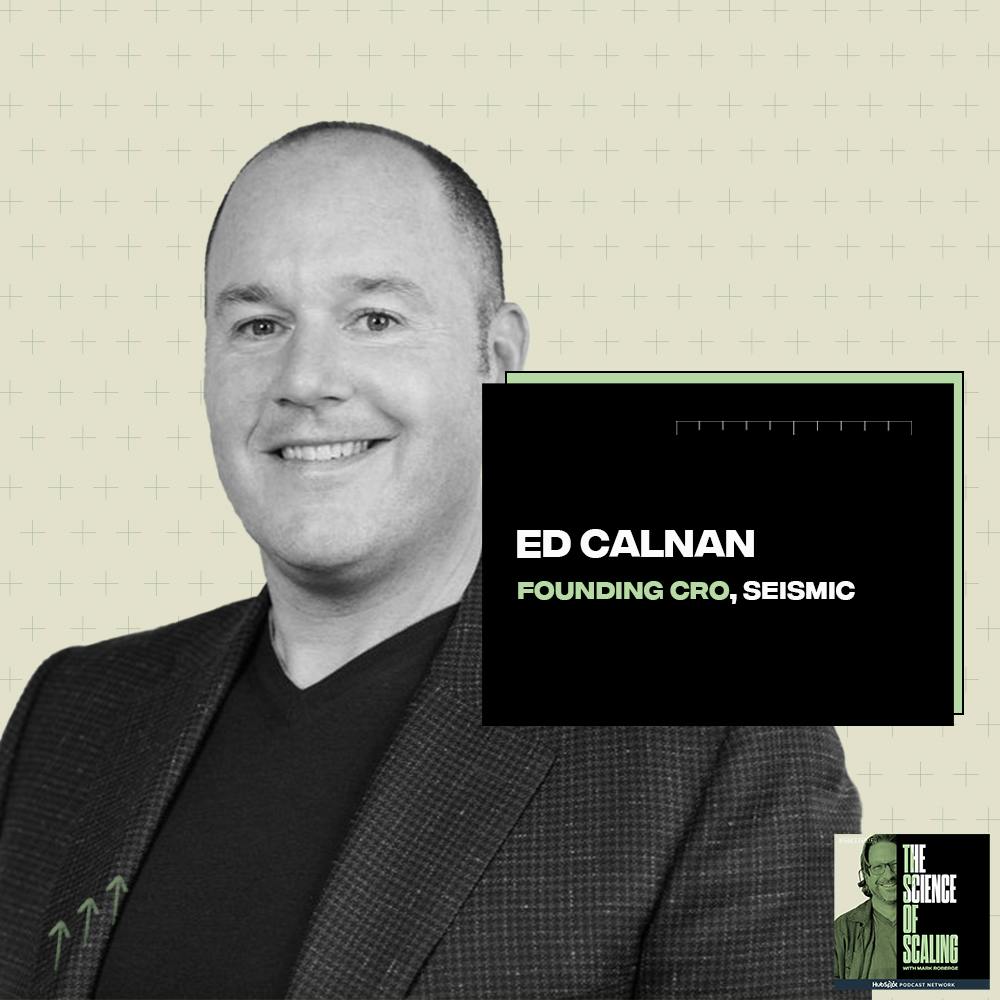
Get the Science of Scaling Database! Real Playbooks from Billion-Dollar Companies: https://clickhubspot.com/scienceofscaling Imagine passing $5 million with three customers. That is whale hunting. Going after big customers with big deals from day one isn't advisable. But sometimes it's the only pa...
Get the Science of Scaling Database! Real Playbooks from Billion-Dollar Companies: https://clickhubspot.com/scienceofscaling Imagine passing $5 million with three customers. That is whale hunting. Going after big customers with big deals from day one isn't advisable. But sometimes it's the only path. Today, Ed Calnan (Co-Founder and Fmr. CRO, Seismic) walks us through how to get big account's attention, get through procurement, get through security, all solve for all the things that kill the startups that try this path. The Science of Scaling is a HubSpot Original Podcast // Brought to you by HubSpot Media in collaboration with HubSpot For Startups // Produced by Matthew Brown.
00:00/00:00
i think that's kinda bull honestly like i think you know if you have a compelling enough solution and you're offering value like they will take you seriously you have your cofounder and you have your minimal viable product next step a million dollars in revenue imagine getting there with one customer imagine passing five million with three customers that is whale hunting that is going after big customers with big deals it's not advisable but sometimes it's the only path because what you dreamed up with an enterprise value prop from day one so today we turn to my friend ed cow the cofounder of seismic and first sales leader he's walking us through how to get their attention how to make that problem seem really big how to get through procurement how to get through security all the things that kill the startups that try this path we're gonna d that journey i'm mark bears and this is a science of scaling alright hey ed welcome to the show nice to see mark jeez what a run for seismic over such a volatile macro condition and i just i'm so excited to unpack especially the early days so you wanna bring us back there like how that came about i was lucky enough to meet the founding group of seismic at a two companies prior so we had a unique combination because it's typically you see with founding teams it's either mostly on the commercial side are mostly on the product side and i feel like we nailed it in a in a sense where we had a a really great combination of super bright product folks as well as someone who had done the sales and marketing side before so we started at a company called document sciences we turned that company around over a couple of years and then sold it to emc in two thousand and eight and then we left and started seismic together hey folks just mark here this is very interesting in laying the foundation at the start for success it's almost like who when why kinda thing like he says okay these are the brightest engineers i've worked with but more importantly they're the exact opposite of him like how many times do we are we out there seeing these founding teams and it's like two mit engineers or two b mba or two mckinsey a or two doctors from mass general hospital it's like we gravitate to the homo homogeneous we gravitate to the people that are like us but a founding team needs to be diverse from a skill standpoint from the beginning you got the engineer you got the business slash go to market person beautiful foundation then the when recession crisis no funding amazing time to start a business for a variety reasons number one is so hard to get funded you're gonna just see less competition right number two what a market to build a team in this is the the best talent is out there and then number three it's very easy to determine if you have a must have value prop or a nice tab value prop because in recessions nice have value prop don't sell and if you can sell something in a recession it sure is a must have what a great foundation for what ended up being a fantastic business let's get back to ed it was three three founders in a in a two bedroom apartment in san diego writing the code and then it was me in my attic here in boston calling everyone i've ever met asking me to see a demo of the of the product yeah you did mention like bright engineers yep and you know i we both speak to a lot of like non technical aspirational founders that know they need to go find like that technical founder how do you know that someone's good as like you know someone that's not coding every day and how did how did you get that sense with the with your technical cofounder it was it was lucky because we kinda tested it out a little bit at the beginning i imagine it's quite difficult if you're a founder looking for a c founder and trying to establish chemistry i think it all comes down to values though like why are you in it and like none of us were in it to get rich you know we were just in it because we wanted to build something great and like some all the places we had worked at before just weren't as we wanted to build the company that we would all wanna work at now you're in it you're building it you got this mvp and i think a lot of folks struggle that point with like alpha customer acquisition if we can call that now either our design partners how do you even get their attention in your case you all kinda came out of the gate on the enterprise like there are certain plays where you have an aspiration for an enterprise value prop in that segment right of the gate and that's fine and that's what you did that even quadrupled the difficulty of finding these design partners can you speak through that process good news for us is that it was a similar customer base that we sold to at emc so i had an existing relationship network i had great champions that were good relationships that were willing to take a risk on us but so we went right after the financial and insurance space right out of the gate i targeted accounts that were that were interested in working with young companies so there's a lot of big big accounts out there that like to work with emerging technology platforms because they get to have an influence on how that platform evolves right so ge was famous for that we went to ge capital liberty mutual famous for that fidelity investments had an incubator whether it inc innovate emerging technologies to see if they could impact the business mass mutual has another incubator here in boston so we targeted those accounts and based on prior relationships as well as research i did i knew that their appetite would be open to working with technology that wasn't proven and wasn't super bullet bulletproof yet and those types of things it it's hard because to get onboard as a vendor to one of those big specifically financial companies takes a while i remember when we were working with liberty mutual for the first time found my champion found the use case proved it out he said yes had budget we went into sourcing and he said okay all need to get the onboarding process started as three years of audited package exactly and i tax we don't even have an accountant like i can maybe show you a snapshot of what our count balances but it ain't gonna look good so we figured out how to get around it and we got onboard and yeah so we just started building from there but it took me a good took me almost a year to get our first paying client which was actually general electric we actually got a deal with ge and that's kinda advice to founders who are listening like don't overthink your pricing don't overthink you know like it was just a an intro that i got to one of their cios and he said look i wanna give you a shot i wanna give this company a shot i'd really like the product i have six thousand dollars left in my budget for this year and i said i'll take it so this is like straight out of science of scaling methodology just as a reminder i'm showing the methodology here we got three steps product market fit go to market fit growth moe so where ed is here in the seismic journey is they're clearly in the pursuit of product market fit notice how he is optimizing the go to market system design choices perfectly for that stage pricing you know fine i got five thousand bucks great i'll take it we're not pricing for profitability at this point we're trying to find product market fit which doesn't has anything to do with revenue optimization all i want is i want this company committed to trying my product to solving one of their problems and getting a chance to be able to do that and that is what ed is doing time and time again with these design partners alpha customers whatever you wanna talk to them about number two he's qualifying hard on whether they're an early adopter or not like he he walked into this with a lot of background and understanding of the market he knew which brands were willing to take bets on new products who were the innovators they had a reputation for it versus the people that were conservative the folks that needed twenty references the folks that needed sox compliance the folks that needed like a nine month trial he is just perfectly qualifying out the lag and spending his time on the early adopters to pursue this product market fit k number three he's purposely like he has a strong hypothesis on the tam the industry the size of company the type of buyer but he's purposely experimenting around the periphery of that hypothesis he's not like bull on the ocean but he's purposely taking meetings with folks that are around it and that ultimately leads him to figure out that opening aha moment that opening aha use case that they actually scale onto right what great execution around this stage of the science of scaling let's get back to ed but we got the ge logo and we ended up get division hopping into like six other ge business units mh so from ge capital we went to aviation we went to we went to oil and gas we went to health care so it's not always that first amount sometimes it's just access and then having the cache of saying sure ge as a customer and we got through their security and they took a they took flour on us biggest question i get every day how do you build the next unicorn how do you build predictable scalable revenue growth luckily the folks at hubspot have put together the science of scaling database real playbook from companies that have gotten to the scale of like forty billion in market cap the playbook cover key decisions like hiring compensation go to market strategy ic development even stuff on ai in sales all from the folks behind the fastest growing companies in tech it's not fluffy it's super tactical you know my content you know my brand it's stuff that you're gonna pick up download and put to use within an hour so head to description click on the link and download your free copy to start scaling your business today i think you had some advantages because you had some relationships you also mentioned did some research yeah i bet there might have been some like discovery as well can you kinda like bring that framework to life a little bit like hey you're a founder you need an alpha customer and you should be qualifying hard on the between an early adopter and a lag how do you do it yeah i think you gotta you gotta qualify in and out pretty ease pretty quickly i think you also should think through like the use cases that you have in mind and go have some conversations that don't necessarily fit what you have in your head because that's what happened to us like a product basically was a document automation platform that ended up redefining the sales enable category over the next ten years none of us even knew what sales enable was until forrest came knocking on the door and said hey we wanna cover you in this report and i remember thinking like that tam might not be big enough i don't know if we wanna be thought about as that type of company because the product was much more broad i would encourage folks to like do some research on big companies who like to work with emerging companies because they're out there and go talk to them and have a conversation with them but then also i remember just going back to old relationships and we we had a huge business in investment management so we would automate the quarterly marketing collateral for all of the world's biggest mutual fund companies so like black rock fidelity state street of those folks and that use case was not in my head when we went out and it came about through sitting in a meeting with a with a a person i knew at tia cr and he said you know i like what your technology does but this is my biggest pain point right now which is at the end of every quarter we have to manually go through and update all of these collateral sitting with our cto mark at the table and i looked at him and he said i think so and i said okay if we can like let us go take crack at this if we can prove this you gotta buy it like we're gonna go do some work and like get us on as a vendor and buy it one of my favorite people on the planet rod smith who's now a goldman sachs took a chance on us and then found that use case it was incredibly important says it's you know it was such an easy value prop it takes you ten weeks with an average of six people to do this work at the end of the quarter if you seismic it'll take you ten days with one person and it just worked so we grabbed it stamped it and we'll walk down wall street and talk to every other fun company on the planet we ended up with like two hundred and fifty customers on the financial side just for that solution alone mh once you see those light bulbs go off again i would think about like not what's in your head but go have a bunch of conversations that are kind of in you know at the ic or the use case you're thinking about but there are broader ways that products can get used that you just don't see in the early days once you find it replicate it yeah but we we did it that immediately put it wholesale team just selling to mutual fund mutual fund companies they did nothing else they had a list of three hundred and fifty firms that that's all they could call and we started to rip and we ended up being in the standard on wall street like people were getting promoted you know people are putting on their linkedin bios that they were seismic certified like it was a thing all of a sudden on the street yeah like what an aha moment a breakthrough moment for the firm so much energy and i guess like i'm trying to channel the founder and the first sale seller that are trying to like avoid the trap of chasing whatever shiny object every customer's telling me yeah know it's like oh like yeah if you build that we you know and then you build in and there's not there's nothing from there yeah you're like how how can can you guide them a little bit on that was that when you had that moment was it you already had heard it in multiple times and that's why your cto mark agreed to it or like can can you unpack how you distinguish those a little bit yeah totally so we were thinking more at the end user level of like people creating their own marketing collateral we had this little wizard that would allow you what now ai can do in minutes like it used to take humans days and hours to prepare for sales meetings and that's what we automated so we were thinking of like mark or ed using the software we never considered like giving it to an administrator and let them do it in batch right at bulk speed and that's what he was asking like instead of my sellers going in there and doing the collateral can i just do it at scale with one process and do it for all materials and then push those materials to the sellers after that so it was a that an example of like that just makes sense yes like that not unique to these guys is just like we're we're not live in their shoes as well as we should have analogy set it's like light bulb exactly right and and we didn't have to change much for the product that's the key so when the light bulb goes off if you don't have to you know commit forty percent of your dev resources to go do this it was just kinda close and once i started interviewing and that's another thing i would think about is like once you fixed that problem go interview the constituents around it whose lives just got better so i remember going to talk to the sales leaders at tia and the sales leader telling me this is the best thing of all time because i used to have sellers sitting on the sidelines for ten weeks waiting for these collateral and then it have two weeks of selling time at the end of the quarter and the marketing team saying yeah our lives sucked for ten ten weeks because we'd have to manually go in and do all this stuff now what that ten weeks freed up we can go do marketing you know i've got an mba from wharton and i'm doing spreadsheets all night long i wanna go do marketing stuff and so i i grabbed those quotes on either side and that turned into our sales pitch and off we went you know and forget we weren't going to the administrators anymore i was targeting the sales leaders at all those accounts so the head of sales at black rock was like your sellers sit around on the sidelines for ten weeks i can give you ten weeks of selling time back for every rep and that's what ended up being the pitch which is it doesn't matter how the product works right a matter of the outcome and the business value that you deliver so i would encourage that too like go interview your customers go talk about how the software is changing their business doesn't matter how it works i know we all love our product nerdy things but like go talk to the customers and then that can be your your value selling pitch after that hi i'm francis fry and i'm ann morris and we are the hosts of a new ted podcast called fixable we've helped leaders at some of the world's most competitive companies solve all kinds of problems on our show we'll pull back the curtain and give you the type of honest unfiltered advice we usually reserve for top executives maybe you have a coworker with boundary issues or you wanna know how to inspire and motivate your team no problem is too big or too small give us a call and we'll help you solve the problems you're stuck on find fixable wherever you listen to podcast so you also mentioned like you are with the innovation group right like that that you heard it and i've i've heard like for a lot of things don't ever sell innovation that's where these these pilots go to die they're not taken seriously like can you maybe like talk to the founders that either heard that device or been through that and like how do you manage the innovation group or right or know that it's a real opportunity can you just double click on it yeah i think that's kinda bullshit honestly like i think you know if you have a compelling enough solution and you're offering value like they will take you seriously like their job sometimes you know at fidelity in particular their innovation lab was very highly regarded like they were all the members of that lab were all ex business leaders that kinda were on the exec track and they spent like a a bit of time and they trying to figure out what was coming for hot new companies ge was the same you know like ge had a really strict rule they had to use good ideas from other divisions so good example of that is the first cio that was our sponsor there this guy dave barnes who i'm still friendly with he was the guy with the six grand we got them up live and i went to take him to dinner in cincinnati that's where aviation headquartered and he said ed i love your stuff i love working with you wanna help you and he said but i need you to answer a question honestly and i said i'll do my best and he said i'm gonna stand on stage in front of a hundred other business lines cios at our ge conference we're all tasked with bringing one idea for the week workshop i wanna showcase you and i said okay and he said if fifty to seventy five cios say i wanna try seismic are you capable of fulfilling that demand and i nervous said yes i did the problem that everybody wants and i i think that was the problem answer but he was real cool about it because he was like look i've seen this crush other companies that aren't ready i trust you i wanna continue to build the relationship if you're not ready wait eight more months and i'll bring you on stage the next time and i said you know what dave i think we're ready and it ended up getting us into like a bunch of other divisions so i i think it's it's it's really worthwhile if you're heading towards the enterprise it's worth spending time with those folks that makes sense and then you kinda skimmed over source and procurement because we gotta i mean every whenever there's a vc or an adviser that don't go to the enterprise there's a long list right like yeah you know long sales cycle you you know they're gonna wanna see all the references like good luck with security they always mention procurement you'll never get through procurement yep and you know the book's been written about best practice on how to get through procurement it's not very well you know known out there yep but not how do you get through procurement as a startup that hasn't been talked about much so you kinda glanced over you glen you we figured it out but you can you bring that we figured it out to life a little bit at my current place we're scaling up into the enterprise and we're we're still having similar challenges i mean incredibly well capitalized company super strong hundred million plus in arr and it takes a while to get into the enterprise because of all the things you described that's one of the advantages that i had with starting with those innovation labs because companies that want to bat on emerging cool things will help you with that process but it's frustrating you know procurement does their job which make sure that you you have the least amount of vendors and the best amount of technology options and everybody likes to standardize and it it is difficult i think networking there as well the business leaders if you get high enough can make procurement go faster so we're working on one with a big bank here now and we're friendly with the e of retail banking and we both we just got the official nod and he's making some behind the scenes things happen that it's gonna make the product the process go faster yeah this is just like champion development it's key in all sales it is critical in enterprise we've talked about this in the past you you talked to some of these the best enterprise sellers out there and they're like i don't win because i have the best prize i don't win because i have the best product i win because i have the strongest champion and ed is one of the best at developing and sniffing out at a strong champion it's critical here we gotta get through procurement we gotta get through security and you know my mentor john mc would always tell me a great champion is willing and able they're all willing but are they able and this is a great case study of that is like you you got this champion that's really excited about you and you know how you're gonna get this deal done and you ask them how do we get through security here who's the person you work with what are the questions they're gonna ask what are the right answers what if they try to delay it for three months and then we talk about procurement how are we gonna get through procurement what are they gonna poke at what's the best way to get through that who do you like to work there that individual's answers are gonna be extremely instructive as to whether you have a strong champion and they're gonna get you through those that red tape even though you're a brand new product and a brand new brand let's get back to that the reason why we chase this stuff and the reason why it's so difficult and it takes a long time is they're bigger numbers they sign multi year deals when you can get rid of term for convenience and so those contracts are worth it you know as everybody knows you know well advising companies if you can get a three year contract versus a twelve month contract with the term convenience like life is just infinitely easier because if you do a twelve month deal you're implementing for the first three months and then you're trying to prove value for the next three months and then your renewal up for for conversation right then and it's just next to impossible to prove true value of a platform in a three month time frame it's impossible to do so it's worth it how do you manage the investors to that process did you have to manage up at all with that we didn't take outside capital until we closed our our first our a round in august of thirteen so we launched in january of eleven we had about a a a one point two million in arr with like twelve or so customers big name customers as well so for us it was more about like how do we scale that now we did have a bunch of customers that didn't stick as well so the beginning ge capital is a bank that serviced a bunch of retailers and we had a champion there that introduced us to the cto at believe it or not toys r us he said i got fifty grand and i've heard that you guys are great and like you wanna give it a shot so i said yes you know it's fifty grand it's a decent logo at the time it was a big company with a cio who gave us some money and if we could replicate it we would have those logos tended to go away and once we found our sweet spot we laser focused on it so you know the hard thing about selling the enterprise i joke with my team now it's like by the time you close a deal you hate the fucking logos so bad you don't even wanna say it anymore and you know if you're if you've done this a few times like i tell the board now like alright i know we're still talking about this one and that one and this one and you know they didn't not close they just slip which use sit on a bunch of boards you know how fun that conversation is too but if you go in with proper expectations you know they take a long time but they're worth getting yeah another really important distinction we're trying to go after these big companies right of the gate this this is not just about like activities calls demos that kind of stuff like these things are slow moving if you got like ten in your pipeline you're great but like understanding if you're actually making progress versus just like sitting on the same deals and as my colleague at h b liu ship says collecting forecast furniture that doesn't move anywhere and ed doing a great job of helping us figure this out here's a tip if you're ever on a board and you're like supposed to be like the go to market representative you're supposed to like help them drive sales i'm in so many of these board meetings and it's like yeah you know bad news is we missed the quarter we only finished at sixty percent but we have a huge pipeline going into q two i come back three months later well bad news is we missed the number by you know we only came in at sixty percent but we have a huge pipeline going to q three and i'm looking around everyone's buying it so i'm just like hey she that slide right there you have with that big pipeline with all those logos on it i want you to show me that exact slide in three months when we come back here and tell me what happened with those accounts because i'm not falling for this anymore like i'll believe you if like you feel like we have a huge pipe and you're optimistic about the quarter i believe you if you continuously tell me that you've got big pipe and you close it out at a consistent rate but if like this story is just repetitive then forget it you're just like buying time for failure alright let's get back to ed so i think it's all about going on the journey with your investors and being super clear about what you wanna go do and what the cost is gonna be and but then also knowing when to pivot a little bit if stuff ain't work mh you know you measure meetings and you measure you know pipeline and you measure progress in that pipeline and like as long as you can see it and the deals are progressing then it's worth staying in are there any aspects of that contract or expectation setting that is a non negotiable for you at that point that you just i need this to be in place for us to wanna lean in i mean term for convenience this one that you always wanna take out you know well if you got a a t in there you you really shouldn't book it as arr however in the early days like i remember like calling doug when the guy from ge said yes and i was like dude do we even have a contract and he's like no i'll look it up on the internet and i'll get one though and and so it's like you and then you of course with ge you send them over your little thing and you don't matter so they're like yeah right whatever here's our contract figure it out and so in the early days you just take you know you take the logo because it's a all about momentum you get a win and the team sees the win and then you get a logo and you can tell others look they're betting on us and you get some cash in the door and no matter what it is and then if your products good you can division hot we turned six thousand dollars into you know i haven't been there for a couple years but i think there's still a big customer and when i left they were paying us like four million bucks a year i mean that's the cool thing about these accounts it starts as a fifty thousand dollar deal and a couple years later it's a five million dollar deal but we gotta learn to expand so two potholes here first potholes is it's a different playbook i feel like in the early years the first motion that the company is building up is how to acquire new customers and they get good at it and then they forget that like they can expand them too and it's a new motion so lean in early especially with this enterprise playbook that adds running the second tahoe is they assume that the department had they already closed the champion they already closed as they go to these new people they have the same perspectives no especially in these huge organizations everyone's unique everyone has a different goal everyone has a different political stance everyone has a different promotion path everybody has a different view on the strategy we have to restart discovery with each new person that we meet especially these department heads they're gonna champion expansion and heads demonstrating how to do that let's get back to him you know business leaders want they all wanna help each other out they wanna give each other great ideas and they'll sponsor you into other groups so i think that's the key and we did that with all of our accounts you know like we started the land and expand motion worked really well for us we'd start in one division and then end up getting sponsored two three four five six seven others i think it's another key is focused you gotta if you have a small amount of sellers you gotta figure out which new logos and which expansions you gotta you want what you wanna work on you know our remember having a conversation early where it was like well seventy percent of your pipeline is up sells and we need more in logos and i'm like come on do we really care where the two million dollars is coming gross fucking two million dollars like we have no money at this time you know like and and you gotta balance that too like you know arr arr if it's good arr and it's multi year ticket from wherever you go and it's like i used to tell the team all the time the fastest path to cash is with an existing customer so go find another person with the business problem you solved and you're on as a vendor and that's a one page addendum you're just someone more seats so before we leave we wanna talk about you know you you you brought seismic to the moon it would be out there if the markets were open and hopefully that happens at some point but you've moved on to your next challenge like any good entrepreneur can you tell us a little about about soc and how you you found them yeah so i by the seismic was about a twelve year run probably the the most proud i've ever been of of something professional in my life i was lucky to work on an incredible team and come february of twenty two we had just smashed through the three hundred million dollar arr mark we're still growing at like thirty percent churn was great and i was just it was time it was the hardest decision i ever had make come on yeah yeah i mean you know though you were in the early days of hubspot and saw it through an incredible exit and like i've i had just always operated like if i couldn't give my team my a plus effort than it was time and so took a break which is something i've never done in life which was great i remember meeting you for coffee during that time well you get you nervous about i'm i dude don't be nervous you gotta shut but you were also before i launched you you remember we had coffee in the same place you weren't of the first calls i made and i said i think i'm gonna do this and i said i need you to teach me how to do content mark getting back in twenty ten we bought how the hubspot and you helped me lay out the first blueprint for what it would eventually become the marketing team so thank you buddy but then i got a call from one of our investors so j equity let our b round so they put in december of twenty fourteen when we were five million in arr and they wrote it with me with me and the rest of the team through the exit with prem tamara at the time it was about three ten so they called and said hey get this interesting up opportunity and i had met our ceo at one point just to kinda give him some advice back in the early days and they said it's an awesome company with great product and a bunch of great customers would you be interested in helping to continue to scale it up so it's rare that you get to join a good one that still has a bunch of legs and it's been fun i've been here for about fifteen months we redid quite a bit and we're on the way it's a rare opportunity to unpack the devil and the details on this extraordinarily challenging journey of bringing enterprise products to the enterprise with absolutely no customers no revenue and really a barely working prop product that like has been true tested truth so thank you so much for walking that through and and dropping knowledge on the show today great to see you as always i love the conversation and if any anybody is out there listening that wants some advice i'm happy to give it if you wanna get in touch on linkedin thanks so much ed alright that does it for today folks our episode was written and produced by my favorite producer matthew brown editing comes from patrick edwards the scientist scaling is a proud part of hubspot media and if you like what you heard today make sure you follow or subscribe to us wherever you're a fan of the show and if you're a founder ready to scale check out my vc firm stage two capital we are backed by over eight hundred cro cmos cc from the best companies in tech and we're ready to help with your scaling journey okay see you on the next episode
39
Minutes listen
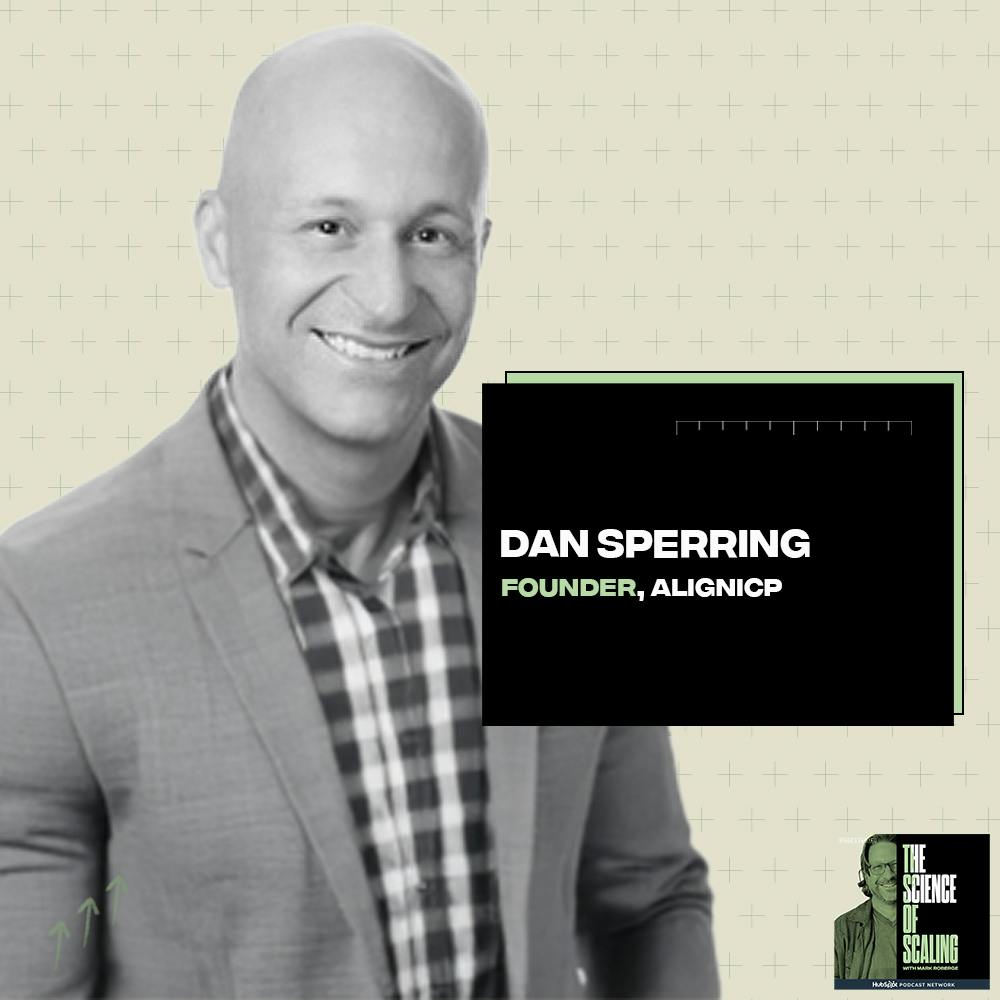
Get the Science of Scaling Database! Real Playbooks from Billion-Dollar Companies: https://clickhubspot.com/scienceofscaling Companies with a very tightly defined ICP that is operationalized on the frontline spend 50% less on sales and marketing. They have CAC payback periods that are 24% shorte...
Get the Science of Scaling Database! Real Playbooks from Billion-Dollar Companies: https://clickhubspot.com/scienceofscaling Companies with a very tightly defined ICP that is operationalized on the frontline spend 50% less on sales and marketing. They have CAC payback periods that are 24% shorter than the mean, and those ICP customers have a 425% higher expansion rate in the first 12 months compared to those that are not. Today Dan Sperring (Founder, AlignICP) explores how product success is often determined by specific use cases rather than customer demographics, and challenges the common startup approach of targeting broad markets too early. The Science of Scaling is a HubSpot Original Podcast // Brought to you by HubSpot Media in collaboration with HubSpot For Startups // Produced by Matthew Brown.
00:00/00:00
just be best in the world at that one use case earn the right to basically expand by focusing on solving use cases and this is a really really big important one for your persona by interesting data listen carefully companies with a very tightly defined ic that is operationalize on the frontline spend fifty percent less on sales and marketing they have c payback periods that are twenty four percent shorter than the mean and those ic customers have a four hundred twenty five percent higher expansion rate in the first twelve months compared to those that are not that's intuitive but this is crazy twenty percent of open pipeline opportunities from the average company is in ic and thirty percent of their customer install base is in their ic we are not aligned there's huge upside here and i learned this from a linkedin comment from a very smart gentleman dan spa the founder of line ic we got into a great conversation and i was like we gotta share this on the episode so here we are we're gonna do something different today it's not a unicorn executive talking about how they want it's a gentleman that has passion for the frameworks and components we've been talking about and how they apply in practice my name is mark be and this is a scientist alright sir dan welcome to the show thank you so much for having me on mark i'm a a long time listener first time caller well thank you that's awesome you sent me a great note and it was like i gotta talk to this guy more i guess this started at the beginning dan how did you even like stumble across the work of the science of scaling and i know as you dug in many different points kinda like resonated but like what was the initial point that like really like drew you in i guess i was incredibly fortunate in in twenty thirteen to go to work at a early stage saas company that had the potential of becoming a unicorn eventually ended up as a a cs leader doing quarterly win loss analysis and through that analysis started to see a lot of trends and patterns in the data eventually stumbled across the science scaling and all a sudden there was a lot of dots that i could connect the i couldn't do so before coming across that work quarterly win loss if it was in the cs context am i interpreting this correctly that it wasn't sales opportunity win loss it was customer win loss like we'd signed them up and then where they gonna renew is it is that the context all of our our win loss analysis that i did was looking at this idea of more of net revenue retention how how do we efficiently grow the existing customer base got it okay so what were the trends yeah know because there were trends you they were seeing and then you came in and you saw some qualification there were certain types of of segments or customer types that would ease that they would they were signed an agreement and then very quickly get get what i i use the term value realization so you know within weeks they would be using up and running using our our software and getting tremendous amount of value and those were the customers that tended to grow and expand and then there was other customer types that they would sign an agreement six months later they still wanna have the software implemented and ultimately those companies they were interfacing with our same kind of you know onboarding teams implementation teams and so what was different wasn't us it was the the customers and and the personas associated with using and implementing the the software you we're at one particular juncture of you know is this customer gonna be successful or not and it's purely onboarding and then your conclusion was it wasn't really the variance in how the customer was onboard it was more of a variance about who the customer was can you unpack that more when you think about software products typically they're way that they're built and constructed they're really good at maybe one two three four use cases but as you start to get to like the eighth ninth tenth use case the the ability to for customers to actually drive value from that use case gets compromised for example a retailer use case maybe financially different than a a media companies use case and so the jobs to be done and the features that those clients leverage to realize value can be financially different across each one of those verticals are use cases biggest question i get every day how do you build the next unicorn how do you build predictable scalable revenue growth luckily the folks at hubspot have put together the science of scaling database real playbook from companies that have gotten to the scale of like forty billion in market cap the playbook cover key decisions like how hiring compensation go to market strategy ic development even stuff on ai in sales all from the folks behind the fastest growing companies in tech it's not fluffy it's super tactical you know my content you know my brand it's stuff that you're gonna pick up download and put to use within an hour so head to the description click on the link and download your free copy to start scaling your business today so at the point of signing up a customer when you're looking at you know given your experience in your recent work of just kind of assessing and researching on this you feel like you're pretty good at when a customer signs up if you were to just do like a ten minute interview on that customer and dive into the use cases by for which they signed up you can predict pretty accurately whether that's gonna be a long time ten year customer or whether that's gonna be a customer that just never engages based on the use case that they made their their decision on without a doubt and so the use case is foundational to a client's ability to derive value there's another really interesting to mention to this which is the way in which we construct the the quote or another way to say is our pricing and packaging the way you structure the deal like with the amount of services you include on it can have a dramatic impact on the client's ability to actually derive value from their purchase hey fo it's just mark here i've actually never heard it described that way i like it i like it like he's he's saying he could predict lt tv high lt tv of a customer based more on the use case by which they bought then their size their location their revenue the persona and that bought in etcetera i like that a lot and i'm gonna route it here in go to market methodology because one of the biggest mistakes that people make when they get to that presentation stage of the go to market and sales process is they do great discovery but then they give the same demo to everyone like what was the point you know everybody can perceive your product differently and you need to if as long as they're a good fit with these use cases you need to explain your product in a way that resonates with the use cases that they care about but most folks just give that generic demo and you're just sub optimally executing and so that's really hard to like teach this to a twenty six year old account executive that doesn't have decades of experience in sales you're like you're basically saying like tailor your pitch to the needs of the customer well that's hard like the best sales pool yes they never give the same go but like that's hard and that takes a long time to understand so here's a way to training wheels it that's line with what dan's saying and i did this with our first sales trainer at house hubspot andrew qui we sat in a room for a day and we listened to twenty discovery calls of twenty different customers and we crafted the perfect demo for each customer based on the discovery call and after we reflect on that exercise we realized that those demos fit into basically three buckets there was like demo one demo two demo three and now we were able to training and wield it for our account executives it wasn't like hey tailor every demo to the needs of the buyer it was like figure out what they need what their perspectives are and then choose one of three demo options that is a huge move beyond dish the generic demo and it made it really easy for folks to align with this now i add dan's work on this and it's like if you can align those demos with the use cases that are proven to yield high lt tv customers now we're cooking and now we're finding ways to align our gray ic strategic work with what's happening on the frontline both in the sales process and this continues on to customer success because the same thing like this is awesome you just explain to me exactly the use case i need now if they get thrown over to customer success and onboarding and they go through a generic onboarding process that every customer goes through bad so there's continuity opportunity here that allows just like they tailored the presentation on the use case now the onboarding process is tailored to them as well it feels custom but it's just configured so it still scales in services great observation by dan and pretty easy way to operationalize this on the frontline let's get back to him so david sp did a study comparing horizontal saas companies to vertical saas companies and he looked at at public companies and what he did is he narrowed the sample size to companies with similar amounts of arr like within let's say five percent and then companies with almost identical growth rates and in the study what he was able to prove and demonstrate is that the horizontal saas companies had c payback periods twenty four percent shorter and so you know right now the average cat back period is thirty six months so i i think for vertical saas companies i believe is twenty six months right now and then the other metric that david was able to demonstrate is they spend about fifty percent less vertical saas companies do on sales and marketing operating cost and what do you think is the driver there because in in payback it's you know it's it's ac gross margin it's c i don't know if payback accounts for retention you're right it it doesn't factor in for retention but it does look at the the contract value yep and so there's a bunch of other metrics that when we start to triangulate this it becomes really clear what's happening hey folks just mark here i love the fact that this is data supported this observation because i i see us fall in this trap quite a bit in the ecosystem when vcs are looking for a billion dollar tam at your seed stage it doesn't mean you have to prove that with every customer in every segment out of the gate in an extreme situation you don't wanna be like selling one customer in australia that's huge health care system one come customer in europe that is a small manufacturing firm him and one customer in south america that you know is a mid stage fintech player they just need to believe your vision but we fall into this trap where you know the the entrepreneur goes out and paints a picture for a big ten which is good but what they do is in their zero to one one to ten million dollar journey they build for that huge market and they sell to that huge market and you end up boil the ocean and you fail and that's what dan is bringing to life here and the research that he's showing is bringing to life and what we need to do instead is yes paint the big picture but find that first minimal viable product end market which he's talking about in use cases to exploit find the lowest risk way to go from zero to one in one to five in five to fifteen and while you're doing that if you're humming that is a two to three year journey that is plenty of time and you'll have some disposable resources and some disposable capital to exploit the known but test the new so during that three year journey you're exploiting it from zero to one to five to fifteen and you're testing that new market or new product that new use case is the way that dan's talking about that you're maybe testing a couple this might be like going to the enterprise or might be a tangent gentle product or it's both and you're saying those tests up there's they don't exhaust resources two will fail one will succeed and that one that succeeds gives you the next three years to go from fifteen to thirty to sixty and that allows you time to build the next tangent gen product or cast the next market like perhaps international and then you can expand into that and now you've architect your way to a billion dollar company tell the big story but exploit the simpler use case initially let's get back to dan as we work with clients what we typically see is less than twenty percent of the pipeline is with ic customers we've also seen that less than thirty percent of the customer base is representative ic customers for horizontal saas companies for vertical saas companies it's closer to fifty percent of the pipeline is with ic customers and then it's around sixty percent of the installed base hi i'm francis fry and i'm ann morris and we are the hosts of a new ted podcast called fixable we've helped leaders at some of the world's most competitive companies solve all kinds of problems on our show we'll pull back the curtain and give you the type of honest unfiltered advice we usually reserve for top executives maybe you have a coworker with boundary issues or you wanna know how to inspire and motivate your team no problem is too big or too small give us a call and we'll help you solve the problems you're stuck on find fixable wherever you listen to podcast so there's just like you're throwing some awesome numbers at us i wanna make sure we like back up and just make sure we unpack all this so sure number one is over the last twenty years we've come to the realization in b b software that it's hard to argue that that one of the main north star metrics in fact most of the time the north star metric is customer retention net dollar retention and customer health it's very difficult to build the business if you're not on top of that now let me play founder who is now playing devil's advocate and perhaps like vc which by the way i agree with you but this is just what we hear is like okay well dan that's fair but like i raised venture capital or want to raise venture capital and all most vcs wanna see an ipo potential business so if i follow your advice my tam is too small and i'm never gonna get funded the belief that that we have is it starts by really understanding and optimizing for product market fit the second most important variable to drive a company valuation is your efficiency metrics related to go to market and so things like lt to cat ratio the price of acquiring arr it's an iterative path and it's one that should start by you know and this probably makes a lot of sense focus on a market in which you can help customers derive immense amount of value and then be thinking about this idea of product market fit and where can we where do we potentially have product market fit in adjacent markets when most founders and companies think about expanding the tam they typically actually jump over a bunch of like foundational things that could do first and so i'd had argue first as as you know i'm having discussions with customers all the time about their ic most of them say my current ic isn't the one that i really want but what most of them can't tell you is what percentage of that market have they already penetrated start by looking at your customer base and saying know over five hundred customers where do we have the strongest product market fit and i would look at metrics like customer lifetime value logo retention net revenue retention hey folks just mark here yeah like ic decision product market fit it's not based on where you're closing customers that is like market message fit you can sell to ask them most big deal it's product market fit is about where people are seeing value from your product that ultimately leads to retention and expansion beautiful you know one way to cod this around what he's saying these words of you know customer setup and success we can also call the leading indicator attention which is p percent of customers achieve e event every t time right examples slack seventy percent of customers send two thousand team messages every month dropbox eighty five percent of customers back up the device every day have to hubspot eighty percent of customers use five more features in the twenty five feature platform every month beautiful we can define it it's not the same for everybody but you can define it and then we can measure it so in your journey of zero to twenty customers it's like okay great we acquired one customer in january and they never lit green they never achieved that leading kid attention but guess what six months later we reflected and we've pivoted we learn more about our business they're no longer in is so it doesn't matter february we sign up to customers and look red room for two months but customer number one let it up green then they went back to red why so you can start to see here that like very simple cod quantification of these observations into the operation such that the upper left here is like we need seventy percent of our ic customers to be hitting this that's product market fit beautiful beautiful and then we can know if our categorization of leading indicator attention is right a year later because we actually have churn numbers and we can see that the people that we've signed up in the last year those that did hit the lien kit attention have very high attention and those that do not have very lower attention you learned something beautiful probably the most important learning in your zero to one one to five journey that you got the lead kid attention right or maybe you get wrong maybe there isn't a variation as you look at those buckets but you have plenty of probably logs customer logs usually to logs etcetera to that week analyze things and figure out what maybe it wasn't first lack the number of messages is more about the number of users great let's run the correlation okay so this is just a remarkable way kudos to dan that the north star is product market fit and product market fit is not about sales and customer acquisition it's about customer value creation and retention and this is a way to cod into your business let's get back to him once you understand that hey this is where i this strong summary product market fit what's the tam for those segments and then through that process chances are what what will happen is because you haven't done this before you will find areas of product market fit within the market that you're not aware of that you've to organically you acquired like thirty five forty customers in a segment that you haven't been proactively targeting that are growing you know at a very healthy rate you're retaining them they're giving you positive mps scores and so rather than go to an adjacent market and then have to find product market fit you can simply double down on those existing customer types where you're already successful okay dan i love that and i'll throw one more related devil's advocate to dan which is if i follow your advice and focus on a vertical don't i hand the other verticals to someone else and what if they take a horizontal approach and i'm stuck in this little vertical and then they can out maneuver me because they've got more capital agreed and and all in the backdrop that i agree with you dan but just so we can we can kinda surface what's going on in the founder heads right now i'd argue you don't have to actually pick a vertical pick a use case and a use case that you know is very prevalent across multiple horizontal markets that's a great clarification yeah yeah did just be best in the world at that one use case and focus on being more of a point solution and then earn the right to basically expand by focusing on solving use cases and this is a really really big important one for your persona and so i have to seen situations where we try to give example you know as we're scaling we're like okay we have to go multi product but we do multi product for different personas and and that creates a whole different thank you for that clarification i i think i'd probably get some light bulbs and some comfort going around and this attaching this data of success to your current execution strategy now you keep throwing around some nomenclature i think we all understand but i think it's important to double click into so like how are people defining like ic in persona and what are some of the potholes or best practices you're seeing there the best metaphor is think about a dart and and so the dart boards your target market and then on the dart board you have these concentric circles and so your ic is the bull's eye of the dark ward and so what what we're finding as we do this analysis is what are the best fit customers the ones that you know the renewing expanding and growing and typically those customers represent a small subset of of your install base but when you really look at the ic specifically to go to market the real purpose of the ic is to help the organization focus on the accounts that are gonna really drive the the business forward and so the jobs to be done for demand gen the people that have the three million dollar budget that to create the great leads the ic typically fails them it doesn't give them the information they need and they end up up leaning more into quantity versus quality hubspot has a a grace stat which states that organizations that have well defined ic they have sixty to eight percent higher win rates which is is pretty fascinating to see which is you know again probably isn't really too surprising the companies that know their their customers best probably you know do much better on the go to market side plus hubspot also has another quote which is less than seven percent of salespeople feel like the marketing organization is creating high quality leads and so the reason for this is we don't have a programmatic process in place to operationalize our ic and so a question becomes how do we actually turn this into a program and use this the guy or our activities around go to market and it starts with us creating these definitions and then tagging our accounts within the crm with these with these labels and once we have that foundational layer there then we can start to programmatic measure our ability to build quality pipeline and close deals with accounts that have a higher propensity to renew and expand yeah that's crazy dan now let me just take a step back and you know you and i are coming to these conclusions based on the last whatever fifteen twenty years of of sales and customer funnels and buyer journeys and ic and arguably we might be going into a dramatic shift because of ai mh what's your thoughts on that today we have i believe brink published the the latest report i think it's maybe it's fifteen to seventeen thousand different mart tech companies and so when i take a step back and i think about this space when you really dis still what these companies do down to their the real core foundational levels there's massive amounts of overlap so when i think about this market i do believe that it's one in which is right for disruption and and a lot of comm monetization what i'm seeing are like companies like zoom info is a great example where what they're doing is you know ultimately selling leads and they're selling contacts and today when i if you take a few steps back and especially if you look into a crm what you'll see is there's probably maybe like thirty thousand accounts within a crm of those thirty thousand there's probably very small subset that are active customers and then in terms of which ones are part of the ic is probably a really small like like maybe there's three thousand accounts that are are really part of the ic so as you start to think about this idea of the future in ai if ai can help us dramatically reduce who we're focused on selling to and what i think most organizations want is they they would like their crm updated with the accounts that matter and probably the contacts that are gonna be members of the buying committee and we know that individuals especially in you know go to market side we we know that they're changing roles like every you know fifteen twenty four months and so there is a shelf life in terms of the value of a contact and so i i see a day in which were where we have these foundational different license models were rather than buying for example you know a hundred contacts for bank of america or maybe a thousand context for bank of america we have twenty and they're constantly being updated as the buyer committee evolves over time yeah i agree with that i mean i think ai arguably at a mature stake can do a much better job of of defining the ic according to something about the customer whether it's the use case or the persona of the demographic or preference or whatever that will correlate with a a high lifetime value customer there's an agent in there that does that okay and that that we're currently doing today with a lot of error and a lot of simplicity because of the limitations of humans right and so once that's discovered then you can incorporate that into your demand gen strategy where those are marketing campaigns or sdr campaigns or whatever to acquire the right customers and right customers are things that can be identified before you even talk to a customer like demographic stuff and stuff that needs to be understood when you talk to the customer like what strategically are you prioritizing in these days which can't be read necessarily publicly in in many cases and so there's a much better opportunity for ai to align the ic with the demand gen strategy and and investment to your point to make it far more efficient what if the buyers an ai agent too automatically you know i can see that happening i just my intuition is gonna take a lot longer than i we think but i do without a doubt see opportunities especially for jen and i to drive more efficiencies into that process and so you maybe you know rather than going from ten to one maybe it's you know ten to eight you know over five years or something like that but yeah dan i just wanna thank you for coming on the show to to share this knowledge and no i i appreciate it and yeah keep up the the work there's just so many massive insights that work unlocks so nicely done thank you thank you dan alright that does it for today folks our episode was written and produced by my favorite producer matthew brown editing comes from patrick edwards the science scaling is a proud part of hubspot media and if you let what you heard today make sure you follow or subscribe to us wherever you're a fan of the chef and if you're a founder ready to scale check out my vc firm stage two capital we are backed by over eight hundred cro cmos cc from the best companies in tech and we're ready to help with your scaling journey okay see you on the next episode
32
Minutes listen
Grab our guide to transform your sales approach: https://clickhubspot.com/zrjp The amount of personalization is off the charts. The amount of time and money you're willing to invest is enormous. Because it's a million dollar deal. I'll walk you through how to navigate complex Decision Making Units,...
Grab our guide to transform your sales approach: https://clickhubspot.com/zrjp The amount of personalization is off the charts. The amount of time and money you're willing to invest is enormous. Because it's a million dollar deal. I'll walk you through how to navigate complex Decision Making Units, adapt your entire sales playbook for enterprise deals, and implement advanced qualification frameworks that go way beyond the basics. I'll also reveal what the best enterprise sellers consistently tell me is their number one reason for winning deals. Whether you're trying to move upmarket or sharpen your enterprise sales approach, these frameworks will help you transform your business. Happy scaling, everyone! Check out The Science of Scaling YouTube channel: www.youtube.com/@ScienceofScaling
00:00/00:00
they don't care about roi they care about like is it easy to use it's a it's a crazy amount of work and it's just so different from what like another rep would be due this is a million audio deal it's not like a thirty thousand dollar deal when i go out and ask great enterprise sellers why do you win a deal what's the number one reason why you win the deal any guys i'll about the blow of my gazette that i know this answer alright hey folks we got something new for you today so you may or may not know but i've got a new youtube channel called the science of scaling it's a slightly different format and we have some other sales shows and content on there too but everything you'll find on the channel is the same sort of super tactical sales advice that every sales leader and rep can use i'm talking about lead gen ic development really tactical sales call tips it's all there so head over to youtube check it out give it a follow and i have a link at the bottom in the description here too now today we're gonna give you a taste of what you can find on the channel i think it's super helpful to this audience so i wanna run it here too it's an episode we made on closing high ticket sales million dollar deals that's a topic i get asked about all the time and people think they can just apply their existing sales motion but it won't work so i sat down with producer matthew to unpack the required changes things like managing complex decision making units adjusting how you define your sales funnel and required adoption of new qualified mat i'm marker bears and this is a science of scale do you wanna close a million dollar deal i'd love to so many companies underestimate how much needs changed to be able to do that i'm gonna bring out a story about a buddy and his territory was two companies yeah that's very target i it wasn't it wasn't target but i'm gonna give you it was like a target k so he's got target and they're an oracle shop and he's his job over the next year is to convert him salesforce so i was golfing with them i'm like okay this is what a great learning opportunity for me and i said well how do you even go about that and he's like and and every sales leader founder is gonna like kill me for saying this right now but he's like i'm not gonna call them for two months i'm like what you're ain't not gonna call him for two months and he's like no i'm like what do you do he's like i shop at target all day like i go online and buy stuff i take screenshots of all the emails they send me i download the mobile app i go into the store i use my like target you know frequent shopper card i see what they sent to me i see what they remember and over the course of that two months he built a thirty page diagnosis of their marketing strategy and he mailed it he printed out twenty five copies and mailed it to every single digital marketing executive at target within three days he had a sit down with all of them just the amount of personalization necessary is off the charts your willingness to invest in a single account the amount you're willing invest and time and money is enormous because it's a million dollar deal it's not like a thirty thousand dollar deal is not shocking to you matthew you it seems like it's a it's a crazy amount of work and it's just so different from what like another rep would be doing you need to appreciate that whatever you learned in closing mid marker or smb deals that process the buyer journey prospecting and getting meetings discovery calls presentation it all needs to be recreated whether you're new to sales start a new role or building a team around you i can't stress enough how important is to perfect the pitch it starts with the first slide but that's not where it ends it's a lot more complicated than that luckily panda and hubspot came together to create perfect the pitch pro tactics for mastering every type of sales deal it's a new resource that gives you an actionable guide scripts and templates for closing the toughest sales deals click the link in the description below to download this resource and start perfect your pitch today okay back to the video and let's start with the buyer journey got so what we're showing here is a little case that i teach at harvard business school from a pretty cool company called the k who developed this framework and you know unlike the simple buyer journey that we've laid out before which is awareness consideration decision they've outlined a buyer journey that has seven steps in it okay and this is a case about a warehouse supply chain management software company okay so imagine like there's these warehouses they have a ton of inventory and they're using software to manage that the orders come in products go out their software that manages that in this particular case we have four personas we have the ceo who's a decision maker at the warehouse we have the warehouse manager we have the supply chain management person and then we have the end user okay and so what's happening here is with each stage the buyer journey is showing the role of the individual at each stage so at the aware in at the very first stage of learning it's really just like the warehouse manager and the supply chain manager that are involved the ceo and the end users not involved at all but as we move down to say the selecting phase the ceo is very involved they're almost like gatekeeper or blocker to the deal and so you can see that like we can get a lot more granular on how we're defining the way these people buy our software and the different needs of the people involved this is called a decision making unit or dm you and that's a big difference in enterprise selling in a lot of smb sales you might be dealing with the president the business unit owner you're dealing one person you're discovering their need you're telling your pitch to them and you're closing with them that doesn't happen with million dollar deals there are three people involved seven people involved twelve people involved and your ability to manage this decision making unit is critical to get on the yield deal done k let's move over to prospecting in this case because we have a dm decision making unit we have to be multi threaded meaning we have to identify all of the people that could play a part in making this decision and this is where one of these techniques called ab or abs come up you might have heard this term before based marketing and account based selling now that's a term that has like really exploded has a lot of means today i think the purest version that i like is used for these million dollar ticket sales and it just means that like there are different people involved in this vision we have to engage all of them at the prospecting stage and we have to adapt and personalize our outreach to their specific needs alright so in the dm you typically have like a couple of different personas so an example is the economic buyer person that signs the check it could be the cfo it could be the ceo whatever they're typically very roi driven dollars and cents i'm gonna pay you you know million dollars when do i get that million dollars back right so that's you that's all a starting to start like the content you wanna send to them starts coming to life then you have the business user they tend to be like focused on their particular growth on growth or you know whatever that business is tasked with then you got the end user now the person actually uses the software they don't care about roi they care about like is it easy to use do i get to go home sooner does it save me time if it breaks who do i call that's what they care about then you got usually someone like the it person your security person that has to like implement the thing they don't care about the roe either they actually don't even care what's it's easy to use they just care that like it's easy to set up it's not gonna cause a security breach i'm not gonna get fired you're gonna maintain it if there's a bug do i call so they hopefully that brings her life matthew of like the different needs of the people involved and we have to use an ab a account based marketing or account based selling tactic which means that we are very aware of each person's role and the unique needs that they're gonna have so we can align our message around it hi i'm francis fry and i'm ann morris and we are the hosts of a new ted podcast called fixable we've helped leaders at some of the world's most competitive companies solve all kinds of problems on our show we'll pull back the curtain and give you the type of honest unfiltered advice we usually reserve for top executives maybe you have a coworker with boundary issues or you wanna know how to inspire and motivate your team no problem is too big or too small give us a call and we'll help you solve the problems you're stuck on find fixable wherever you listen to podcast there is there one that you should prioritize first is the one that ultimately is more important is at like like you really need to nail roi but like it implementation like that's always secondary or like do you need to look at these all on the exact same level in order for it to be successful this gets to an important point this is gonna be a quiz for him matthew when i go when i go out and ask great enterprise sellers why do you win a deal what's the number one reason why you win the deal any you guys i'm about to the blow of my microsoft bet i know this answer probably do it's whoever has the best champion boom we must have daughter you're right you i have a few tears as of sales person yes it's crazy the the best enterprise sales reps are out there and they're like i it's i don't win i have the best price i don't win because i have the best product i win because i develop the best champion the strongest champion and that gets to your a question matthew it's like where do i have to pull like bottom line is you are attacking it from on the prosper side from every single angle but as we move into the discovery the qualification phases in the presentation phase this becomes about establishing the strongest champion okay because what's gonna happen at some point is if you're lucky you're gonna get to the final vendor assessment there's gonna be two three people in the mix the decision is going to happen when you are not in the room believe me like the whoever is it the ceo the cfo the you know the head of security the head of fight you know the the head of you know this user group the general manager that they're all gonna be a room talking and debating and there's a decision maker in there like the economic buyer who's basically gonna like defer to the advice of the folks in the room and your competitor is gonna have a champion maybe their your their champion is you know the gm of em and maybe the gm of em mia just started six months ago and it doesn't have that much political power and you're gonna have a champion maybe your champions the cfo and maybe the cfo has worked across three companies with the ceo before and they've been best friends for twenty five years guess who's gonna win the deal every time exactly so this is all about getting the best champion alright and so qualifying on a champion a champion and this is right from my mentor who is ironically brian hall former boss back at ptc john mc he was my mentor while i was running a global sales team here for like four or five years and yeah he taught me about this champion is willing abel everyone's willing the hard part's able so matthew are you are you a strong chairman are you gonna get this deal done absolutely you're willing but are you able so how do you sos that out well if it's me i mean i'm just gonna say no because that kind of pulled but yeah i guess you you have to see like who their connections are like who do they report to who they who are they in conversation with and by the time you're assessing this by the way you're on the same team like you've gone through so much work together that this person's a partner to you they want this deal to get done just as much as you do like they're trying to probably use this deal to get promoted to make a name for themselves so like you're on the same team and so you can you can like really qualify them and sal say something like matthew okay great let's get this done like tell me about the last time you got a million dollar deal through this company right like what's the process who you work with who do you work with and procurement what does steve care about who do you work with in legal what does diane care about what are her her common red lines if you have a strong champion they're like oh yeah don't worry i got to end like she this is what she's gonna care about like i've done this seven times before like you know like you're you're getting closer to understand if you don't have the right champion if they don't have the answers who has the answers that's our champion you move on immediately yeah matthew great oh you don't know great who would know oh my boss steven know okay great when can we get meet with talk steve steve's my new champion got no am i ditching you absolutely not we're still buddies we're grabbing coffee we grabbing regardless whatever it is right and now i'm gonna get you promoted but i'm gonna get the deal because i'm gonna get steve on my side okay so this is very much about the the champion now we got a little off track because we building up our sales funnel but this is related to it so we've established a new buyer journey align with high ticket sales we've established a new demand gen channel strategy around big ticket sales with a account based marketing account based selling with the decision making unit now when we move to the discovery stage the big pothole here is that salespeople people that don't have much experience with big ticket sales assume that every employee at the company has the same pain point has the same perspective and yes there usually is a general organizational pain but each individual has a different pain and that kind of came out when we're talking about the different roles in the decision making unit the pain of the economic buyer versus the end user buyer versus the business unit owner versus the head of security they're all very different pains so even if we've been spending six months with an organization and we meet someone new someone that might be important to the purchase of this product like the head of security we have to redo secured redo discovery we can't just say oh yeah i know everything about your business i know i know all of your problems and this is my product no you gotta give that person an opportunity to what have you heard about us if you haven't heard heard about anything we solve this problem have you offer explored solutions around that problem you know what what kind of hurdles have you what goes through your mind when you hear about that know what i mean so we're redoing discover on each person okay and then when we get to the presentation phase again we have to tailor the pitch to each individual if we can but oftentimes we're presenting to an entire group at this stage and the big hurdle that people make is the first slide do you have any guess what the first slide is you know you're walking in right so i'm i'm you're the enterprise seller you've been working this deal for eight months the big committee they the cfo the ceo the business the head of em amir the security person what's the first slide well i'm i'm already immediately terrified so my of like my first slide is about our company that sound wrong immediately that's right totally wrong that's exactly what it is the first slide is we've been in business for twelve years we have seventy five hundred customers we've raised a hundred twenty million dollars from these awesome vcs we won employ you know employee of the employer of the year in the us who cares but look we've been so good for so long the first slide is a recap of what you know about their situation mh your team has been phenomenal i've spent seven months with them i've had seventeen conversations with all these folks you have amazing employees and what they've basically told to me is you are losing market share because your demand generation performance has fallen apart you haven't modernized your techniques in a long time you're trying to figure out how to align these investments with current buyer trends and what you've been leaning toward is to blah blah blah blah blah do i have that right and even if it's the first time i'm with the ceo i hope the ceo disagrees now i have an opportunity to ask them what is right what's right right because it's very hard to do personal discovery in a group meeting right so basically takeaway away is that first slide needs to be a recap of the problem so hopefully you have seen how you have to adapt some of the basic frameworks we've established buyer our journeys prospecting methods discovery call methods presentation guides for these multi dollar ticket sales now to tie it back to the champion and this is there's a big debate around who's invented this framework but i'm gonna introduce what we call a qualifying matrix okay and a qualifying matrix is nomenclature there we establish in our company that's a consistent way for us to understand how qualified this potential deal is how likely are they to buy the simplest longest running one that i know of is called ban i think it was invented at like ibm or intel back in the seventies and it stands for budget authority need timing that's great for small business leads mid market leads etcetera it's not sufficient to encapsulate the complexities of a million a a million dollar ticket sale there's a more advanced one called medic that many people credit john mc with inventing ptc with inventing it doesn't remember i don't even think john really cares if you get like he was definitely a driver of some of the foundations even if he wasn't the inventor and there's plenty of other people circling around that had major contributions to it medics stands for metrics economic buyer decision process decision maker identifying pain champion and some people throw another c at the end for competitors champion just to influence that that champion bake off now there's other examples like med pick and people mess around with the orders and all that kind of stuff but you you understand like you know you can start to see that this is a more advanced qualification around this so metrics is like how are they quantifying the roi for this purchase need to know that code economic buyer who's signing the check and what do they care about decision process how does that decision get made what are all the steps decision maker who is that person that's actually making the decision identify pain what's the pain that they're doing and then the champion who's the champion we need and who's the competitor's champion so hopefully you can see it's like just like every it's a little more complicated a little more advanced but it's justified for these million dollar ticket sales alright so what are our takeaways yeah alright so hopefully you all feel a lot more equipped to close these million dollar sales they can totally change your business so let's just hit the three main takeaways the first thing we covered was the concept of a dm you a decision making unit really sets the stage for what it's gonna take to up level our sales approach there's a lot more people involved and they all have different political views different role views etcetera we have to appreciate those and adjust our style accordingly k number two is we brought to life how you're gonna change the sales funnel the sales playbook the sales process each each piece of it to adjust the to this reality of a decision making unit we talked about a more advanced view on the buyer journey a more sophisticated approach to prospecting with ab and abs we talked about discovery on the personal level not just the organizational level and we talked about how to handle that really stressful pitch with the whole committee there k and the good news is like remember my friend at salesforce dot com and the million dollar seller our willingness to spend is much higher because the upsides there he took two months before he place a call but he got the meeting the third and final point is also implementing a more advanced qualifying matrix in this case mat right so that is the simple version it's used gray and and smb and mid market deals these deals are more complex you need to inspect these deals on a closer lens so we introduce the concept of medic you can go ahead and implement that my name is mark i hope you enjoyed this video and i hope you enjoy our channel we have a whole lot more content like this so go ahead and subscribe now and check out all the rest of this stuff happy scale everyone happy sc everyone mister rogers or you scaling everyone that me are in my coffee alright that does it for today folks our episode was written and produced by my favorite producer matthew brown editing comes from patrick edwards the science scaling is a proud part of hubspot media and if you like you heard today make sure you follow or subscribe to us wherever you're a fan on the show and if you're a founder ready to scale check out my bc firm stage two capital we are backed by over eight hundred cro cmos cc from the best companies in tech and we're ready to help with your scaling journey okay see you on the next episode
25
Minutes listen